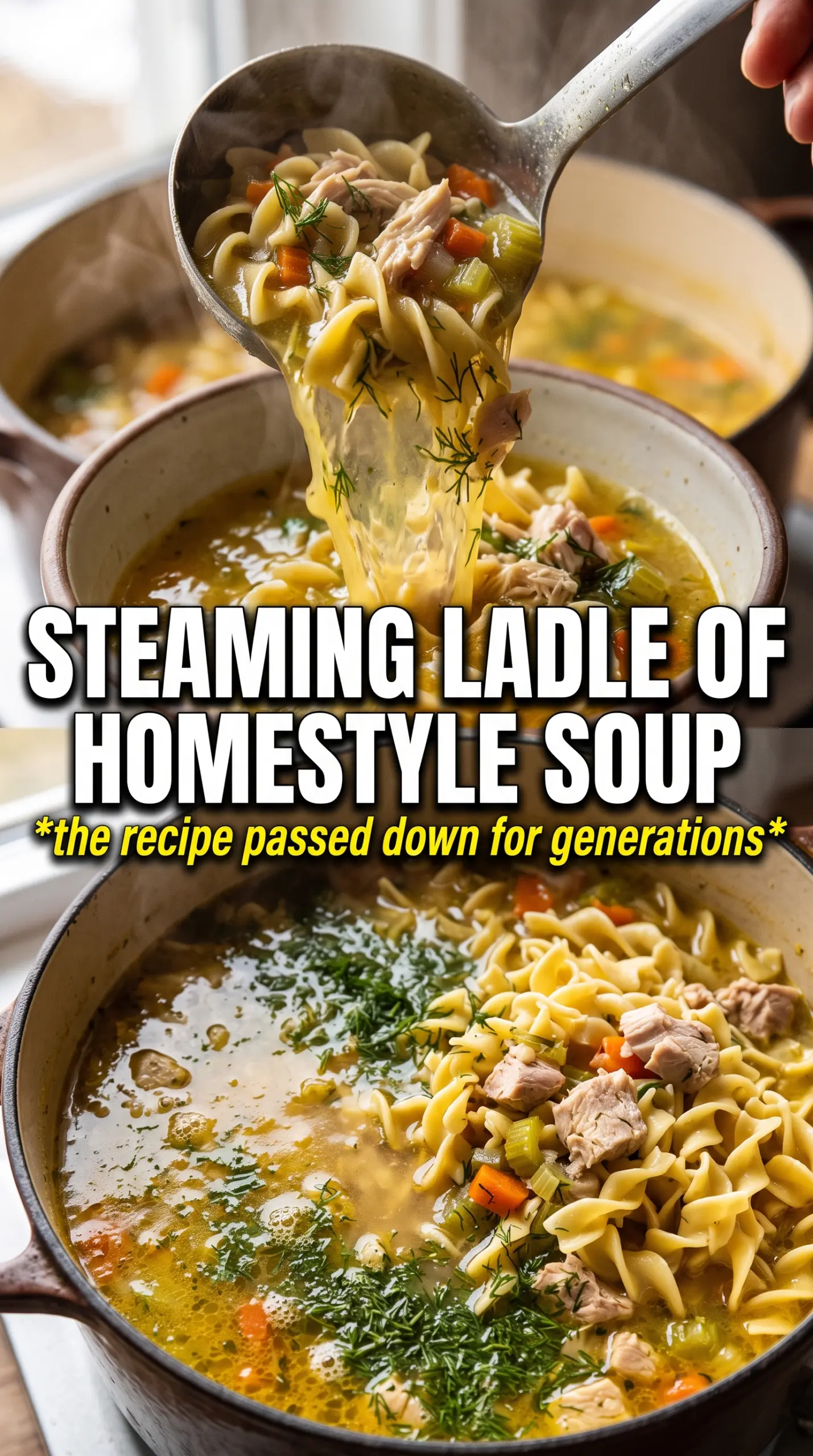
Homestyle chicken noodle soup earns its place in the regular rotation because it tastes like the pot has been working for hours, even when you start from a simple list of pantry staples. The broth turns rich and golden from the chicken, onion, celery, and peppercorns, and the noodles soak up just enough of that flavor without going soft and bloated. It lands in that sweet spot between comforting and clean-tasting, with enough substance to count as dinner.
The difference here is in the broth-building. Simmering a whole chicken, or bone-in pieces, with a few whole vegetables first gives you depth that boneless chicken and boxed broth just can’t match. Leaving some carrots and celery whole for the first simmer keeps the broth clear and clean, then adding the sliced vegetables later gives the finished soup texture instead of turning everything to mush. Fresh dill at the end wakes the whole pot up.
Below you’ll find the timing that keeps the noodles from overcooking, the one step that makes the broth taste fuller, and a few smart swaps if you need to use what you already have.
The broth came out clear and deeply chickeny, and the noodles stayed perfectly tender even after reheating the next day. My husband said it tasted like the soup his mom used to make.
Save this homestyle chicken noodle soup for the nights when you want a rich broth, tender chicken, and noodles that still have a little bite.
The Broth Has to Taste Good Before the Noodles Go In
The biggest mistake in chicken noodle soup is treating the broth like background noise. If the first simmer tastes flat, the finished soup will taste flat too, even after you add chicken and noodles. Starting with a whole chicken or bone-in pieces gives you body from the skin and bones, while the whole carrots, celery, onion, garlic, bay leaves, peppercorns, and thyme build a broth that tastes layered instead of watery.
Skimming the foam after the boil matters more than people think. That foam is what can make the broth look cloudy and taste a little harsh. Keep the heat low enough that the surface only gives you an occasional lazy bubble; a hard boil tears the chicken apart and turns the broth greasy and dull.
What Each Ingredient Is Doing in This Pot
- Whole chicken or bone-in pieces — This is where the broth gets its real body. A boneless breast will cook, but it won’t give you the same depth or silkiness. If you only have bone-in thighs or breasts, use them and expect a slightly lighter broth.
- Whole carrots, celery, onion, garlic — The first batch of vegetables is there to flavor the broth, not to survive the soup. Keeping them whole lets you strain out a cleaner broth and avoids overcooked vegetable flavor. Save the sliced vegetables for later so the finished soup still has texture.
- Wide egg noodles — These are the right noodle for this soup because they hold up without disappearing. Cook them at a gentle simmer and pull the pot off the heat as soon as they turn tender; if they go too long, they drink up the broth and turn soft fast.
- Fresh dill — Stir it in at the end. Dill cooked for too long loses its brightness and starts to taste muted. Added at the finish, it lifts the whole pot and makes the soup taste fresher.
- Whole peppercorns and bay leaves — This is one place where the whole form matters. Ground pepper clouds the broth, while whole peppercorns perfume it quietly. Bay leaves add background depth that you notice most when they’re missing.
How to Keep the Chicken Tender and the Noodles Intact
Build the Broth First
Put the whole chicken, the first carrots and celery, whole onion, garlic, bay leaves, peppercorns, and water into a large pot, then bring it just to a boil. As soon as it boils, skim off the foam and drop the heat to a steady simmer. You want the chicken to look gently bobbing, not tumbling around in the pot. That slow heat keeps the broth clear and gives the chicken time to turn tender instead of stringy.
Strain Before You Add the Fresh Vegetables
Once the chicken is tender, remove it and strain the broth before you move on. The cooked vegetables have given up what they had, and leaving them in the pot only muddies the soup. Shred the chicken while it’s warm so it falls apart in clean pieces instead of clumping into dry chunks. If the broth looks greasy, skim the top before it goes back on the heat.
Finish With the Sliced Vegetables and Noodles
Return the broth to the pot, bring it back to a simmer, and add the sliced carrots, celery, diced onion, and remaining garlic first. Give them about 10 minutes so they soften but still keep some bite. Add the noodles and shredded chicken last, then cook just until the noodles are tender; if you walk away here, the noodles will keep absorbing liquid and the soup will go from brothy to stodgy.
Season at the End
Salt and pepper should be adjusted after the noodles go in and the dill is stirred through. The broth tastes different once the noodles and chicken have had a chance to sit in it, so seasoning too early often leaves the soup under-salted at the table. A final generous season is what makes the broth taste rounded instead of thin.
How to Adapt This for What You Have on Hand
Gluten-Free Chicken Noodle Soup
Swap the egg noodles for a gluten-free noodle that holds up to simmering, and cook it separately if the brand tends to go soft. Gluten-free pasta can get fragile in broth, so adding it at the very end helps keep the texture intact and keeps the soup from turning cloudy.
Use Rotisserie Chicken to Cut the Time
If you need dinner faster, start with a good-quality rotisserie chicken and a sturdy broth or stock, then simmer the carrots, celery, onion, garlic, bay leaves, peppercorns, and thyme in that liquid. You lose some of the slow-cooked depth, but you gain a weeknight version that still tastes homemade.
Dairy-Free and Naturally Light
This soup is already dairy-free as written, and that’s part of why the broth stays clean and bright. If you want it richer without dairy, simmer the chicken with bone-in pieces and don’t rush the first broth stage; that gives you the most body without changing the ingredient list.
Storage and Reheating
- Refrigerator: Store for up to 4 days. The noodles will keep soaking up broth, so expect the soup to thicken a little as it sits.
- Freezer: It freezes, but the noodles soften after thawing. For the best texture, freeze the broth and chicken without the noodles, then cook fresh noodles when you reheat.
- Reheating: Warm it gently on the stove over medium-low heat until steaming. A hard boil will break up the chicken and overcook the noodles, so keep it at a slow simmer and add a splash of water if the broth has tightened up.
Answers to the Questions Worth Asking

Homestyle Chicken Noodle Soup
Ingredients
Equipment
Method
- Place whole chicken, 2 whole carrots, 2 whole celery stalks, whole onion, 4 garlic cloves, bay leaves, and peppercorns in a large pot with water.
- Bring to a boil, skim foam, then reduce heat and simmer 45-60 minutes until chicken is very tender.
- Strain the broth, discard vegetables and peppercorns, then shred the chicken meat.
- Return broth to the pot and bring to a simmer.
- Add sliced carrots, sliced celery, diced onion, and remaining garlic, then simmer 10 minutes.
- Add egg noodles and shredded chicken, then cook 6-8 minutes until noodles are tender.
- Stir in fresh dill and season generously with salt and pepper.