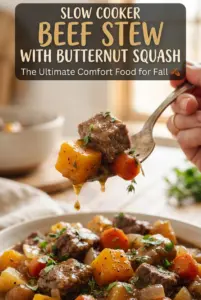
Slow cooker beef stew gets its best texture when the beef turns spoon-tender without the vegetables collapsing into mush, and the broth cooks down into a glossy gravy that clings to every bite. The butternut squash brings a gentle sweetness that plays against the savory beef, while the kale holds its shape just long enough to add color and a little bite at the end.
The trick here is building flavor before the lid goes on. Browning the flour-dusted beef gives the stew depth, and cooking the tomato paste with the onion and garlic takes the raw edge off so the broth tastes rounded instead of flat. Adding the squash later keeps those cubes intact, which matters more than people think in a slow cooker.
Below you’ll find the timing that keeps the vegetables from falling apart, the ingredient swaps that still work, and the reheating method that keeps the broth from turning greasy.
The beef came out fall-apart tender and the squash stayed in perfect cubes instead of disappearing into the broth. I loved adding the kale at the end because it kept a little bite and made the whole pot taste fresh.
Save this slow cooker beef stew with butternut squash for a cozy one-pot dinner with tender beef, sweet squash, and a rich broth.
The step that keeps the beef tender and the squash intact
Slow cooker stew can turn muddy when every ingredient goes in at once and cooks for the full time. Beef chuck needs long, steady heat to relax into tenderness, but butternut squash only needs a fraction of that time before it starts breaking down. Staggering the additions is what keeps this stew from tasting overcooked.
The flour on the beef does two jobs here. It helps the meat brown better in the skillet, and it thickens the broth later into that clingy gravy people expect from a good stew. If you skip the browning step, the stew will still cook, but it loses the deep, savory base that makes the sauce taste finished.
- Beef chuck — This cut has enough connective tissue to become tender over a long cook. Lean stew meat dries out faster, so chuck is the better choice.
- Tomato paste — A couple of tablespoons may not look like much, but they add body and a cooked-down richness that plain broth can’t give you.
- Butternut squash — It holds its shape better than softer winter squash and brings sweetness that balances the beef. Add it late or it will dissolve into the stew.
- Kale — Stir it in at the end so it stays green and slightly chewy instead of turning dull and limp.
What each ingredient is actually doing in the pot
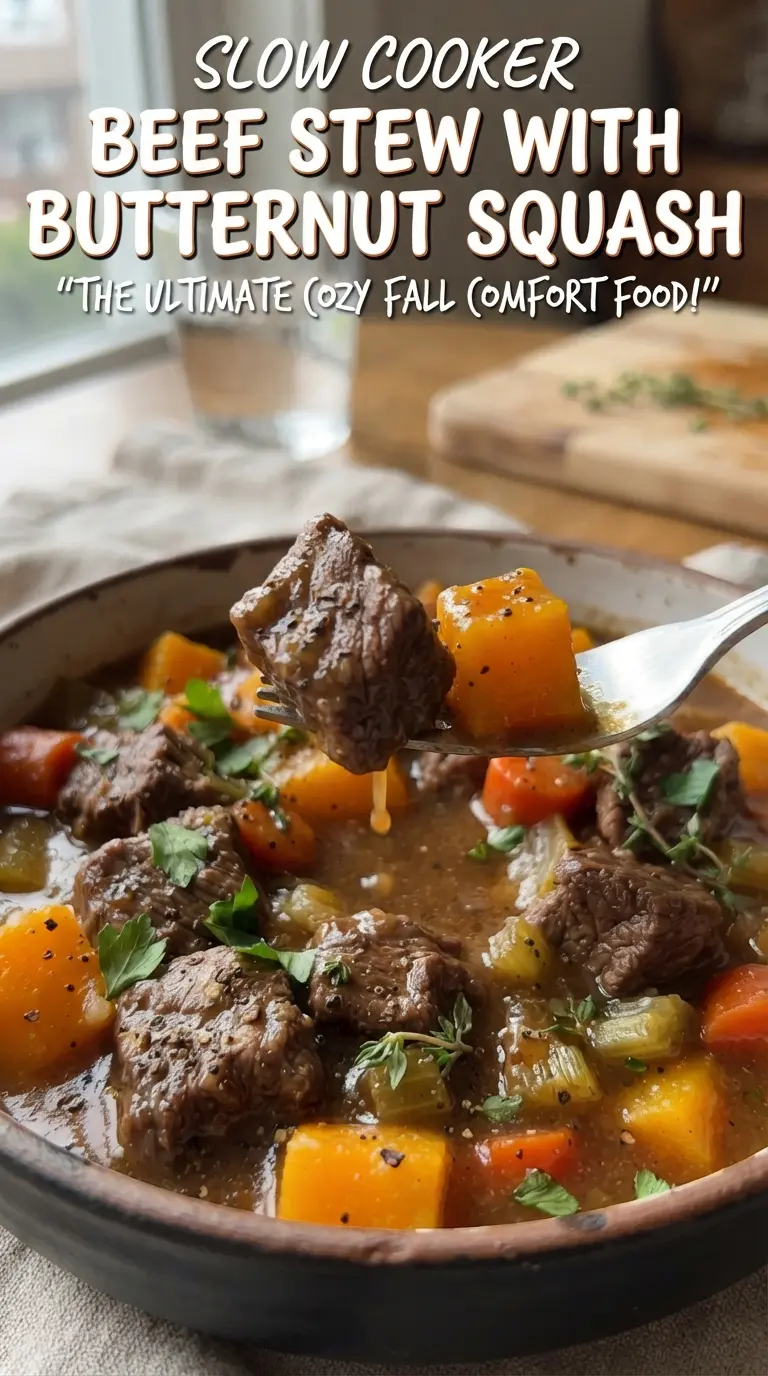
- Beef chuck gives the stew its body and richness. Cut it into even cubes so it finishes at the same pace.
- Flour coats the meat and lightly thickens the broth. If you need a gluten-free version, use a 1:1 gluten-free flour blend with the same method.
- Red wine deepens the sauce and helps lift the browned bits from the pan. Extra broth works fine if you don’t cook with wine, but the stew will taste a little less layered.
- Worcestershire sauce adds savory depth and a little tang that keeps the broth from tasting flat.
- Butternut squash needs to go in after the beef has had time to soften. If it cooks from the start, the cubes lose their edges and blend into the gravy.
Building the stew in stages so nothing overcooks
Browning the beef first
Toss the beef with the flour, salt, and pepper, then sear it in hot oil until the outside is deeply browned. Don’t rush this by crowding the pan; steamed meat won’t build the flavor you want. You’re looking for a crust that releases easily from the pan and leaves browned bits behind.
Cooking the onion and tomato paste
Cook the onion until it softens and starts picking up color, then stir in the garlic and tomato paste. The paste should darken slightly and smell sweet, not raw or sharp. This short cook time turns it from a tinny ingredient into part of the stew base.
Letting the slow cooker do the work
After you deglaze with wine or broth, scrape every browned bit into the slow cooker along with the broth, Worcestershire, thyme, sage, and carrots. Cook on low until the beef starts to relax, then add the squash so it can finish without falling apart. The stew should simmer gently, not boil aggressively; if it’s bubbling hard, the slow cooker is running hot and the vegetables will soften too fast.
Finishing with the kale
Stir in the kale during the last 15 minutes so it wilts but still looks fresh. Season at the end, after the broth has had time to concentrate, because slow cooking can dull salt levels. If the stew tastes thin, leave the lid off for 10 to 15 minutes on high to let the broth tighten a little before serving.
How to adapt this stew when you’re missing one key thing
Gluten-free stew without losing body
Use a gluten-free all-purpose flour blend to coat the beef, or skip the flour and whisk 1 tablespoon cornstarch with 2 tablespoons cold water at the end to thicken the broth. The texture won’t be quite as velvety as flour-browned stew, but it still lands in the same comfort-food lane.
No wine in the house
Replace the wine with extra beef broth and a teaspoon of red wine vinegar or apple cider vinegar. You’ll lose a little complexity, but the acid still helps wake up the browned bits and keeps the stew from tasting heavy.
Make it a little richer
Stir in a tablespoon of butter at the end or add a splash of cream right before serving. That gives the broth a rounder finish, but don’t add dairy early in the cook or it can separate and turn the stew grainy.
Storage and Reheating
- Refrigerator: Store in an airtight container for up to 4 days. The broth thickens as it chills, and the squash softens a little more each day.
- Freezer: This freezes well for up to 3 months. Cool it completely first, then freeze in portions so the squash doesn’t get crushed during reheating.
- Reheating: Warm it gently on the stove over low heat or in the microwave at medium power. High heat can split the broth texture and turn the beef stringy before the center is hot.
Answers to the questions worth asking
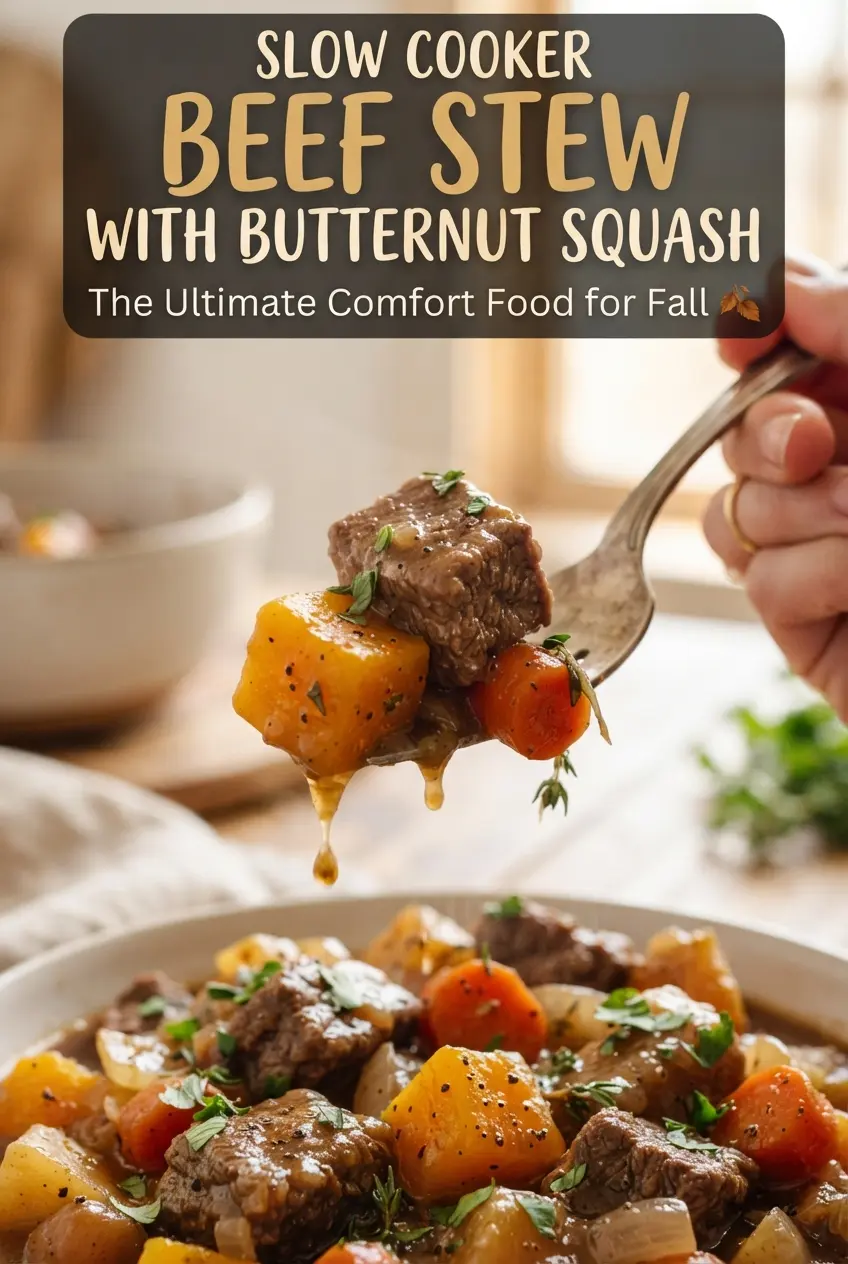
Slow Cooker Beef Stew with Butternut Squash
Ingredients
Equipment
Method
- Toss the beef with flour, salt, and black pepper, then brown it in hot olive oil until nicely colored before adding to the slow cooker.
- Add the browned beef to the slow cooker and scrape up any browned bits from the pan into the cooker for extra flavor.
- In the same pan, cook the diced onion, minced garlic, and tomato paste for 3 minutes until fragrant.
- Deglaze with the red wine (or extra broth), letting the liquid reduce slightly, then pour it into the slow cooker.
- Add beef broth, Worcestershire sauce, dried thyme, dried sage, and the thick-sliced carrots to the slow cooker.
- Cover and cook on LOW for 5 hours, letting the carrots soften and the flavors meld (visual cue: gravy thickens slightly and beef becomes very tender at the edges).
- Add the butternut squash cubes, stir to combine, then cover and cook on LOW for 2-3 hours more until the beef and squash are tender.
- Stir in the chopped kale and cook for the last 15 minutes (visual cue: kale turns bright green and wilts).
- Taste and season as needed, then ladle into bowls and serve hot with a glossy gravy and visible butternut squash cubes.