Chick-fil-A chicken noodle soup hits the bowl with a clean, comforting broth, tender vegetables, and noodles that stay pleasantly slurpable instead of turning mushy. The real charm is how light it tastes while still feeling satisfying, with little bites of chicken, celery, carrot, and corn in every spoonful.
This copycat version leans into the same simple balance. Finely diced chicken blends into the broth instead of clumping into shreds, and the vegetables are cut small enough to soften quickly without falling apart. A modest hand with herbs keeps the soup tasting clear and savory instead of heavy or over-seasoned.
Below, I’ll show you the one cut that matters most, plus how to keep the noodles from soaking up too much broth if you’re making it ahead. Once you’ve made it this way, it earns a spot in the regular dinner rotation fast.
The broth stayed clear and the chicken pieces were tiny just like the restaurant version. I added the noodles at the end and they were perfect, not bloated at all.
Save this Chick-fil-A chicken noodle soup for a simple broth, tiny chicken pieces, and noodles that stay tender.
The Reason the Chicken Stays Tender Instead of Stringy
The biggest difference between a soup that tastes polished and one that feels rough is the size of the chicken. Finely diced chicken heats through quickly, spreads through the spoonfuls evenly, and doesn’t give you those long shredded strands that can make the broth look busy and cloudy. That small cut also keeps the chicken from overcooking while the noodles finish.
The other thing that matters is the order. The vegetables need time first, then the chicken and corn, and the noodles go in last so they don’t steal too much liquid from the pot. If the soup sits too long after the noodles go in, the broth will tighten up and the noodles will keep drinking. That’s normal. It just means the timing matters more here than in a bean or rice soup.
What Each Ingredient Is Actually Doing in This Recipe
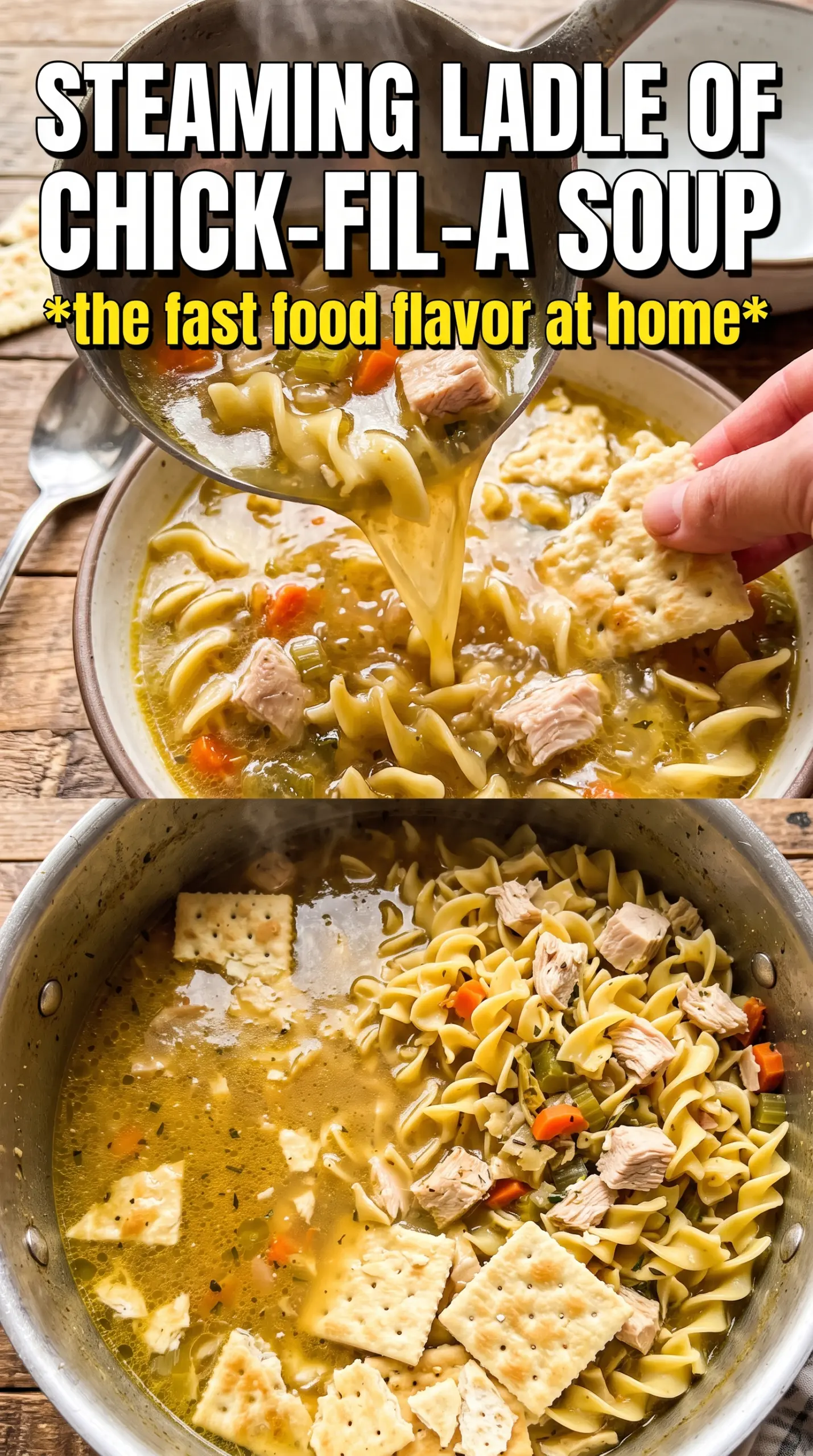
- Primary ingredient (the star) — Quality matters most. Choose the best you can find.
- Cooking medium (oil, butter, or broth) — This carries flavors and prevents dryness.
- Seasonings (salt, pepper, spices, herbs) — Layer flavors so nothing overpowers. Build depth gradually.
- Aromatics (garlic, onion, herbs) — Cook with fat to bloom flavors. Become the foundation.
- Supporting ingredients — Complement the main ingredient without overpowering it.
- Sauce or liquid (if applicable) — Brings flavors together. Balance richness with acid.
- Acid (lemon, vinegar, wine, or other) — Brightens and prevents flat-tasting results.
- Final finish (garnish, glaze, or sauce) — Prevents one-dimensional taste and adds visual appeal.
What Each Ingredient Is Actually Doing in the Bowl
- Cooked chicken breast — Use breast meat if you want the same lean, light result as the restaurant version. Dice it finely instead of shredding it. Shredded chicken tends to fray into the broth and make the soup feel heavier.
- Chicken broth plus water — The broth brings the main flavor, but the water keeps the soup from tasting salty or overly dense. If your broth is low-sodium, you get more control at the end. If you use regular broth, wait until the last minute to salt.
- Carrots, celery, and onion — This trio builds the base of the soup. Dice them small so they soften in the short simmer time and don’t overpower the spoonful. Bigger chunks need longer cooking, which would throw off the clean finish.
- Corn — Corn adds little pops of sweetness that match the copycat style. Frozen kernels work perfectly here and don’t need any special treatment. Canned corn can work in a pinch, but drain it well so the broth stays clear.
- Egg noodles or small pasta — Egg noodles give the closest texture, but any small pasta will do the job. The important part is cooking them just until tender and serving right away. Overcooked noodles turn the whole pot soft and dull.
Building the Soup in the Right Order
Starting With the Broth and Vegetables
Bring the broth and water up to a full boil before you add the vegetables, then drop the heat to a steady simmer. You want the carrots and celery to soften but still hold their shape, which takes about 10 minutes when they’re diced small. If the simmer is too hard, the broth turns cloudy and the onion can break down before the carrots are ready.
Adding the Chicken and Corn at the Right Moment
Once the vegetables are just tender, stir in the diced chicken and corn and let everything simmer briefly. The chicken is already cooked, so this stage is about warming it through and letting it absorb some broth. If you simmer it too long, the chicken dries out and loses the soft bite that makes this soup work.
Finishing With the Noodles
Add the noodles only after the chicken is hot and the vegetables are where you want them. Cook just until the noodles are tender at the center and still hold their shape at the edges. If they sit in the hot pot too long, they’ll keep swelling and drink up the broth fast, which is the most common reason this soup turns thick overnight.
How to Adjust This Soup for Different Kitchens and Schedules
Use turkey instead of chicken
Leftover turkey works well in place of chicken and gives the soup a slightly deeper, richer flavor. Dice it small and add it near the end just long enough to warm through. This swap is especially good after a holiday meal, but it does taste a little less like the restaurant original.
Make it gluten-free
Use your favorite gluten-free small pasta or gluten-free egg noodle, but watch the cooking time closely because those noodles soften faster and can fall apart if left in the pot too long. The broth and vegetables already do most of the work, so this swap is easy as long as you pull the noodles when they’re just tender.
Use rotisserie chicken for speed
Rotisserie chicken cuts the prep time almost to nothing. Pull off the breast meat, dice it finely, and add it with the corn just to warm through. You lose a little control over the seasoning, so taste the broth before you salt.
Storage and Reheating
- Refrigerator: Store for up to 4 days. The noodles will continue to absorb broth, so the soup gets thicker as it sits.
- Freezer: It freezes, but the noodles soften after thawing. For the best result, freeze the soup without noodles and cook fresh pasta when reheating.
- Reheating: Warm it gently on the stove over medium-low heat with a splash of broth or water. High heat tightens the chicken and can make the noodles go soft before the center of the soup is hot.
Questions I Get Asked About This Recipe
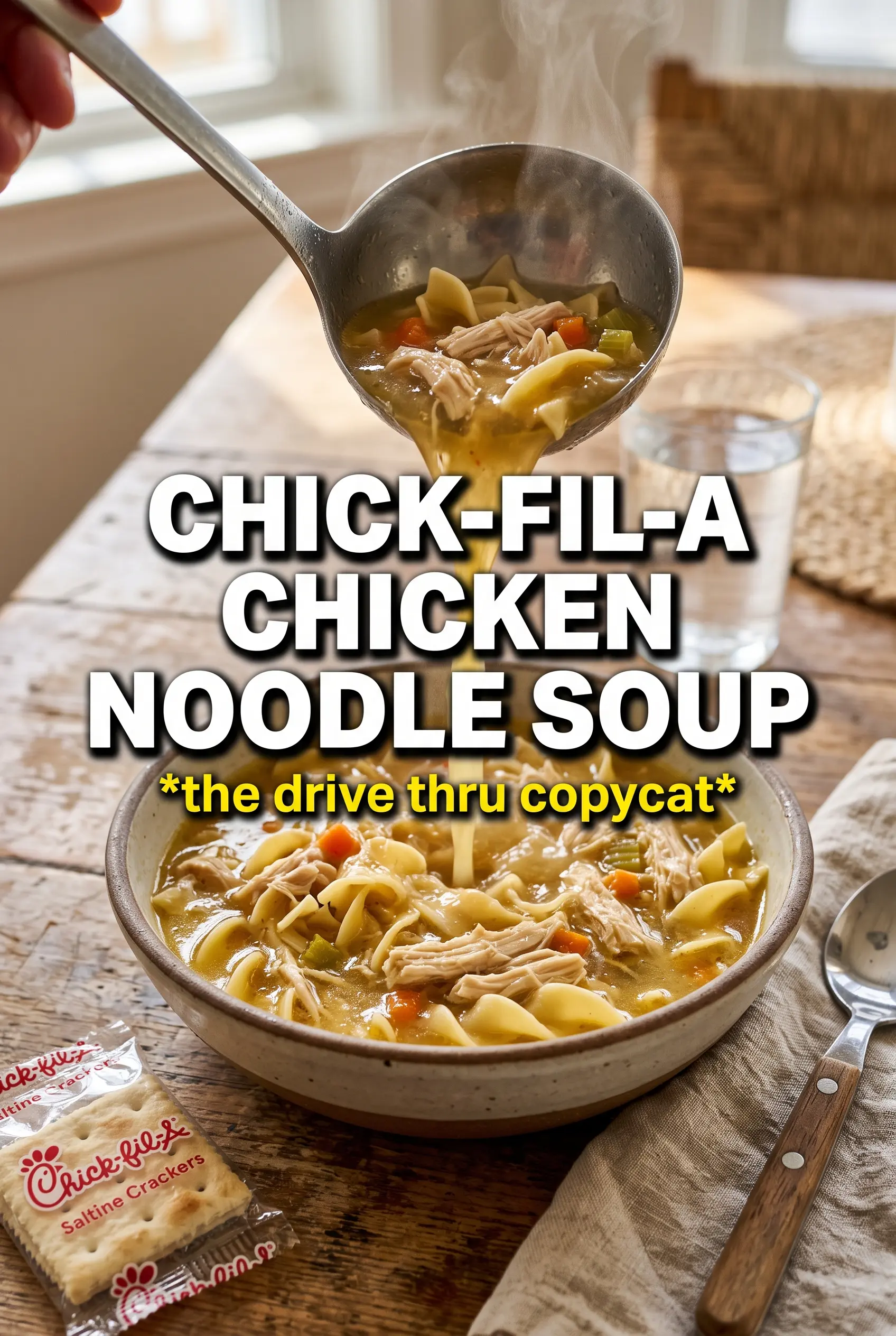
Chick-Fil-A Chicken Noodle Soup (Copycat)
Ingredients
Equipment
Method
- Bring the chicken broth and water to a boil in a large pot over high heat, so you have active bubbling before adding vegetables.
- Add carrots, celery, onion, garlic, dried parsley, dried thyme, and garlic powder, then reduce to a simmer and cook for 10 minutes until vegetables are just tender, with occasional gentle bubbling.
- Stir in the finely diced (not shredded) chicken and corn kernels, then simmer for 5 minutes until the chicken is heated through and the broth turns golden and fragrant.
- Add the egg noodles (or small pasta) and simmer for 6-8 minutes, stirring once or twice, until tender with a soft bite.
- Season with salt and pepper to taste, and serve right away to keep the noodles from softening further.