Gluten-free chicken noodle soup should taste like the bowl you remember: clear golden broth, tender chicken, soft vegetables that still have a little backbone, and noodles that hold together instead of turning to mush. When it’s done right, it’s the kind of soup that settles in fast and gets quiet at the table.
The part that matters most here is timing. The chicken poaches gently in the broth so it stays juicy, and the gluten-free pasta goes in at the very end, when the soup is already finished. That keeps the noodles from absorbing too much liquid and going soft before you even ladle the bowls. Using certified gluten-free broth also matters more than people think, because it’s the difference between a soup that’s truly safe and one that only looks the part.
Below, I’ve laid out the small details that keep this soup tasting clean and comforting instead of bland or starchy, plus a few ways to adapt it depending on the pasta you have on hand.
The broth stayed clear, the chicken shredded beautifully, and the rice noodles held up for dinner without getting gummy. My husband asked for seconds before I’d even sat down.
Save this gluten-free chicken noodle soup for the nights when you want tender chicken, clear broth, and noodles that stay intact.
The Noodle Timing That Keeps This Soup Brothy, Not Starchy
The biggest mistake with gluten-free chicken noodle soup is cooking the pasta in the pot too early. Gluten-free noodles keep absorbing liquid long after they’re tender, which means a good broth can turn thick and pasty by the time you serve the second bowl. The fix is simple: simmer the soup until the chicken is cooked, shred it, then add the pasta and cook only until it’s done.
That order protects both the texture and the flavor. The chicken poaches gently in the seasoned broth, the vegetables soften without falling apart, and the noodles finish at the very end so they stay separate in the bowl. If you know your pasta tends to go soft fast, pull the pot off the heat a minute early and let the residual heat finish the last bit.
What Each Ingredient Is Actually Doing in This Soup
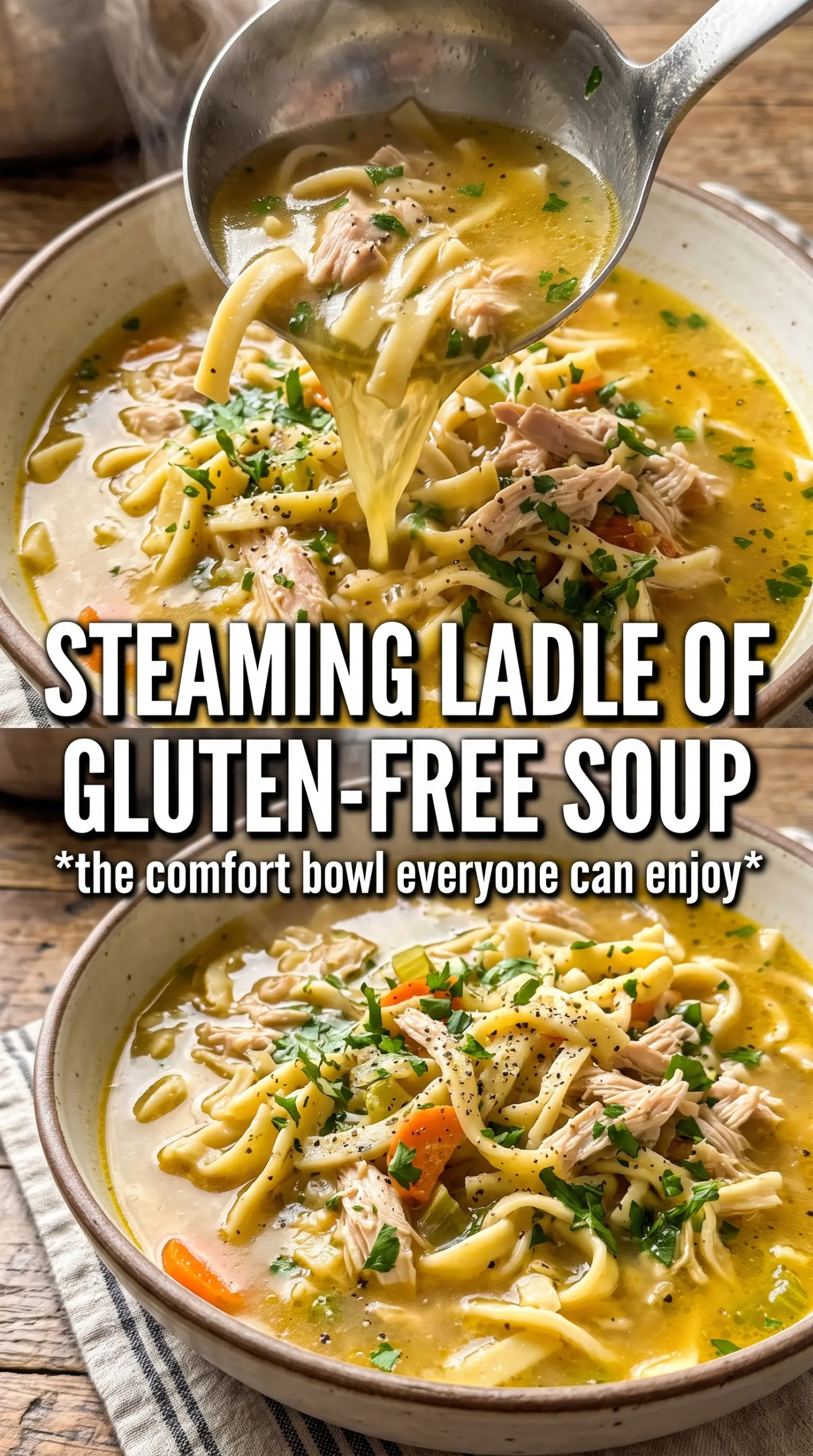
- Chicken breast — This gives you clean, lean shreds that blend into the broth without turning greasy. If you want richer flavor, boneless thighs work too, but they’ll make the soup a little deeper and less light.
- Certified gluten-free broth — This is where the flavor lives, so don’t use a broth you wouldn’t happily sip on its own. If you only have regular broth, the soup may taste fine, but it won’t be safe for someone avoiding gluten unless the label clearly says certified gluten-free.
- Carrots, celery, and onion — This trio builds the base flavor and gives the soup its classic backbone. Cut the vegetables evenly so they soften at the same pace; big uneven pieces leave you with a mixed pot of crunch and mush.
- Gluten-free pasta — Brown rice rotini, GF egg noodles, or rice noodles all work, but each one has a different limit. Rice noodles soften fastest, so watch them closely and serve the soup soon after they’re added.
- Thyme, parsley, and garlic powder — These seasonings keep the broth tasting like chicken noodle soup instead of plain chicken stock. Fresh herbs can go in at the end, but the dried herbs need the simmer to open up.
Building the Soup in the Right Order
Softening the Vegetables First
Start by heating the olive oil and cooking the onion, carrots, and celery until the onion turns translucent and the vegetables smell sweet, about 5 minutes. That first sauté gives the broth more depth than dumping everything in raw. If the pot is crowded or the heat is too low, the vegetables steam instead of softening, and the soup tastes flat.
Poaching the Chicken in the Broth
Add the garlic for just a minute, then pour in the broth and seasonings before adding the chicken. Bring everything to a boil, then drop it to a simmer so the chicken cooks gently and stays tender. A hard boil will tighten the meat and cloud the broth more than you want.
Shredding and Finishing With the Pasta
Remove the chicken when it’s cooked through, shred it, and return it to the pot. Add the gluten-free pasta last and cook it only until it’s just tender, checking a minute early if you’re using rice noodles. If the soup sits too long after the pasta goes in, the noodles keep drinking broth, so serve it soon after it’s done.
Use chicken thighs for a richer bowl
Boneless skinless thighs bring more body and a deeper chicken flavor. The tradeoff is a slightly richer broth and a softer shredded texture, which some people like better than the cleaner taste of breast meat.
Make it dairy-free and gluten-free without compromise
This soup is naturally dairy-free as written, so the main job is keeping the broth and pasta certified gluten-free. That means you get the comfort of classic chicken noodle soup without relying on cream or flour to carry the flavor.
Swap in rice noodles when that’s what you have
Rice noodles work well, but they need a close eye because they can go from tender to soft fast. Add them only at the end and plan to serve the soup right away, since they’ll continue to soften in the hot broth.
Turn it into a make-ahead soup base
Cook the broth, chicken, and vegetables ahead of time, then store the pasta separately and add it when you reheat. That keeps the noodles from swelling and preserves the texture of the broth.
Storage and Reheating
- Refrigerator: Store for up to 4 days. The noodles will keep absorbing broth, so expect the soup to thicken a bit.
- Freezer: Freeze the soup without the pasta for the best texture. Cook fresh noodles when you reheat, since gluten-free pasta can turn grainy after freezing.
- Reheating: Warm it gently on the stove over medium-low heat until steaming. If it looks too thick, add a splash of broth before it comes fully back to temperature.
Questions I Get Asked About This Recipe
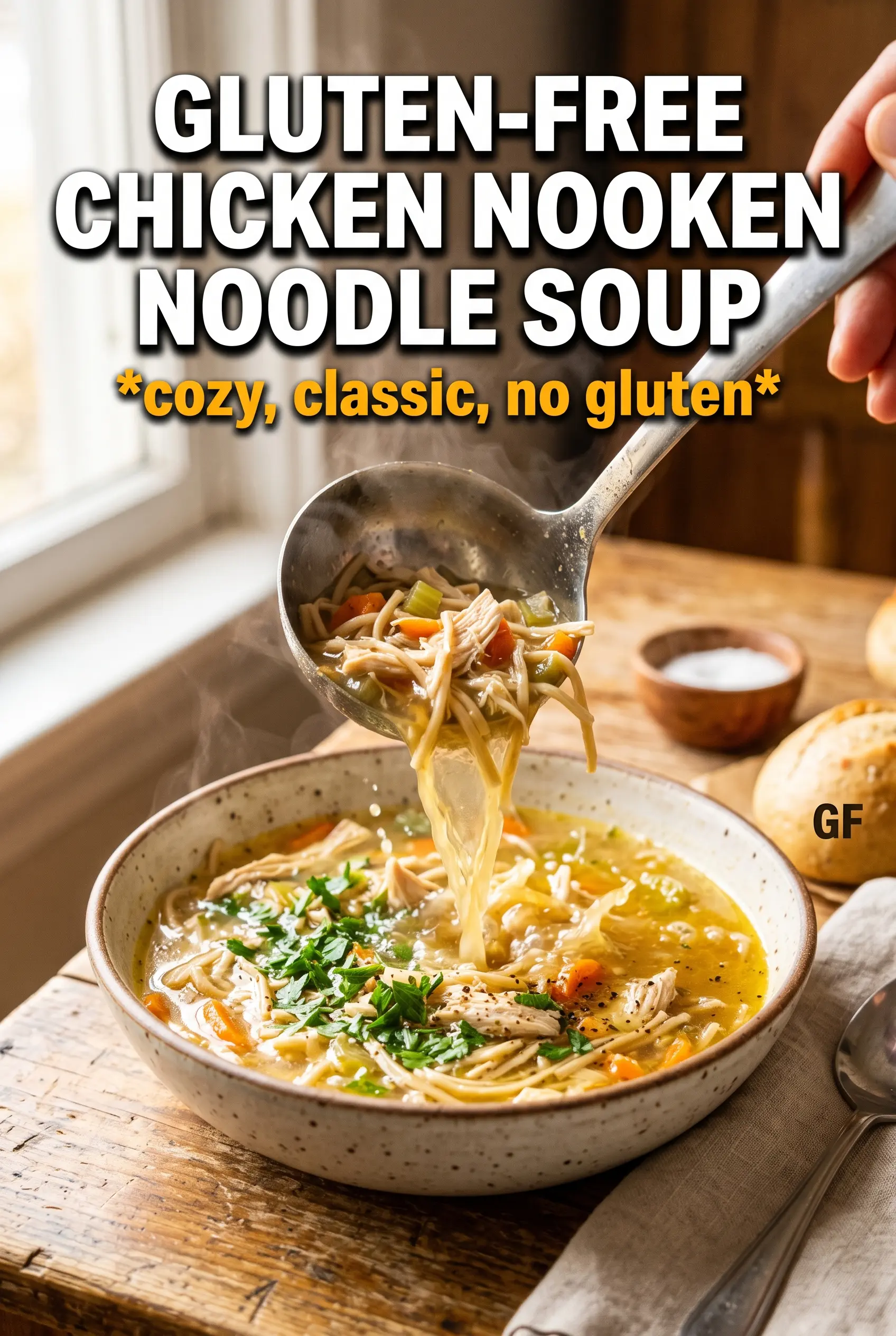
Gluten-Free Chicken Noodle Soup
Ingredients
Equipment
Method
- Heat the olive oil in a large pot, then add the onion, carrots, and celery. Sauté over medium heat for 5 minutes, stirring occasionally, until the vegetables start to soften and look glossy.
- Add the minced garlic and cook for 1 minute. Stir constantly until fragrant, with a light golden color at the edges.
- Pour in the certified gluten-free chicken broth, then add dried thyme, dried parsley, garlic powder, and the chicken breast. Bring to a boil, then reduce to a simmer and cook for 18-20 minutes, until the chicken is cooked through and no longer pink in the center.
- Remove the chicken from the pot and shred it, then return the shredded chicken to the broth. Stir to distribute the chicken evenly so each bowl gets tender strands.
- Add the gluten-free pasta to the pot and cook according to the package instructions. Check frequently during cooking because gluten-free pasta can overcook and turn soft.
- Season the soup generously with salt and pepper, then garnish with fresh parsley. Serve hot, with visible herbs floating on top for a classic look.