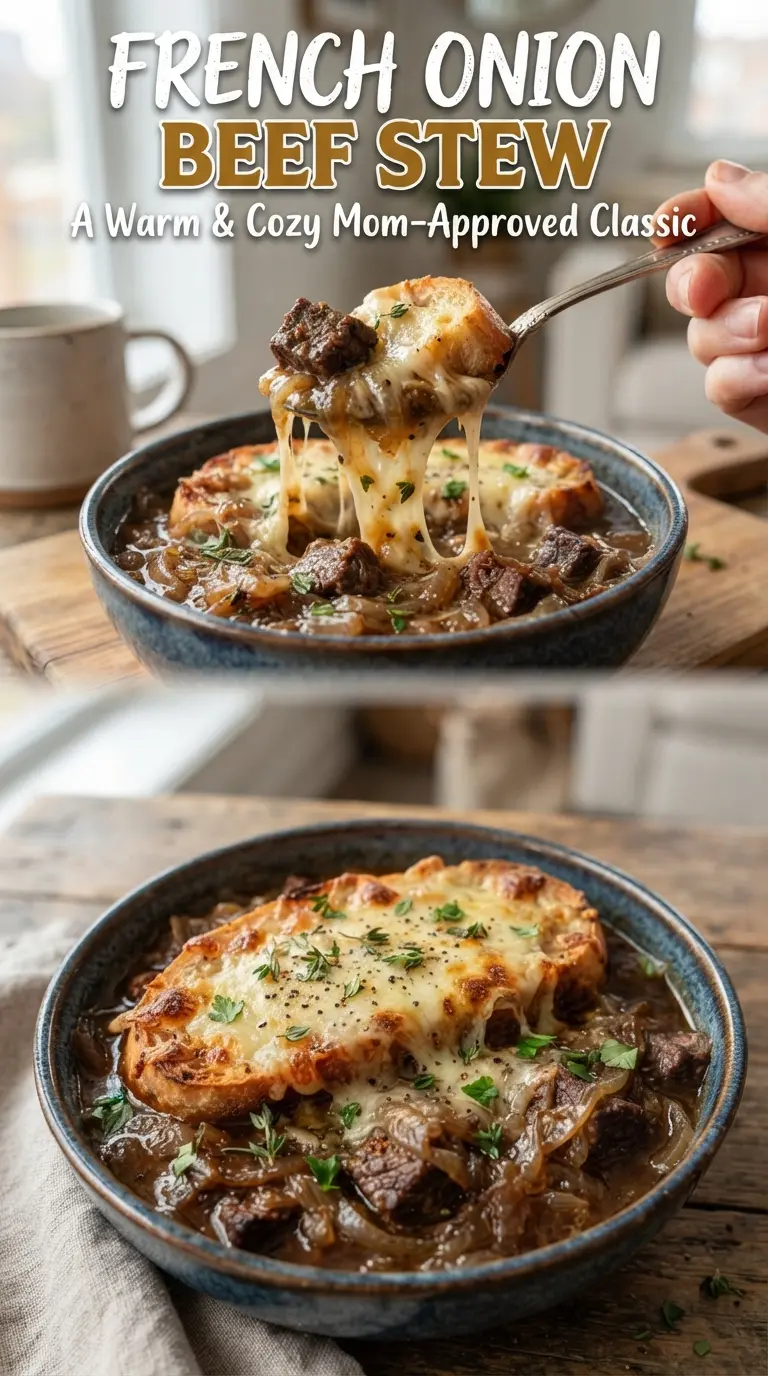
Deep, browned onions and fall-apart beef turn this stew into something that tastes like it simmered all afternoon in a French kitchen. The broth gets glossy from the onions themselves, then finishes with a layer of toasted baguette and bubbling Gruyere that melts into the top instead of sinking into the pot. You get all the comfort of French onion soup, but with the staying power of a true beef stew.
The part that makes this version work is patience with the onions and restraint with the liquid. Thinly sliced onions need time to collapse, caramelize, and pick up color before the broth goes in, or the stew tastes flat and sweet instead of deep and savory. Browning the beef in batches matters too; crowd the pan and you steam the meat instead of building the crust that gives the broth its backbone. If you rush those two steps, the finished stew will taste like it needs something. It doesn’t. It just needs time.
Below, I’ll walk you through the moments that matter most, plus the swaps that still keep the stew rich and balanced. The topping gets its own attention too, because that cheesy baguette cap is what makes every bowl feel special.
The onions turned this deep golden brown and the broth tasted like it had been simmering for hours. The baguette stayed crisp long enough to eat, and the Gruyere browned beautifully under the broiler.
Save this French Onion Beef Stew for the night you want deep caramelized onion flavor, tender beef, and a browned Gruyere topping in one bowl.
The part that makes French onion flavor hold up in a stew
The biggest mistake with French onion anything is stopping the onions too early. Pale onions taste sharp and one-note; properly caramelized onions taste sweet, savory, and almost jammy, and that’s what lets the broth carry the whole dish. In this stew, the onions aren’t just an accent. They become part of the body of the sauce.
Browned beef matters just as much. The crust on the meat and the browned bits in the pot dissolve into the wine and broth, which gives the stew its dark color and deep flavor. If you dump everything in at once, you lose that foundation. The flour goes in after the garlic so it can coat the onions and thicken the liquid without tasting raw.
- Beef chuck — This cut has enough fat and connective tissue to turn tender during the long simmer. Lean beef dries out before the onions finish doing their work.
- Yellow onions — They soften and sweeten beautifully. White onions can work in a pinch, but they don’t develop quite the same roundness.
- Dry white wine — It lifts the browned bits off the pan and gives the broth a little brightness. If you skip it, use extra broth plus a small splash of vinegar at the end.
- Gruyere — This is the topping that melts smoothly and browns under the broiler without turning greasy. Swiss cheese will melt, but the flavor won’t be as nutty.
What Each Ingredient Is Actually Doing in This Recipe
- Primary ingredient (the star) — Quality matters most. Choose the best you can find.
- Cooking medium (oil, butter, or broth) — This carries flavors and prevents dryness.
- Seasonings (salt, pepper, spices, herbs) — Layer flavors so nothing overpowers. Build depth gradually.
- Aromatics (garlic, onion, herbs) — Cook with fat to bloom flavors. Become the foundation.
- Supporting ingredients — Complement the main ingredient without overpowering it.
- Sauce or liquid (if applicable) — Brings flavors together. Balance richness with acid.
- Acid (lemon, vinegar, wine, or other) — Brightens and prevents flat-tasting results.
- Final finish (garnish, glaze, or sauce) — Prevents one-dimensional taste and adds visual appeal.
Building the stew in the right order so nothing tastes flat
Browning the beef first
Season the beef well, then brown it in batches in hot olive oil. You want a real crust on the outside and space between the pieces in the pot; if the pan looks crowded, the meat will release liquid and turn gray. Move the beef out as each batch is done so the bottom of the pot stays coated with those dark browned bits.
Caramelizing the onions until they turn sweet and deep
Melt the butter, then add the onions with the sugar and give them time. Stir often enough to keep the bottom from scorching, but don’t rush the process by turning the heat up high. After 30 to 35 minutes, the onions should be deep golden and soft enough to collapse when stirred. If they still look pale, the stew won’t have the French onion depth you’re after.
Using the wine to pull flavor off the pan
Once the garlic and flour have cooked for a minute, pour in the wine and scrape firmly across the bottom. The flour will look a little paste-like at first, then loosen as the wine hits the pan. That step removes the concentrated flavor left behind from the beef and onions, and it keeps the final broth from tasting thin.
Letting the simmer finish the job
Add the broth, Worcestershire sauce, thyme, bay leaf, and beef, then cover and simmer until the meat gives easily when pierced. Keep the heat low enough that the surface moves lazily, not violently. A hard boil tightens beef instead of tenderizing it. When the stew is done, the broth should taste rich and the onions should have melted into the background without disappearing completely.
Broiling the baguette and Gruyere on top
Ladle the stew into oven-safe bowls, add the toasted baguette slices, and pile on the cheese. Set the bowls close to the broiler and watch them the whole time, because the difference between browned and burnt can be less than a minute. The goal is bubbly cheese with a few dark spots, not a pale melted lid.
How to change this stew without losing the French onion character
Make it dairy-free without losing richness
Swap the butter for more olive oil and finish the bowls with toasted bread only, or use a dairy-free melting cheese if you have one you trust. You’ll lose some of the classic Gruyere finish, but the onions and broth still carry the dish if you keep the caramelization deep.
Use red wine for a darker, deeper pot
A dry red wine gives the stew a bolder, slightly more rustic finish. It works well with beef, but it will push the flavor away from classic French onion soup and toward something heartier and more robust.
Skip the baguette topping for a lower-carb bowl
Serve the stew with extra cheese on top instead of bread. You’ll get the same savory onion-and-beef combination without the crunch, and the broiler still gives the surface that browned, savory finish.
Storage and Reheating
- Refrigerator: Store the stew for up to 4 days. The flavor gets deeper overnight, but the bread topping should be added fresh.
- Freezer: Freeze the stew without the baguette and cheese for up to 3 months. Thaw in the fridge before reheating so the beef stays tender.
- Reheating: Warm gently on the stovetop over low heat until hot. If you boil it, the beef can tighten and the onions can lose their silky texture. Add fresh toasted bread and Gruyere after reheating.
Answers to the questions worth asking

French Onion Beef Stew
Ingredients
Equipment
Method
- Season the beef chuck cubes with salt and black pepper, then heat olive oil in a Dutch oven or cast iron skillet over medium-high heat. Brown the beef in batches and set aside while you cook the next batch.
- Melt the butter in the same Dutch oven over medium heat, then add the thinly sliced yellow onions and sugar. Cook 30-35 minutes, stirring often, until deep golden.
- Add the minced garlic and all-purpose flour and cook for 1 minute, stirring to coat the onions. Pour in the dry white wine and scrape the bottom of the pot to loosen browned bits.
- Stir in the beef broth, Worcestershire sauce, fresh thyme, bay leaf, and the browned beef, then cover the pot. Simmer for 2 hours, until the beef is tender and the stew tastes fully melded.
- Ladle the stew into oven-safe bowls and top each with a toasted baguette slice and a generous layer of shredded Gruyere. Broil for 2-3 minutes until the cheese is bubbly and browned.