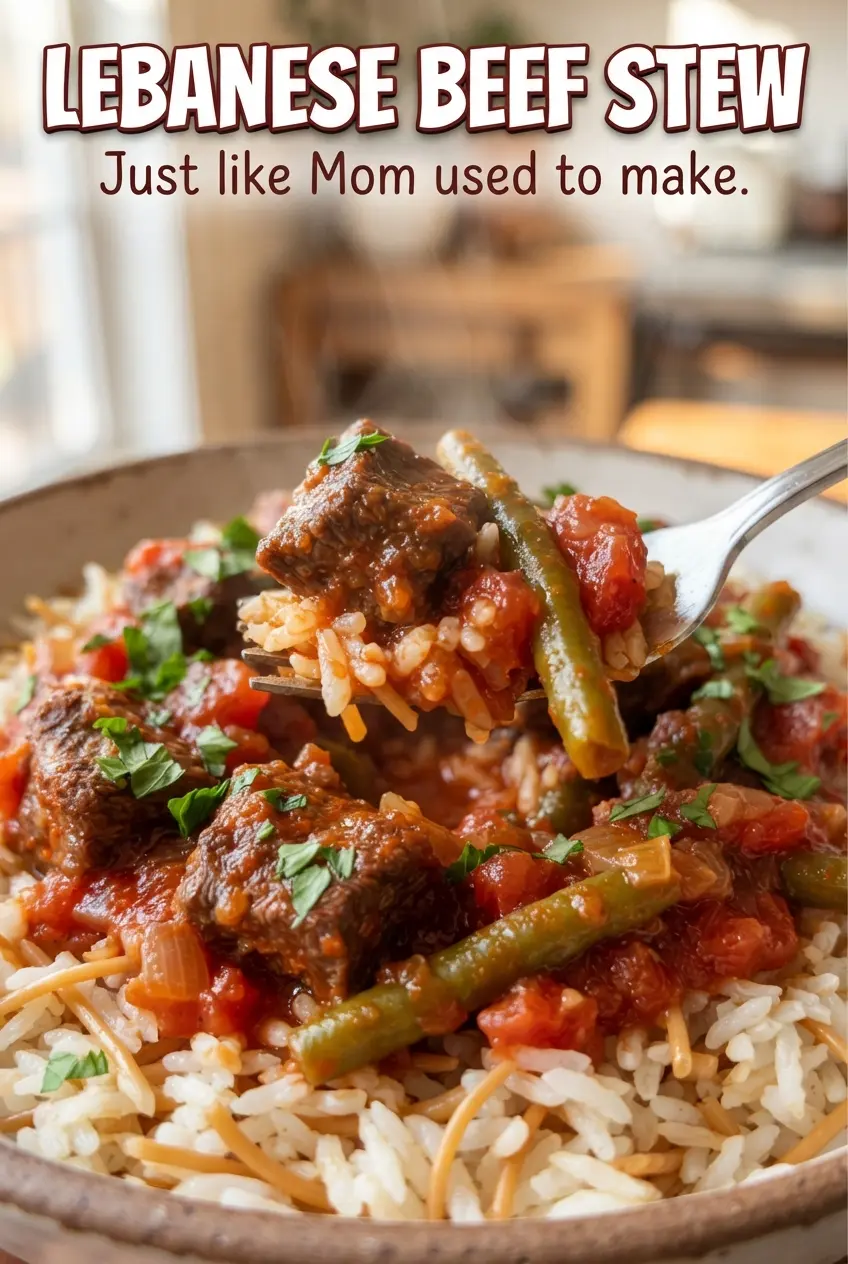
Lebanese beef stew lands with deep tomato richness, tender chunks of beef, and green beans that still hold their shape instead of melting into the pot. The cinnamon and seven spice don’t make it taste sweet; they give the broth warmth and a quiet complexity that keeps you going back for another spoonful. Served over vermicelli rice, it’s the kind of meal that feels complete the second it hits the table.
The difference here is in the layering. Browning the beef first builds the base, then the tomato paste cooks long enough to lose its raw edge before the liquids go in. That small step makes the sauce taste rounded and slow-cooked instead of thin and sharp. Green beans go in near the end so they stay bright and tender, not dull and overdone.
Below you’ll find the timing that keeps the beef fork-tender, the ingredient choices that matter most, and a few swaps if you need to stretch what’s in the pantry without losing the character of the dish.
The beef turned melt-in-your-mouth tender and the tomato sauce thickened up beautifully without tasting heavy. I served it over rice with the pine nuts on top, and my husband went back for seconds before I even sat down.
Love this Lebanese beef stew with green beans and seven-spice tomato sauce? Save it to Pinterest for a cozy dinner over vermicelli rice.
The Step That Keeps the Stew Rich Instead of Flat
The biggest mistake with a stew like this is rushing past the browning step. Beef chuck needs time in the pan to develop a dark crust, and those browned bits on the bottom are what give the sauce depth later. If the pan looks crowded, brown the meat in batches. Stacking cubes on top of each other traps steam, and steamed beef will taste gray and bland no matter how good the broth is.
Tomato paste deserves attention too. Cook it with the onions and garlic until it darkens slightly and smells sweet and concentrated. That short minute changes the whole pot, because raw tomato paste can make the stew taste sharp and underdeveloped. Once the liquid goes in, keep the simmer gentle. A hard boil will tighten the beef before it has time to relax and turn tender.
What Each Ingredient Is Actually Doing in This Pot

- Beef chuck — This is the cut that gives you the best balance of flavor and texture for a long simmer. It has enough fat and connective tissue to turn silky instead of dry. Stew meat from the store can work, but chuck gives you better results and usually needs less rescuing.
- Lebanese seven spice and cinnamon — These are what make the stew taste distinctly Lebanese instead of like a generic beef tomato pot. The cinnamon should stay in the background; it adds warmth, not dessert notes. If your seven spice blend is strong on allspice or clove, use a light hand so it doesn’t take over.
- Crushed tomatoes and tomato paste — The paste builds intensity, while crushed tomatoes give the stew body and a sauce that clings to rice. Use a good-quality canned tomato if you can, because weak tomatoes make the whole dish taste thin. If you only have diced tomatoes, crush them by hand in the pot before simmering.
- Green beans — They soak up the tomato broth and give the stew its signature shape and freshness. Fresh beans hold up best here. Frozen beans can work, but add them straight from the freezer and expect a softer texture.
- Pine nuts and cilantro — These finish the dish with richness and brightness. Toast the pine nuts until just golden because they go from nutty to bitter fast. Cilantro should go in at the end so it stays fragrant instead of cooked down.
Building the Stew from Browning to Final Simmer
Season and Sear the Beef
Coat the beef with salt, seven spice, and cinnamon, then brown it in olive oil until you get deep color on multiple sides. You are not trying to cook it through; you’re building flavor that will carry the whole pot. If the meat is wet when it hits the pan, it will steam and the seasoning won’t stick as well, so pat it dry first. Pull the beef out as soon as it has a good crust.
Wake Up the Onion and Tomato Paste
Cook the diced onion until it turns soft and translucent, then add the garlic and tomato paste. Stir constantly for about a minute so the paste darkens a shade and loses its raw edge. If the garlic starts to brown hard, the heat is too high and the pot will taste bitter. Lower the burner before the paste has a chance to scorch.
Simmer Until the Beef Gives
Add the crushed tomatoes and water or broth, then return the beef to the pot and bring everything to a gentle simmer. Cover and cook until the beef is close to tender, checking once or twice to keep the heat low and steady. A rolling boil will make the meat seize up and can split the sauce, while a slow simmer lets the collagen break down cleanly. At this stage the sauce should look thick but still loose enough to bubble lazily.
Add the Green Beans at the End
Stir in the green beans during the last 25 to 30 minutes so they stay bright and tender. If they go in too early, they’ll go dull and mushy long before the beef is ready. You want them cooked through but still holding a little snap at the center. Stir in the cilantro just before serving, then finish with toasted pine nuts over vermicelli rice.
How to Adapt This Stew Without Losing Its Character
Dairy-Free and Naturally Gluten-Free Serving
The stew itself is already dairy-free and gluten-free, so the main thing to watch is what you serve it with. Vermicelli rice is traditional, but use plain rice if you need to keep the dish gluten-free. Check the broth label too, because some boxed broths contain wheat-based additives.
Using Fresh or Frozen Green Beans
Fresh beans give the best bite, but frozen beans can stand in when that’s what you have. Add them straight from frozen and expect a softer finish. If you thaw them first, they can turn watery and overcooked by the time the beef is ready.
Turning It into a Lighter Weeknight Pot
You can trim a little richness by using half broth and half water, but don’t cut the simmer short. The flavor comes from time as much as ingredients, and the beef still needs that long cook to soften. The sauce will be a touch lighter, but the spice and tomato base will still read clearly.
Storage and Reheating
- Refrigerator: Store in an airtight container for up to 4 days. The flavor deepens overnight, and the sauce usually thickens a bit more.
- Freezer: This freezes well for up to 3 months. Cool it fully, portion it into containers, and leave a little room at the top because the sauce will expand.
- Reheating: Warm it slowly on the stovetop over low heat with a splash of water or broth if needed. High heat can make the beef tight and the beans soft before the center is hot.
Answers to the Questions Worth Asking
Lebanese Beef Stew
Ingredients
Equipment
Method
- Season the beef with salt, Lebanese seven spice, and ground cinnamon, then brown it in olive oil in a Dutch oven until well-browned (about 5 to 8 minutes). Keep the heat at medium-high so the beef develops color.
- Cook the diced onion for 5 minutes in the same Dutch oven, then add the minced garlic and tomato paste and cook for 1 minute (stir constantly). The mixture should smell fragrant and look slightly darkened.
- Add the crushed tomatoes and water or beef broth, then bring to a simmer. You should see steady bubbling across the surface.
- Return the browned beef to the pot, cover, and simmer for 1 1/2 hours. The beef should be fork-tender and the sauce should thicken slightly as it reduces.
- Add the green beans and simmer for 25 to 30 minutes until tender. Skim off any foam if it forms and keep a gentle simmer.
- Stir in the chopped cilantro, then top the stew with toasted pine nuts and serve over vermicelli rice. The pine nuts should look lightly golden and the cilantro should stay bright green.