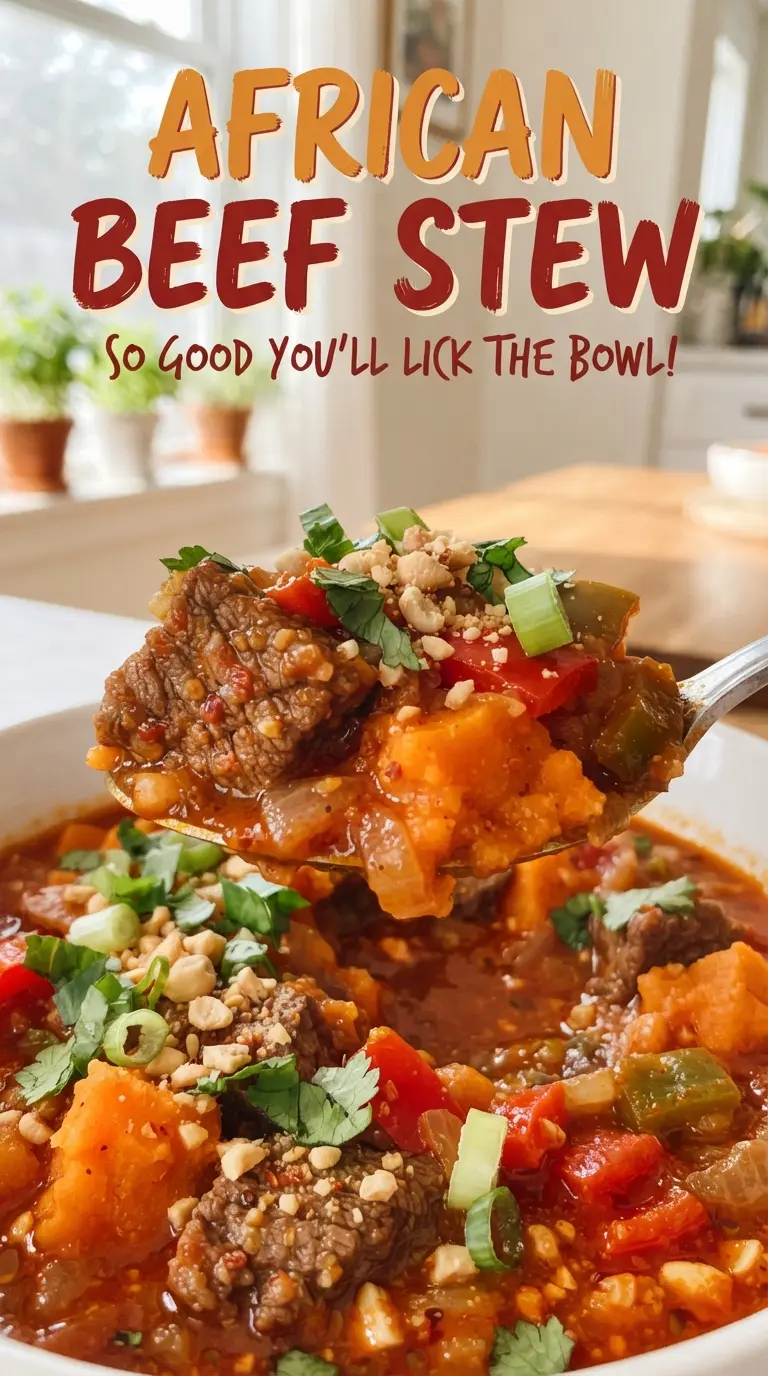
Rich, glossy African beef stew lands in the bowl with deeply tender beef, a peanut-tomato sauce that clings to every spoonful, and sweet potato that softens just enough to balance the heat. It eats like a full meal, but the kind you want to linger over, with rice catching all that sauce and a scatter of peanuts adding the last bit of crunch. The best versions don’t taste heavy; they taste layered, with savory beef, gentle warmth from ginger, and a finish that stays bright from the tomatoes.
The key is browning the beef in batches and letting the tomato paste cook down before the broth goes in. That short stretch builds the base so the stew tastes cooked all the way through instead of just simmered. Peanut butter goes in later, after the broth has done its work, so it melts into a smooth sauce instead of turning grainy or greasy.
Below you’ll find the timing that keeps the beef tender, the point where the sweet potato should go in, and a few useful swaps if you need to work around what’s already in your kitchen.
The beef got fall-apart tender and the peanut sauce stayed silky instead of oily. I served it over jasmine rice and even my picky kid went back for seconds.
Save this African Beef Stew for the nights when you want tender beef, peanut richness, and a bowl that eats like a full meal over rice.
The Slow Simmer That Keeps the Beef Tender Instead of Stringy
The mistake most people make with beef stew is pushing the heat too hard once the liquid goes in. Chuck needs time, not aggression. Keep the stew at a gentle simmer, where you see lazy bubbles breaking the surface here and there, and the meat relaxes into tenderness instead of tightening up. If the pot boils hard, the outside of the beef goes dry before the inside has time to soften.
Browning first matters here because it gives the broth something deeper to build on. Those dark bits on the bottom are not a cleanup problem; they’re flavor. Once the broth goes in, scrape the pan well and keep the simmer low enough that the sauce thickens gradually as the beef cooks.
What the Peanut Butter, Tomato Paste, and Sweet Potato Are Each Doing
- Beef chuck — This cut has the fat and connective tissue that turn silky after a long simmer. Leaner beef won’t give you the same texture; it tends to dry out before the sauce is done. Cut the cubes evenly so everything finishes at the same time.
- Natural peanut butter — This is what gives the stew its body and that nutty, rounded finish. Use natural peanut butter with just peanuts and salt if possible, because sweetened versions can make the stew taste flat or oddly sticky. Whisk it in off the heat of a hard boil so it melts smoothly.
- Tomato paste — A couple minutes in the pot deepens the color and pulls out a cooked, concentrated tomato flavor. If you skip this step, the sauce can taste thin and raw even after a long simmer.
- Sweet potato — Add it after the beef has had time to tenderize so it doesn’t collapse. It thickens the stew gently and gives you a soft, sweet contrast that works with the peanut and spice.
- Scotch bonnet or habanero — This is for heat, not just spice. Mince it finely so the heat distributes evenly, and keep in mind that even a small amount will build as the stew simmers.
Building the Sauce in the Right Order So It Stays Smooth
Brown the Beef in Batches
Season the cubes first, then brown them in a single layer in hot oil. If you crowd the pan, the meat steams and the bottom never develops the dark crust you want. Work in batches and let each piece sit long enough to release cleanly before you turn it. The beef doesn’t need to be cooked through at this stage; it just needs color.
Cook the Aromatics Until They Smell Sweet
Onion, garlic, ginger, and pepper should go in after the beef comes out, right into the same pot. Let the onion soften and pick up the browned bits, then stir in the tomato paste and cook it until it darkens slightly. That short sauté removes the raw edge from the paste and builds a richer base for the broth.
Simmer Before the Peanut Butter Goes In
Once the tomatoes, broth, cumin, coriander, and beef are in the pot, cover and simmer until the meat starts to relax. Don’t add the peanut butter too early or it can sit on top of the liquid instead of melting evenly into it. When the beef is already on its way to tender, whisk the peanut butter in until the sauce looks smooth and unified, then add the sweet potato and keep going until both are soft.
Finish with Spinach and a Fresh Topper
Spinach only needs a minute or two to wilt into the sauce. Stir it in at the end so it stays green instead of fading to olive and disappearing into the stew. Finish with chopped peanuts and cilantro for crunch and brightness, then spoon it over rice while the sauce is still glossy and hot.
How to Adapt This African Beef Stew for Your Kitchen
Make It Milder Without Losing Depth
Skip the scotch bonnet or habanero and the stew still tastes complete. The ginger, cumin, coriander, tomato, and peanut butter carry plenty of flavor on their own, and you can always add hot sauce at the table for the people who want more heat.
Dairy-Free and Gluten-Free by Default
This stew already fits both of those needs as written, as long as your broth is gluten-free. Serve it over rice and you’ve got a naturally sturdy, satisfying bowl with no extra changes.
Use Chicken Thighs Instead of Beef
Boneless thighs work if that’s what you have, but the stew will finish faster and taste lighter. Cut the simmer time back and stop as soon as the chicken is cooked through, then add the sweet potato near the end so it doesn’t turn mushy.
Storage and Reheating
- Refrigerator: Keeps for 4 days. The sauce thickens as it sits, and the flavor gets even deeper.
- Freezer: Freezes well for up to 3 months. Cool it completely first, then store it in airtight containers with a little room at the top for expansion.
- Reheating: Warm it gently on the stove over low to medium-low heat with a splash of broth or water. Hard boiling can break the sauce and make the beef feel stringy instead of tender.
Answers to the Questions Worth Asking

African Beef Stew with Peanut-Tomato Sauce
Ingredients
Equipment
Method
- Season the beef cubes with salt and black pepper, then heat the vegetable oil in a Dutch oven over medium-high heat. Brown the beef in batches until well-browned, about 4-6 minutes per batch, then transfer to a plate.
- Add the diced onion to the same Dutch oven and cook for 4 minutes, stirring as needed. Stir in the minced garlic, grated ginger, and (if using) minced scotch bonnet or habanero, then add tomato paste and cook for 2 minutes until fragrant.
- Add the crushed tomatoes, beef broth, ground cumin, and ground coriander, then return the browned beef to the pot. Bring to a simmer, cover, and simmer for 1 1/4 hours, stirring once halfway for even cooking.
- Whisk the natural peanut butter into the stew until smooth, then add the cubed sweet potato. Simmer uncovered for 30-35 minutes until the beef and sweet potato are tender, stirring occasionally to prevent sticking.
- Stir in the baby spinach and cook just until wilted, about 2-3 minutes. Serve the stew over rice and top with chopped roasted peanuts and fresh cilantro.