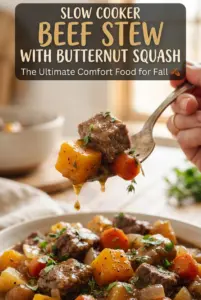
Beer and horseradish beef stew has the kind of deep, savory broth that makes a cold-weather dinner feel complete without needing much beside it. The beef turns fork-tender, the potatoes soak up all that malty, oniony flavor, and the horseradish cuts through the richness at the finish so every spoonful stays lively instead of heavy. It’s the sort of stew that tastes even better on day two, which is usually how I know it earned its place in the rotation.
The trick here is building flavor in layers instead of relying on one big seasoning hit at the end. Browning the floured beef gives the stew body, tomato paste adds a dark, almost caramel note, and the brown ale brings depth that plain broth can’t match. The horseradish goes in twice: some in the stew for backbone, and the rest stirred into sour cream for a sharp, creamy topping that wakes everything up.
Below, I’ve included the small details that matter most: when to stop simmering the meat and add the vegetables, how to keep the stew from tasting flat, and what to swap if you don’t have brown ale on hand.
The beef got perfectly tender and the horseradish in the sour cream was the best part — it made the whole bowl taste rich without being heavy. I used the full simmer time and the potatoes held their shape.
Save this beer and horseradish beef stew for the nights when you want a hearty, malty broth and that sharp sour cream finish in one bowl.
The Part Where the Beef Gets Its Backbone
The biggest mistake in a stew like this is rushing past the browning stage. If the beef goes into the pot pale, the broth can taste flat no matter how long it simmers. Tossing the cubes in flour before they hit the oil helps them take on a deeper crust and gives the finished broth a little body without turning it pasty.
Brown the beef in batches and leave space between the pieces. If the pan crowds up, the meat steams and you lose the dark bits that should be clinging to the bottom of the pot. Those browned bits are what make the beer work harder for you later.
What the Beer, Horseradish, and Sour Cream Are Each Doing Here
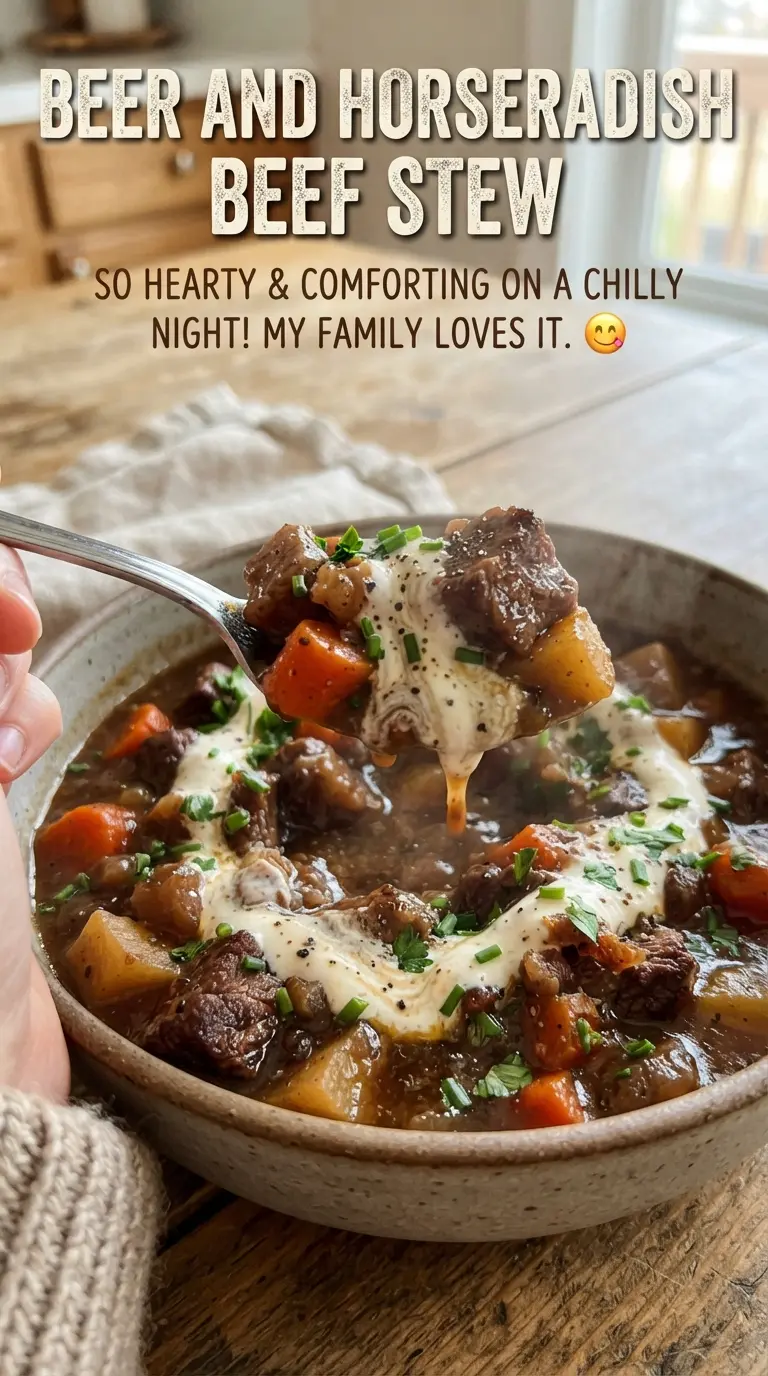
- Brown ale or amber beer — This gives the stew a malty depth that water or extra broth can’t fake. Use something you’d actually drink, but don’t reach for anything too bitter or aggressively hoppy, since that can turn the broth sharp.
- Prepared horseradish — This is the ingredient that keeps the stew from tasting dull. The amount in the pot builds background heat, while the spoonful in the sour cream gives you that fresh, nose-tingling finish right at the table.
- Tomato paste — A minute in the hot onion pan changes its flavor from raw and tinny to rich and concentrated. That little step matters because it rounds out the beer and makes the broth taste cooked, not just mixed.
- Sour cream — Don’t stir it straight into the pot or it can separate. Keeping it as a topping gives you a cool, creamy contrast against the hot stew and lets the horseradish stay bright instead of fading into the background.
- Potatoes and carrots — Add them later so they hold their shape. If they go in at the beginning, the potatoes break down too soon and the carrots lose their clean sweetness.
How to Build the Stew So the Broth Stays Rich, Not Muddy
Seasoning and Browning the Beef
Salt and pepper go on first, then the flour. That coating should look thin and dusty, not clumpy, or it’ll thicken unevenly later. Heat the oil until it shimmers and brown the beef in batches until the surfaces are deep mahogany; if you pull it too soon, the stew misses the savory base that carries the whole pot.
Softening the Onion and Cooking Out the Tomato Paste
Once the beef comes out, cook the onion until it turns translucent and picks up a little color from the pan. Garlic only needs about a minute; any longer and it can burn when the beer goes in. Stir the tomato paste through the onions and let it darken slightly before adding liquid, because raw tomato paste tastes flat and metallic.
Deglazing with Beer and Simmering Low
Pour in the beer and scrape the bottom until the pan sounds clean when you stir. Then add broth, horseradish, Worcestershire, brown sugar, thyme, and the beef. Keep the simmer gentle, not lively; a hard boil will toughen the meat and make the broth cloudy instead of glossy.
Adding the Vegetables at the End
Wait until the beef is already tender before the potatoes and carrots go in. They only need the last 45 to 60 minutes, just until a knife slips into the potatoes without resistance and the carrots are soft at the edges but still intact. If you add them too early, they’ll dissolve before the beef is ready.
How to Adapt This When You Need a Different Finish
Gluten-Free Version
Swap the all-purpose flour for a gluten-free flour blend that’s meant for thickening, or skip the dredge and stir in a cornstarch slurry at the end if you want a cleaner broth. You’ll lose a little of the early crust on the beef, but the stew still turns out hearty and stable.
No Beer, Still Deep and Savory
Use extra beef broth plus 1 tablespoon balsamic vinegar for some of the beer’s tang and complexity. The stew will taste a little less malty, but the vinegar gives the broth the lift it needs so it doesn’t fall flat.
Extra-Horseradish Finish
If you like a sharper bite, add an extra teaspoon of prepared horseradish to the sour cream topping, not the stew itself. That keeps the heat bright and fresh instead of burying it in the simmer.
Make-Ahead and Reheat Later
This stew holds up well for a next-day dinner, and the broth often tastes even better after a night in the fridge. Keep the sour cream topping separate and add it after reheating so it stays smooth instead of breaking.
Storage and Reheating
- Refrigerator: Store covered for up to 4 days. The broth thickens as it chills, which is normal.
- Freezer: Freeze without the sour cream topping for up to 3 months. The potatoes can soften a little after thawing, but the flavor holds up well.
- Reheating: Warm gently on the stove over low heat with a splash of broth if needed. A hard boil can make the beef tougher and can split the dairy topping, so add the horseradish sour cream only after the stew is hot.
Answers to the Questions Worth Asking

Beer and Horseradish Beef Stew
Ingredients
Equipment
Method
- Season the beef with salt and black pepper, toss with the flour, and brown in batches in hot vegetable oil in a Dutch oven or cast iron skillet until well browned.
- Cook until the beef releases easily and the flour turns golden-brown, then transfer browned beef to a plate and repeat with remaining batches.
- Add the chopped onion to the pot and cook for 5 minutes, stirring, until softened.
- Stir in the minced garlic and tomato paste and cook for 1 minute, until fragrant and darkened slightly.
- Pour in the beer and scrape the bottom of the pot to loosen the browned bits, then stir until the liquid is uniform.
- Add beef broth, 2 tablespoons prepared horseradish, Worcestershire sauce, brown sugar, and dried thyme, then return the browned beef to the pot and stir.
- Cover the pot and simmer for 1 hour 45 minutes to 1 hour 30 minutes at a gentle bubbling level until the beef is becoming tender (visual cue: steady simmer, occasional bubbles through the lid).
- Add the cubed potatoes and sliced carrots, then simmer for 45 to 60 minutes until the potatoes are tender and the carrots are soft (visual cue: a fork slides in easily).
- Mix the sour cream with the remaining prepared horseradish until smooth and pale with a visible horseradish swirl.
- Ladle the stew into bowls and top each serving with a dollop of horseradish sour cream and chopped fresh chives.