Apple cider beef stew lands somewhere between a classic pot roast and a slow-simmered fall stew, with the kind of deep, savory gravy that clings to the beef and vegetables instead of pooling thinly at the bottom of the bowl. The apples don’t turn the dish sweet in a dessert-like way; they soften into the broth and give the stew a roundness that makes the beef taste richer and the carrots taste more like themselves.
The key is building flavor in layers. Browning the beef first gives you the base, then the cider goes in to loosen every caramelized bit from the pot before the broth joins in. A little apple cider vinegar keeps the stew from tasting heavy, while cinnamon and thyme add just enough warmth to notice without making it read like pie filling.
Below, you’ll find the timing that keeps the vegetables tender without falling apart, plus the one step that keeps the gravy glossy instead of muddy. If you’ve ever wanted a beef stew that tastes familiar but still has a little surprise in the bowl, this one earns its place.
The cider made the gravy taste rich and balanced, and the apples held their shape just enough to add little sweet-tart bites without turning mushy.
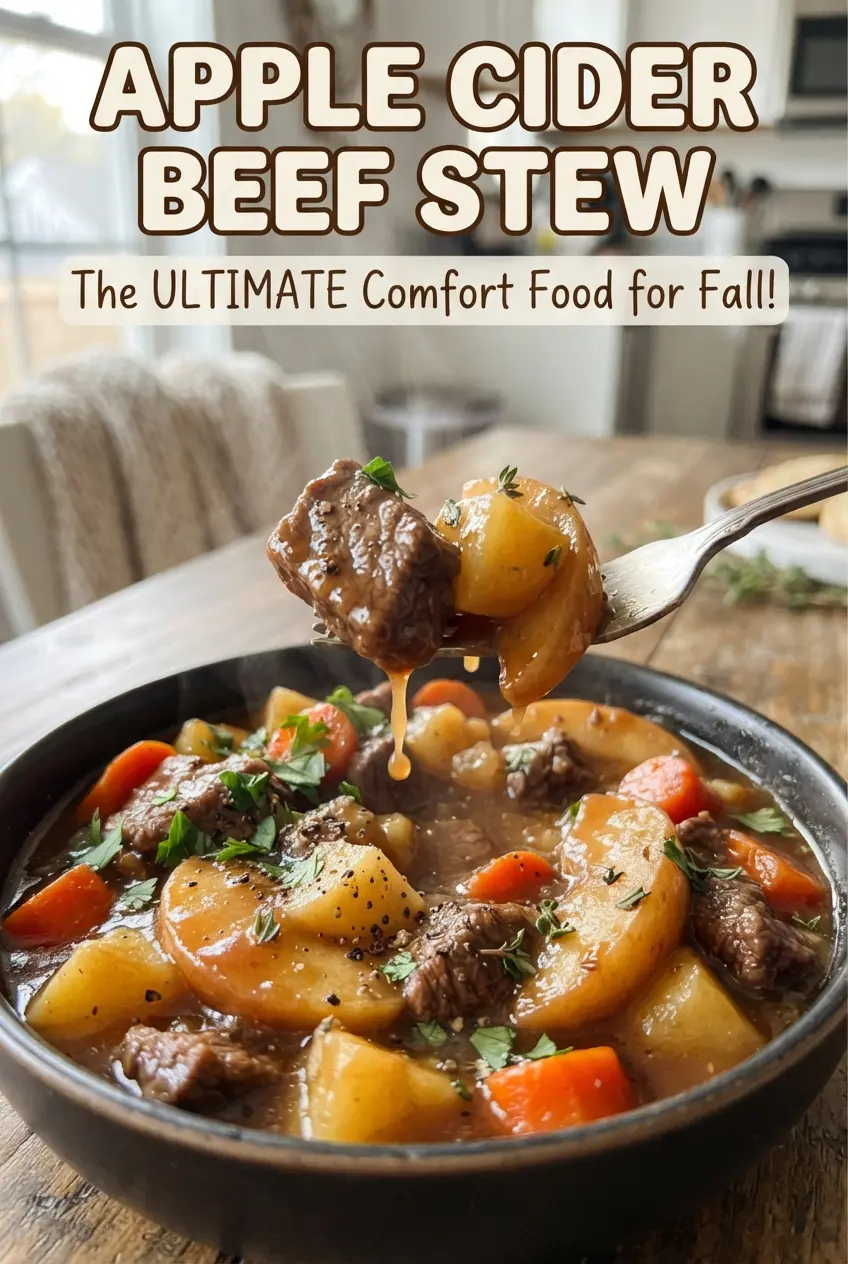
Apple Cider Beef Stew is the one to save when you want a beef stew with glossy cider gravy, tender chunks of beef, and sweet potatoes that hold their shape.
The Reason the Gravy Stays Rich Instead of Thin
The stew gets its body from three places at once: the flour-coated beef, the tomato paste, and the long simmer. Flour on the beef does more than help it brown. It also thickens the cooking liquid gradually as the stew simmers, which is why this pot ends up with a cohesive gravy instead of a broth that feels separate from the meat.
Apple cider brings sweetness and acidity, but it also adds enough natural fruit body to make the sauce taste fuller. The trick is balancing that cider with beef broth and vinegar. If you skip the vinegar, the stew can taste flat. If you add the apples too early, they collapse before the beef is tender and leave the pot looking muddy.
What Each Ingredient Is Actually Doing in This Pot

- Beef chuck — This is the cut that gives you spoon-tender beef after a long simmer. Leaner stew meat can work, but it won’t give you the same silky texture or rich broth.
- Apple cider — Use real cider, not apple cider vinegar and not apple juice if you can avoid it. Cider has the gentle tang and depth that keeps the stew from tasting sugary.
- Apple cider vinegar — This sharpens the whole pot and keeps the cider from feeling one-note. It doesn’t make the stew sour; it just lifts the beef and vegetables.
- Sweet potatoes and carrots — They bring sweetness and body, but they also need staggered cooking. Add them after the beef has already softened so they stay intact.
- Apples — Choose firm apples like Honeycrisp, Pink Lady, or Granny Smith. Soft apples disappear too fast and turn the gravy grainy.
- Tomato paste — It deepens the color and adds a slow-cooked savoriness that cider alone can’t provide. Let it cook for a minute so it loses its raw edge.
Building the Stew in the Right Order
Brown the Beef in Batches
Pat the beef dry, season it, and toss it in flour before it hits the pan. Then brown it in batches in hot oil so the pieces sear instead of steam; if the pot gets crowded, the beef will turn gray and the bottom of the stew won’t develop much flavor. You’re looking for a deep brown crust on several sides, not a full cook-through.
Cook the Aromatics Until They Smell Sweet
Onion goes in next and needs the full five minutes to soften and pick up the browned bits left behind by the meat. Garlic and tomato paste only need about a minute, just long enough for the garlic to lose its raw edge and the tomato paste to darken a shade. If the paste sticks and scorches, the whole pot will taste bitter, so keep the heat at medium and stir often.
Use the Cider to Lift the Pan
Pour in the cider and scrape every brown bit from the bottom of the pot. That fond is where the stew gets its roasted depth, and cider works especially well here because it pulls up the flavor while adding its own fruit brightness. Once the broth, vinegar, thyme, cinnamon, bay leaves, and beef are in, the liquid should look rich but not overly thick yet.
Finish the Vegetables and Add the Apples Last
Let the beef simmer covered until it’s starting to turn tender, then add the sweet potato and carrots. They need about 30 minutes to soften without dissolving. The apples go in for the final 15 minutes only; that keeps them intact enough to add little sweet-tart pockets instead of melting away into the gravy.
Swap the Apples for Pears
Firm pears can stand in for the apples if that’s what you have, but they’ll taste a little softer and less tart. Keep the timing the same and use pears that still feel dense when you press near the stem, or they’ll collapse too quickly.
Make It Gluten-Free
Swap the all-purpose flour for a gluten-free flour blend that lists xanthan gum, or dust the beef lightly with cornstarch instead. Cornstarch gives a slightly glossier finish, while gluten-free flour behaves more like the original and gives the gravy a familiar body.
Make the Stew Less Sweet
Use a tart apple like Granny Smith and reduce the cider by 1/2 cup, replacing it with extra beef broth. The stew will still have that apple-cider backbone, but the final flavor will lean more savory than sweet.
Make It Ahead for Better Flavor
This stew tastes even better after a night in the fridge because the cider, thyme, and beef settle into each other. Cook it all the way through, cool it quickly, then reheat gently the next day so the apples keep their shape and the sauce doesn’t break.
Storage and Reheating
- Refrigerator: Store for up to 4 days. The gravy thickens as it chills, and the apples soften a bit more.
- Freezer: Freeze for up to 3 months. The beef and sauce freeze well, though the apples and sweet potatoes will be softer after thawing.
- Reheating: Warm it slowly over low heat on the stove with a splash of broth if needed. A hard boil can make the beef tighten up and can push the apples past their best texture.
Questions I Get Asked About This Recipe
Apple Cider Beef Stew
Ingredients
Equipment
Method
- Season the beef chuck cubes with salt and black pepper. Toss until the cubes look evenly coated.
- Toss the seasoned beef with all-purpose flour. Brown in batches in olive oil so the pieces develop deep color, not steam.
- Cook the diced onion for 5 minutes in the Dutch oven. The onion should soften and turn slightly translucent.
- Add the minced garlic and tomato paste and cook for 1 minute. Stir until fragrant and darkened at the edges.
- Pour in the apple cider and scrape the bottom of the pot. Loosen browned bits to make a glossy base.
- Add the beef broth, apple cider vinegar, dried thyme, ground cinnamon, bay leaves, and the browned beef. Stir to submerge the meat.
- Cover and simmer for 1 1/2 hours. Maintain a gentle bubble so the stew thickens while the beef becomes tender.
- Add the cubed sweet potato and sliced carrots. Stir and simmer for 30 minutes until the vegetables are nearly tender.
- Add the apple chunks and simmer for 15 minutes more. Watch for apples to soften while still holding shape.
- Remove the bay leaves before serving. The stew should look thick and evenly glossy.