Deep, slow-simmered beef stew gets its best flavor when every part of it is given a chance to brown first. The mushrooms turn golden in butter before anything else touches the pot, the beef develops a dark crust in batches, and the broth picks up all those browned bits when the wine goes in. The result is a stew with a rich gravy, tender beef that holds together instead of shredding apart, and vegetables that taste like they belong there instead of floating in from the side.
The flour on the beef does two jobs at once: it helps the cubes sear properly and it gives the braising liquid just enough body without turning it pasty. Tomato paste, soy sauce, and dried thyme round out the broth so it tastes full and savory all the way through, not flat or muddy. Adding the mushrooms later keeps them meaty instead of soft and washed out.
Below, I’ve broken down the two spots where this stew usually goes wrong: getting the browning right and knowing when the vegetables should go in. There’s also a simple note on what to swap if you need to skip the wine.
The mushrooms stayed meaty, the beef got tender without falling apart, and the gravy thickened up beautifully after that long simmer. My husband kept going back for “just one more bowl.”
Save this beef stew with mushrooms for the kind of night when you want a deeply savory gravy and fork-tender beef.
The Trick to Browning the Mushrooms Before the Stew Starts
Most beef stews treat mushrooms like an afterthought, but they carry a lot of the finished flavor here. If you add them straight into the braise, they give up water and turn soft before they ever have a chance to taste like much. Browning them first in butter and a little oil concentrates their flavor and gives the stew those deep, earthy edges that make each spoonful taste fuller.
The other reason this matters is texture. Golden mushrooms hold their shape much better through the long simmer, while pale or undercooked mushrooms disappear into the gravy. Use a wide pan if you have one, and keep the heat high enough that the pan sizzles instead of steams. If the mushrooms crowd the pan, they’ll leak liquid and you’ll lose the color you’re trying to build.
What Each Ingredient Is Actually Doing in This Stew
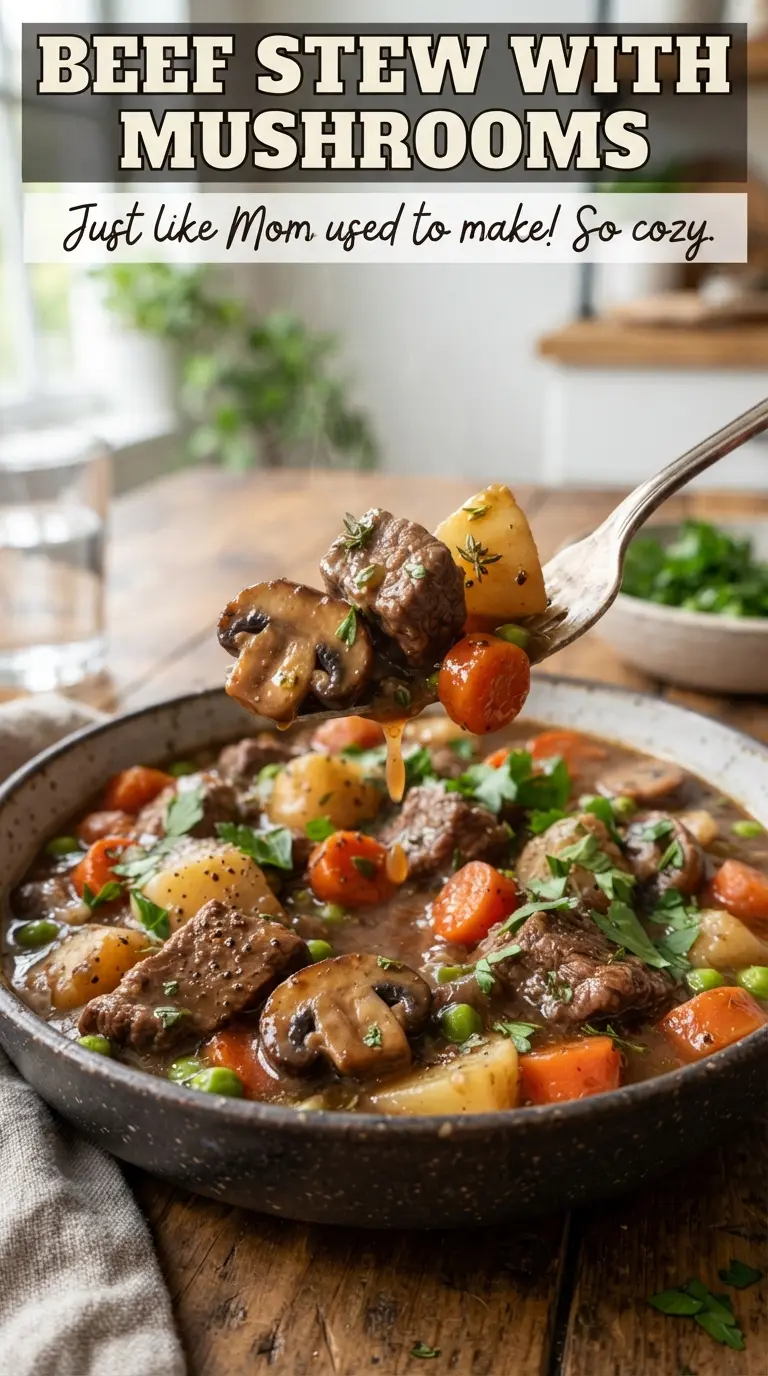
- Beef chuck — This cut has enough fat and connective tissue to turn tender over a long simmer. Leaner beef will dry out before the broth gets deep enough.
- Cremini mushrooms — They bring a stronger, more savory mushroom flavor than white buttons and keep a meatier bite after cooking. If you use white mushrooms, the stew will still work, but the flavor will be lighter.
- Dry red wine — This lifts the browned bits off the bottom of the pot and adds acidity that keeps the gravy from tasting heavy. If you skip it, use extra beef broth with a splash of red wine vinegar at the end for brightness.
- Tomato paste and soy sauce — These are the quiet flavor builders. Tomato paste adds depth and a little sweetness once it cooks for a minute, and soy sauce boosts the stew’s savory backbone without tasting overtly like soy.
- Flour — It coats the beef so it sears better and helps thicken the braising liquid naturally. Don’t add extra flour later unless the stew needs it after simmering; overdoing it can make the broth dull.
- Potatoes and carrots — They go in late so they stay intact. Add them too early and the potatoes break down before the beef is tender.
Building the Stew So the Beef Stays Tender and the Gravy Stays Deep
Getting the Mushrooms Out of the Way First
Start with the mushrooms in butter and oil until they give off moisture, then keep going until the pan starts to show browned spots underneath. That extra color is the difference between mushrooms that taste roasted and mushrooms that taste boiled. Pull them out once they’re golden; they’ll finish in the stew later and keep a little bite.
Coating and Browning the Beef
Toss the beef with salt, pepper, and flour right before it hits the pan. The flour should look like a thin dusting, not a paste, or it’ll clump and burn. Brown the meat in batches and leave space between the cubes so they sear instead of steam; the pot may look less crowded, but the flavor will be much better for it.
Building the Base in the Same Pot
Cook the onion until it turns translucent and the edges start to soften, then add the garlic and tomato paste just long enough to take the raw edge off. When you pour in the wine, scrape the bottom until the stuck-on brown bits dissolve into the liquid. That’s where a lot of the stew’s flavor lives, so don’t rush this part or leave anything behind.
Letting the Stew Simmer to the Right Texture
Once the broth, soy sauce, thyme, bay leaves, and beef are in, keep the heat low enough that you see only gentle bubbles. A hard boil will tighten the meat and can make the broth cloudy. After about 1 3/4 hours, the beef should start yielding when pressed with a spoon, and then the potatoes, carrots, and mushrooms can go in to finish without falling apart.
Skip the Wine and Keep the Depth
Use an extra 1/2 cup beef broth plus 1 teaspoon red wine vinegar stirred in at the end. You’ll lose a little of the round, dark note that wine brings, but the vinegar restores the lift so the stew doesn’t taste flat.
Make It Gluten-Free
Swap the all-purpose flour for a gluten-free flour blend that can handle browning, or skip the flour and thicken the finished stew with a cornstarch slurry. The texture will be a touch lighter, but the flavor stays the same if you still brown the beef well.
Use Different Mushrooms for a Stronger Earthy Flavor
A mix of cremini and shiitake gives the stew a deeper, woodsy edge. Shiitakes bring more intensity, but they’re firmer and can dominate if you use too many, so keep them to about a third of the mushroom amount.
Storage and Reheating
- Refrigerator: Store in an airtight container for up to 4 days. The gravy thickens as it chills, which is normal.
- Freezer: Freezes well for up to 3 months. Cool it completely first and leave a little headspace in the container so the broth can expand.
- Reheating: Warm gently on the stove over low heat with a splash of broth or water if needed. Don’t boil it hard, or the beef can tighten up and the potatoes can break apart.
Questions I Get Asked About This Recipe
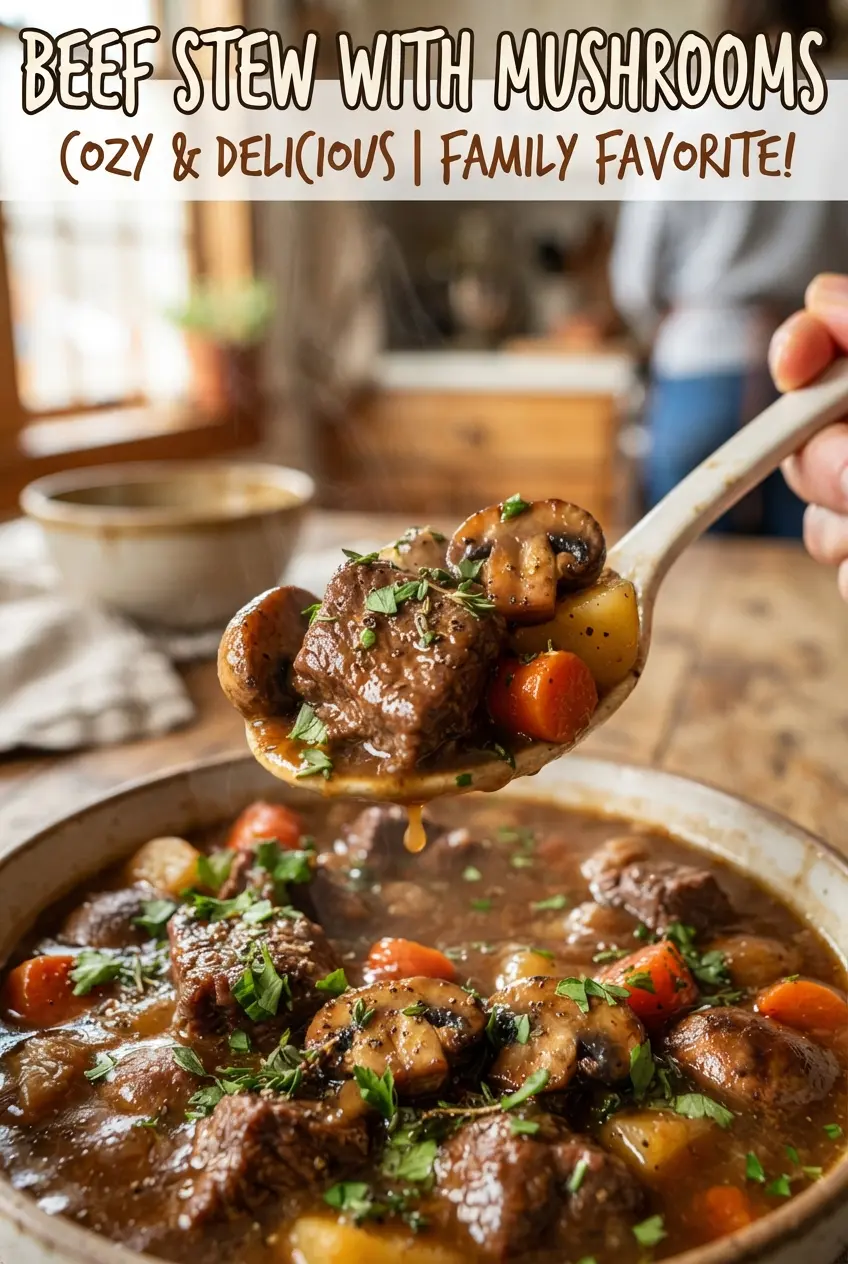
Beef Stew with Mushrooms
Ingredients
Equipment
Method
- Melt the butter with 1 tablespoon olive oil in a Dutch oven over medium-high heat, then add the cremini mushrooms. Cook for 8 minutes, stirring occasionally, until golden, then set aside.
- Season the beef chuck cubes with salt and black pepper, then toss them with the all-purpose flour until coated. Heat the remaining 2 tablespoons olive oil in the Dutch oven and brown the beef in batches, without crowding.
- Reduce heat slightly and cook the diced onion for 4 minutes until softened. Add the minced garlic and tomato paste and cook 1 minute, then deglaze the pot with the red wine.
- Pour in the beef broth, then stir in the soy sauce, dried thyme, and bay leaves. Add the browned beef, cover, and simmer for 1 3/4 hours, until the beef is tender.
- Uncover and add the cubed potatoes, sliced carrots, and the reserved mushrooms. Simmer for 45-60 minutes, until the potatoes and carrots are tender and the gravy thickens.
- Remove the bay leaves and serve the stew hot, with all solids coated in the rich sauce.