Scottish beef stew settles into the bowl with deep, beefy richness, a thick gravy, and the kind of spoon-tender texture that makes a second helping feel inevitable. The pearl barley gives it body without turning it heavy, and the turnip and carrots bring a gentle sweetness that keeps the whole pot balanced. It tastes like it’s been simmering all afternoon, because it has, but most of that time is hands-off.
The part that matters most is the browning. Dusting the beef with flour before it hits the pan helps the stew thicken later, but only if you let the meat actually take on color in batches. Crowding the pan steams the beef instead of searing it, and that brown fond on the bottom is what gives the broth its depth once the ale goes in. I also like adding the barley later, after the beef has already started to soften, so it keeps its shape and doesn’t turn mushy.
Below, you’ll find the small decisions that make this stew work: when to add the vegetables, how to keep the broth from tasting flat, and what to do if you need to swap the ale or make it ahead.
The beef turned meltingly tender and the barley held its bite. I used the Scottish ale and the broth had this deep, savory flavor that tasted like it cooked for hours.
Save this Scottish beef stew for the nights when you want tender beef, pearl barley, and a rich ale-kissed broth in one pot.
The Secret to Keeping the Beef Tender While the Barley Finishes
Beef chuck is the right cut here because it has enough connective tissue to turn silky during a long simmer. Leaner beef goes stringy before the broth has time to build depth, and that’s where a lot of stews fall apart. The flour coating does two jobs at once: it helps the meat brown, and it gives the broth a little body as it cooks.
The trick is timing. The beef needs the first stretch of simmering on its own, with just the broth, ale, onions, and leeks, so it has time to soften before the barley and root vegetables go in. If you add the barley too early, it swells before the beef is ready and turns the pot thicker than it should be. Keep the simmer gentle enough that the surface barely moves; a hard boil tightens the meat and makes the broth cloudy instead of lush.
What Each Ingredient Is Actually Doing in the Pot
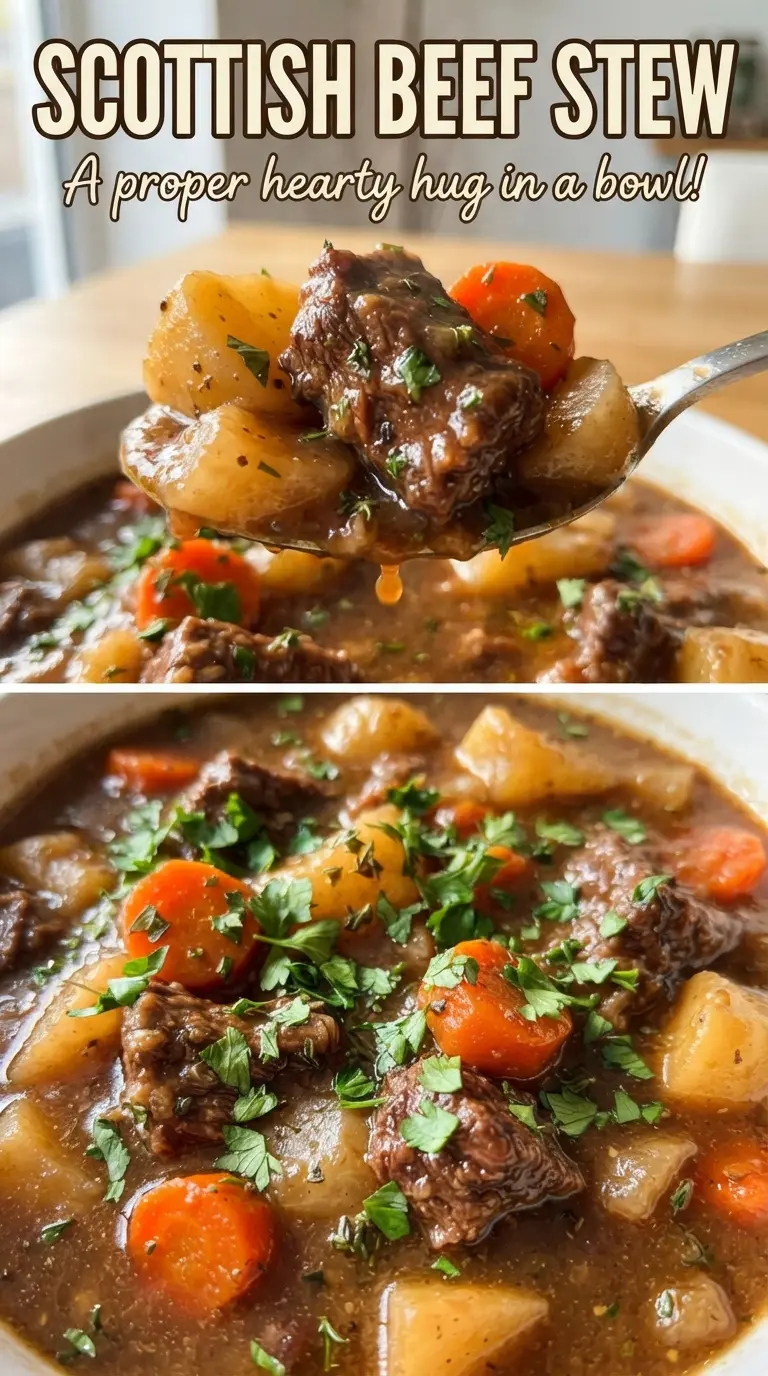
- Beef chuck — This is the backbone of the stew. It needs the long simmer to break down, and no quick-cook cut gives you the same soft, shreddable texture.
- Scottish ale — The ale adds malty depth and a little bitterness that keeps the broth from tasting flat. If you skip it, use extra beef broth and add a teaspoon of vinegar at the end for brightness.
- Pearl barley — Barley thickens the stew naturally and gives it that old-fashioned, hearty finish. Rinse it first so the broth stays clean rather than starchy.
- Turnip or swede — This is the earthy note that makes the stew feel Scottish instead of just generic beef and vegetable stew. Swede is sweeter; turnip is a little sharper.
- Leeks and onions — They melt into the broth and build a sweeter, rounder base than onions alone. Slice the leeks carefully and rinse them well, because grit will sink straight into the pot.
Building the Stew in the Right Order
Brown the Beef in Real Batches
Season the beef, toss it in flour, then brown it in the butter and oil a few pieces at a time. You want a dark crust on the outside, not gray meat that has only sweated in the pan. If the pot looks crowded, stop and do another round; that extra time pays off later in the broth. Leave the browned bits stuck to the bottom, because they’re part of the flavor.
Soften the Onions and Leeks Before the Liquid Goes In
Once the beef comes out, cook the onions and leeks until they go soft and a little sweet, about six minutes. Don’t rush this part to keep the vegetables from tasting sharp and raw in the finished stew. Stir often enough to keep the fond from burning, but not so constantly that nothing picks up color. The pot should smell savory and sweet before you add the ale.
Lift the Fond, Then Let the Simmer Do the Work
Pour in the ale and scrape the bottom until the pan is clean. That step pulls up all the browned flavor and spreads it through the broth. Add the beef broth, Worcestershire, thyme, and beef, then cover and let it simmer low and slow for an hour and a half. If the liquid boils hard, the beef tightens instead of relaxing, so keep it at a lazy bubble.
Add the Barley and Root Vegetables at the End
Stir in the barley, turnip, and carrots and keep simmering until the barley is tender and the beef falls apart easily, another 45 to 60 minutes. The vegetables go in late so they keep some shape instead of dissolving into the stew. Taste before serving and adjust the salt only after the broth has reduced, since the flavor concentrates as it cooks. Finish with parsley for a clean, fresh note.
Three Useful Ways to Adapt This Stew
Swap the Ale for Extra Broth
If you don’t want to cook with ale, use another cup of beef broth instead. The stew will be a little less malty and complex, so add a small splash of vinegar or a squeeze of lemon at the end to keep the flavor from feeling flat.
Make It Gluten-Free
Swap the all-purpose flour for a gluten-free flour blend that’s meant for coating and thickening. Use the same amount, then brown the beef the same way; the texture stays close, though the broth may thicken a little less than the original.
Skip the Barley for a Lower-Carb Bowl
Leave out the pearl barley and add a few more carrots or extra turnip if you still want the same hearty feel. The stew will be looser and more broth-forward, which is actually nice if you’re serving it with oatcakes or crusty bread.
Storage and Reheating
- Refrigerator: Keep in a sealed container for up to 4 days. The barley will keep absorbing broth, so the stew thickens a bit as it sits.
- Freezer: It freezes well for up to 3 months. Cool it completely first, then freeze in portions; the barley softens slightly after thawing, but the stew still holds up.
- Reheating: Warm gently on the stove over low heat with a splash of broth or water. Don’t boil it hard, or the beef can dry out and the barley can go past tender.
Answers to the Questions Worth Asking
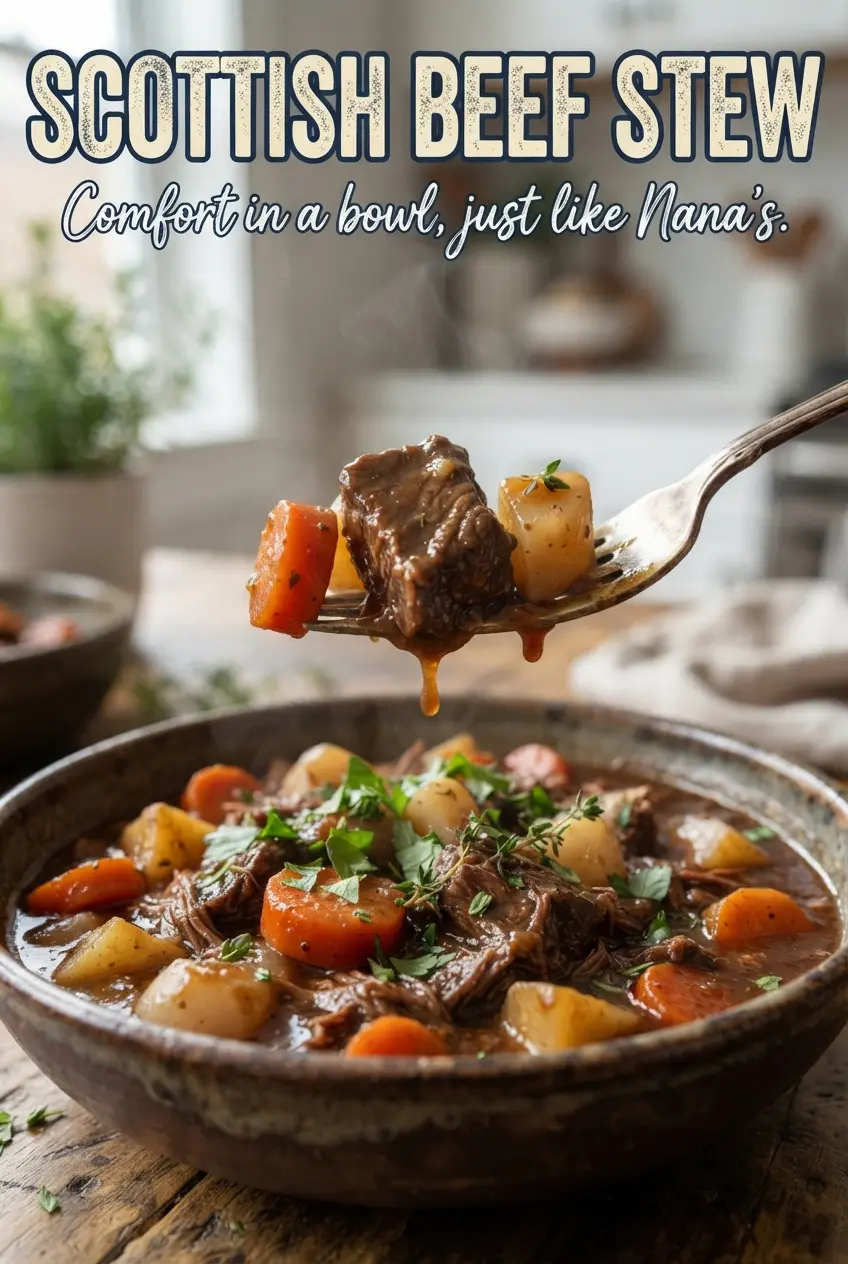
Scottish Beef Stew
Ingredients
Equipment
Method
- Season the beef cubes with salt and black pepper, then toss with the flour to coat evenly.
- Heat butter and vegetable oil in a Dutch oven over medium-high heat, then brown the beef in batches so it develops color on the outside without steaming, about 3 to 5 minutes per batch, until deep golden.
- Reduce heat to medium and add the onions and leeks to the same pot; cook 6 minutes, stirring, until soft and lightly golden.
- Pour in the Scottish ale (or extra beef broth) and scrape the bottom of the Dutch oven to loosen the browned bits.
- Add the beef broth, Worcestershire sauce, and dried thyme, then return the beef to the pot.
- Bring to a simmer, cover, and cook for 1 1/2 hours at a steady gentle simmer until the beef is partially tender, with visible small bubbles around the edges.
- Stir in the rinsed pearl barley, cubed turnip (or swede), and sliced carrots.
- Cover and simmer 45 to 60 minutes until the barley is tender and the beef pulls easily, thickening into a brown gravy texture.
- Taste and season to your preference, then top with chopped fresh parsley right before serving.