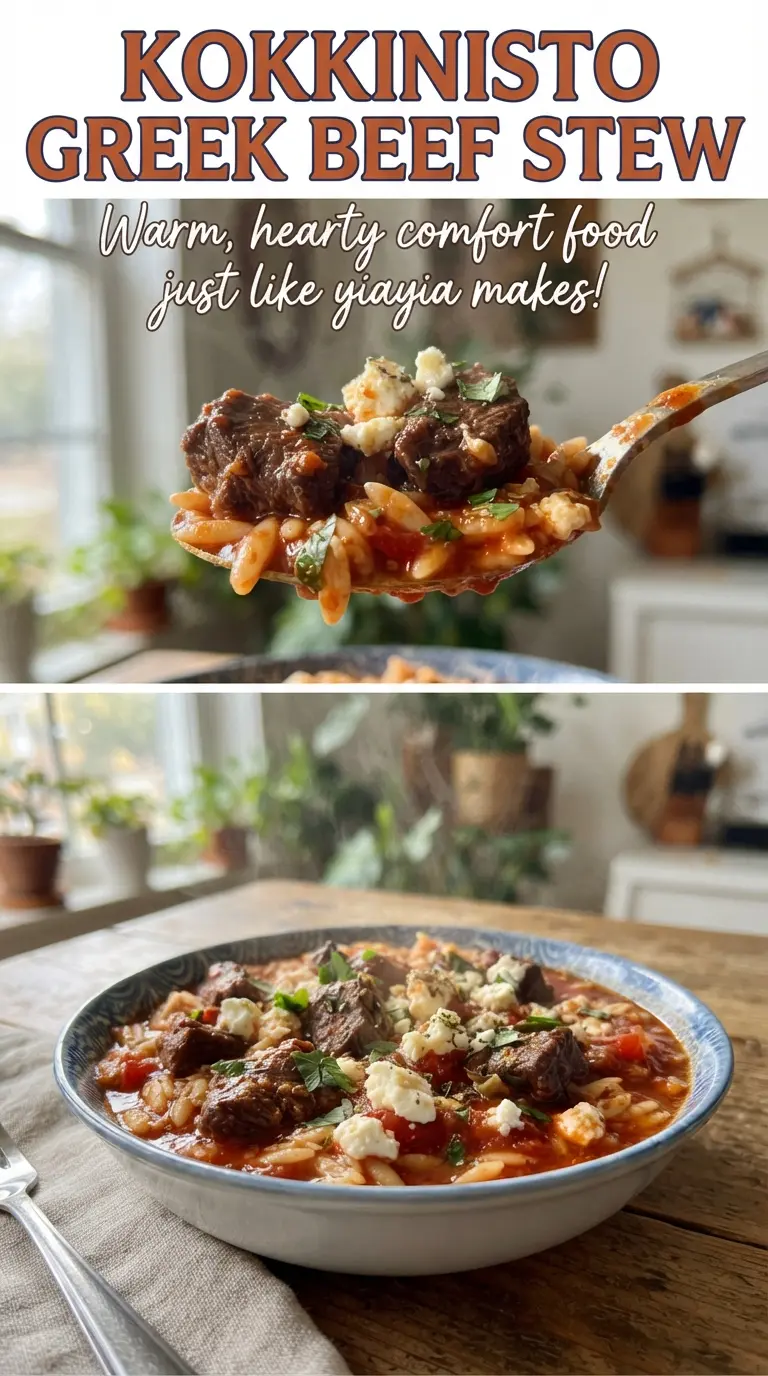
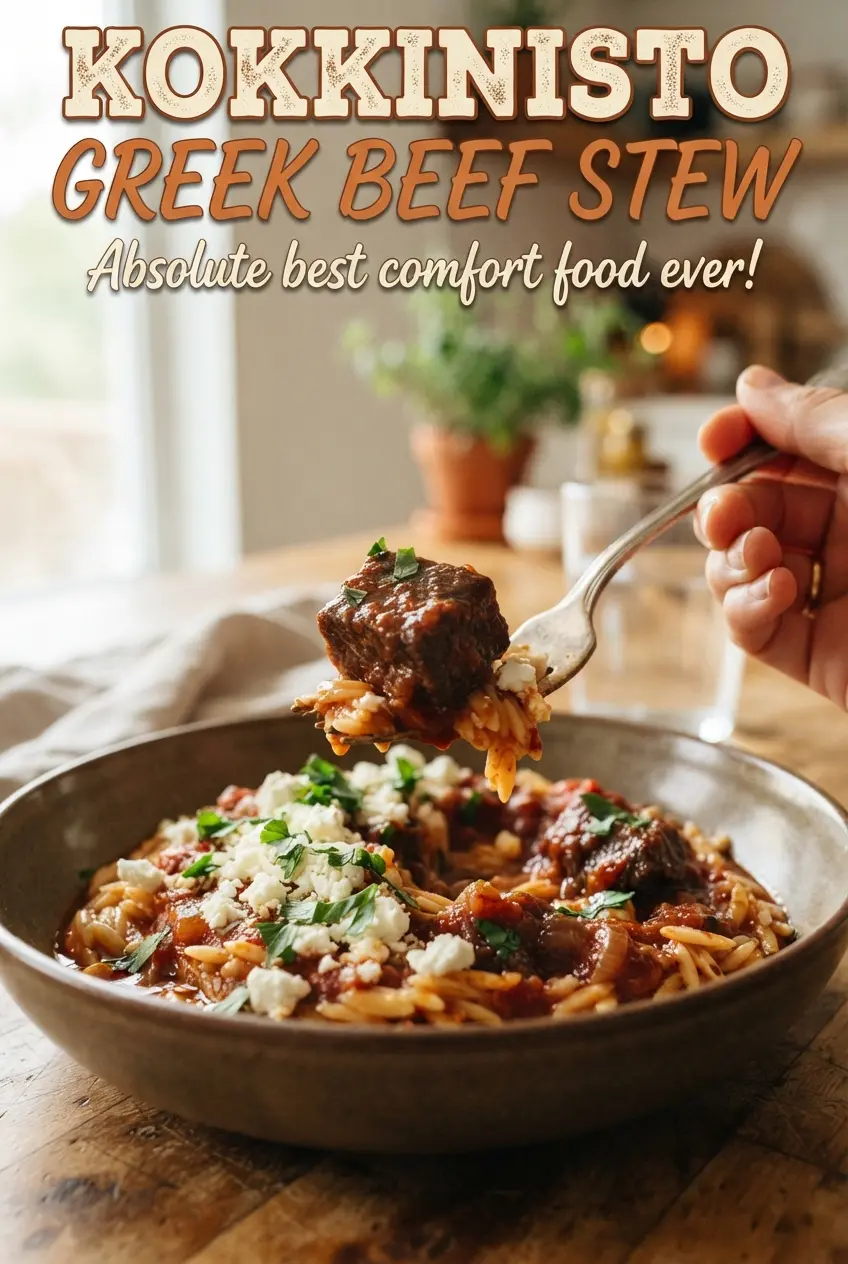
Kokkinisto is the kind of beef stew that gets its depth from patience, not complication. The beef turns spoon-tender in a tomato sauce that tastes round and savory, with cinnamon and allspice giving it that unmistakable Greek warmth without turning the dish sweet or heavy. Served over orzo or potatoes, it lands like a full meal in one bowl, with feta and parsley cutting through the richness at the end.
What makes this version work is the layering: the beef is browned first for a deeper base, then the onions and tomato paste cook long enough to lose their raw edge before the wine goes in. That short simmer matters because it pulls the browned bits off the pan and gives the sauce a head start before the long braise. The whole spices stay in the pot just long enough to perfume the sauce, then come out before serving so the flavor stays clean.
Below, you’ll find the small details that make a pot of Kokkinisto taste like it simmered all afternoon in the best possible way, plus the swaps that still keep the stew rich and balanced.
The sauce got thick and glossy, and the beef was fall-apart tender after two hours. The cinnamon and tomato were balanced perfectly, not sweet at all.
Save this Kokkinisto Greek beef stew for the night you want tender beef, a cinnamon-kissed tomato sauce, and feta over orzo.
The Browning Stage Is What Gives Kokkinisto Its Depth
The biggest mistake with beef stew is crowding the pan. If the cubes sit too close together, they steam and lose the dark crust that gives the sauce its backbone. Brown the beef in batches and let each piece sit untouched until it releases easily from the pan and the surface has turned a deep mahogany color.
The next part matters just as much. Tomato paste needs that minute with the onions and garlic so it darkens slightly and loses its raw edge. Then the wine goes in and scrapes up every browned bit from the bottom; those bits carry most of the flavor in the finished stew.
What the Cinnamon, Wine, and Tomato Are Doing Here
- Beef chuck — This is the right cut because it has enough connective tissue to turn silky during the long simmer. A leaner stew beef will work in a pinch, but it won’t get the same rich texture.
- Dry red wine — It sharpens the sauce and helps deglaze the pan. Use a wine you’d actually drink; a harsh wine stays harsh after cooking.
- Cinnamon stick, allspice, and bay leaves — These are what make kokkinisto taste like kokkinisto. Ground spices muddy the sauce, so keep the whole spices in the pot and remove them before serving.
- Crushed tomatoes and tomato paste — The paste gives concentration, while the crushed tomatoes build body. If you only have tomato sauce, the stew will be thinner and flatter unless you cook it down longer.
- Feta for serving — Don’t stir it into the pot. Sprinkle it on top at the table so it stays tangy and distinct against the warm sauce.
Let the Stew Braise Until the Beef Gives In
Building the Base
Cook the onions until they’re soft and translucent, not browned. That sweetness is what balances the tomatoes later. Stir in the garlic and tomato paste and let them cook for about a minute; once the paste darkens a shade and smells less sharp, it’s ready for the wine.
Deglazing and Simmering
Pour in the wine and scrape the bottom of the pot while it bubbles. Let it simmer for two minutes so the alcohol cooks off a bit and the liquid tastes rounder. When the tomatoes, water, spices, sugar, and beef go in, the liquid should just barely cover everything; if the pot looks dry, add a splash more water, not a big pour that will thin the sauce.
Slow Braise, Finished Cleanly
Keep the pot covered and simmer it gently until the beef is tender enough to pull apart with a spoon. If the heat is too high, the sauce can reduce too fast before the meat softens, so aim for a lazy bubble, not a hard boil. Pull out the cinnamon stick, bay leaves, and allspice berries before serving, then spoon the stew over orzo or potatoes and finish with feta and parsley.
How to Adapt This Stew Without Losing Its Character
Serve It Over Potatoes Instead of Orzo
Potatoes make the dish feel a little more rustic and turn it into a fork-and-knife supper. Use boiled or mashed potatoes under the stew, and keep the sauce a touch looser if that’s your plan, since the potatoes soak up more liquid than orzo.
Make It Dairy-Free
Skip the feta garnish and finish with extra parsley and a drizzle of olive oil instead. You lose the salty tang, so add a few flakes of finishing salt at the table if the stew needs a lift.
Use Lamb for a Stronger, Earthier Stew
Lamb gives the sauce a deeper, more savory edge that works well with the cinnamon and allspice. It cooks on the same timeline as beef chuck, but it brings more fat, so skim any excess from the surface before serving if the pot looks greasy.
Storage and Reheating
- Refrigerator: Keeps for 4 days. The sauce thickens as it chills, which is normal.
- Freezer: Freezes well for up to 3 months. Cool it fully first, then portion it into containers with some sauce around the beef so it doesn’t dry out.
- Reheating: Warm it gently on the stove over low heat, with a splash of water if needed. Don’t blast it in a hard boil or the beef can tighten up and the sauce can turn oily.
Answers to the Questions Worth Asking
Kokkinisto Greek Beef Stew
Ingredients
Equipment
Method
- Season the beef cubes with salt and black pepper. Heat olive oil in a Dutch oven and brown the beef in batches until well-browned on the outside, avoiding overcrowding.
- Continue browning in batches until all beef is browned. Turn only as needed to build color, then transfer beef to a plate.
- Add the diced onions to the pot and cook for 6 minutes, stirring occasionally, until soft. Add the minced garlic and tomato paste and cook for 1 minute.
- Pour in the dry red wine and simmer for 2 minutes, scraping the bottom of the pot to loosen browned bits. This creates a deeper red sauce.
- Add crushed tomatoes, water, cinnamon stick, allspice berries, bay leaves, sugar, and the browned beef to the pot. Stir to coat the beef in the sauce.
- Cover and simmer for 1 1/2-2 hours, until the beef is very tender and the sauce is thick. Skim any foam if it forms around the edges, and stir gently partway through.
- Remove the whole spices (cinnamon stick, allspice berries, and bay leaves) before serving. Taste the sauce and adjust seasonings only if needed.
- Serve the stew over cooked orzo or potatoes, then top with crumbled feta and parsley. The surface should look rich and red, not watery.