Autumn beef stew earns its place on the table when the broth turns glossy, the beef gets spoon-tender, and the vegetables hold just enough shape to keep every bite interesting. The sweet edge from apple cider and maple syrup doesn’t make it taste sugary; it rounds out the deep, savory base and gives the gravy that slow-cooked, just-right finish. Dried cranberries add a little lift at the end, which keeps the stew from feeling heavy.
The trick is building flavor in layers. Browning the beef in batches leaves browned bits in the pot, and that fond is what gives the broth its depth once the cider goes in. Tomato paste gets cooked with the onion and garlic long enough to lose its raw edge, and the flour on the beef helps the stew thicken without turning gluey. The vegetables go in later so the squash, parsnips, and carrots stay intact instead of dissolving into the sauce.
Below you’ll find the timing that keeps the stew rich but not muddy, plus a few smart swaps if you need to work with what’s in the pantry.
The gravy turned out silky and the beef was fork-tender after the full simmer. I loved how the cider and cranberries gave it a little brightness without making it sweet.
Save this autumn beef stew for the night you want tender chuck, maple-cider gravy, and vegetables that still have some bite.
The Browning Step That Gives This Stew Its Depth
The beef needs room in the pot. If you crowd it, the meat steams and turns gray before it browns, and that missing crust is what leaves a stew tasting flat. Work in batches and wait for each piece to release naturally before turning it; if it sticks, it isn’t ready yet. The flour coating helps the surface color and later thickens the broth, but only if the meat actually browns first.
Tomato paste and the brown bits on the bottom do a lot of the heavy lifting here. Cooking the paste with the onion and garlic for a minute takes away the raw edge, and the cider loosens the fond without scrubbing away the flavor. That combination is what makes the broth taste layered instead of just salty.
What Each Ingredient Is Actually Doing in the Pot
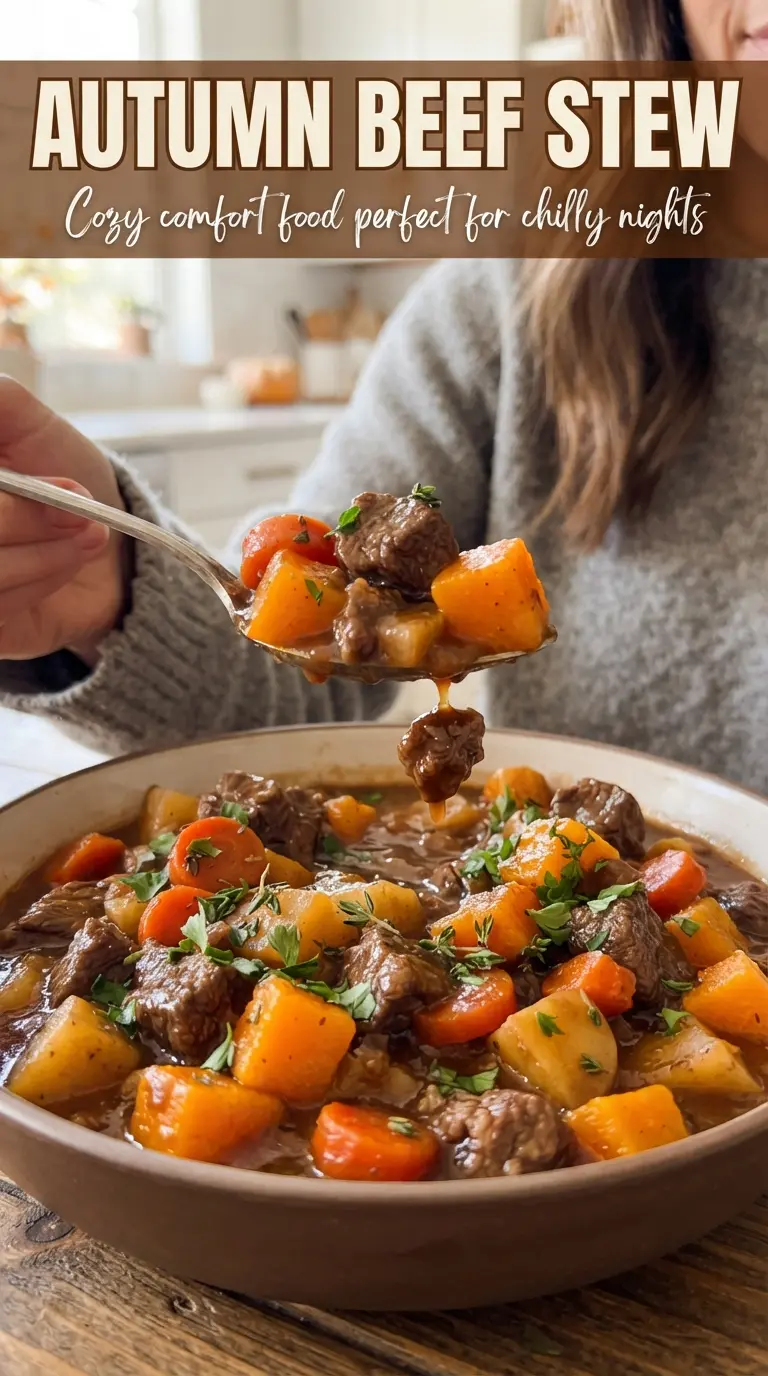
- Beef chuck — This is the cut you want for long simmering. It starts tough, then turns silky and rich after the connective tissue breaks down. Leaner stew meat won’t give you the same spoon-tender texture.
- Apple cider — Use real cider, not apple cider vinegar or an overly sweet juice blend. It adds acidity and fruit depth that keeps the stew from tasting one-note, and it softens the beef flavor in a way broth alone can’t.
- Maple syrup — Just a tablespoon is enough to round out the cider and bring out the sweetness of the squash and carrots. It shouldn’t taste like pancake syrup; it should read as warmth in the background.
- Butternut squash, parsnips, and carrots — These go in near the end because they cook at different rates but finish around the same time. Add them too early and the squash turns to mash before the parsnips are tender.
- Dried cranberries — They’re not just garnish. Stirred in at the end, they add a bright tart note and a little chew that cuts through the richness of the gravy.
How to Keep the Vegetables Tender Without Turning the Stew Muddy
Building the Base
Start with the beef, salt, pepper, and flour, then brown it in hot oil until you get deep color on more than one side. Move the meat around only when it’s ready to turn, and leave the browned bits in the pot after each batch. That fond is part of the sauce, not something to clean away.
Deglazing With Cider
Once the onion, garlic, and tomato paste have cooked down, pour in the cider and scrape the bottom with a wooden spoon. The pot should sizzle and release quickly, and the liquid will pick up color almost immediately. If the bottom feels scorched instead of browned, lower the heat before you add the cider or the whole pot will taste bitter.
Long Simmer, Late Vegetables
After the broth, maple syrup, sage, thyme, and beef go in, cover the pot and keep the heat low enough that the surface barely trembles. A hard boil will tighten the meat and break the vegetables later. Add the squash, parsnips, and carrots after the first long simmer so they cook through without disappearing into the gravy.
The Final Brightness
Stir in the cranberries during the last 10 minutes so they plump without falling apart. Taste the stew at the end and add salt only after the broth has reduced a bit; that’s when the seasoning shows its true strength. The finished stew should be thick enough to coat a spoon, with beef that pulls apart easily and vegetables that still look like themselves.
Three Ways to Adjust This Stew Without Losing What Makes It Good
Gluten-Free Version
Swap the all-purpose flour for a gluten-free all-purpose blend or dust the beef with cornstarch instead. Cornstarch gives a slightly silkier finish and less of a rustic body, but it still helps the beef brown and thickens the gravy well.
Wine Instead of Cider
Use dry apple wine or a dry white wine if you want a less sweet stew. You’ll lose some of the soft apple note, so add an extra half teaspoon of maple syrup only if the broth tastes sharp at the end.
Make It Dairy-Free and Heavier on the Veg
This recipe already fits dairy-free cooking, and you can push the vegetables a little farther by adding an extra cup of squash or carrots. The stew gets sweeter and more vegetable-forward, so keep the cranberries in place to balance it.
Storage and Reheating
- Refrigerator: Store for up to 4 days. The broth thickens as it sits, and the vegetables soften a little more.
- Freezer: Freezes well for up to 3 months. Cool it completely first, and leave a little space in the container for expansion.
- Reheating: Warm it gently on the stove over low heat, stirring now and then. A hard boil will make the beef tighten and can break down the squash too much, so go slow and add a splash of broth if the stew has thickened too much.
Answers to the Questions Worth Asking
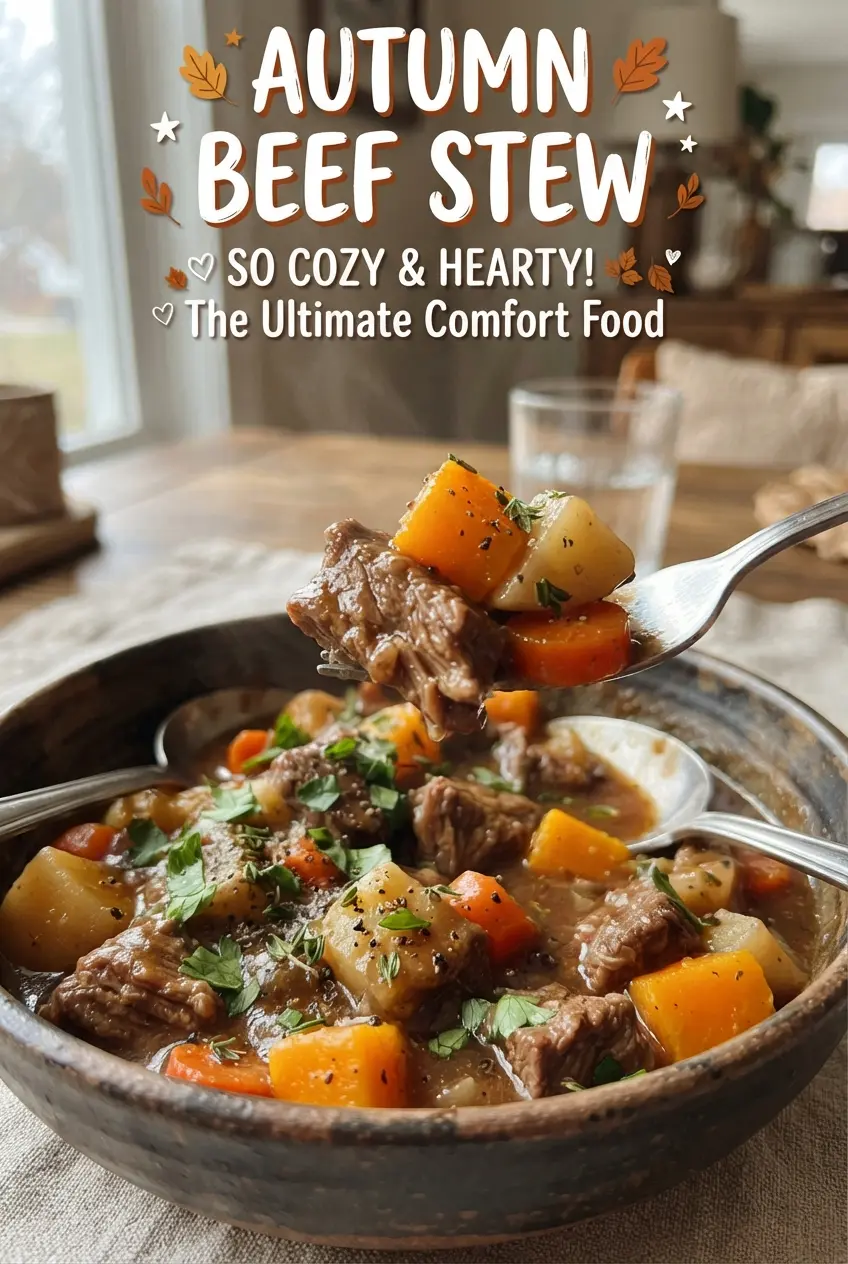
Autumn Beef Stew
Ingredients
Equipment
Method
- Season the beef chuck cubes with salt and black pepper, then toss with the flour to coat evenly.
- Heat the olive oil in a Dutch oven over medium-high heat and brown the beef in batches, cooking until well-browned on the outside.
- In the same Dutch oven, cook the diced onion until softened, about 5 minutes.
- Add the minced garlic and tomato paste and cook for 1 minute, stirring until fragrant.
- Pour in the apple cider and scrape the bottom of the pot to loosen browned bits.
- Stir in the beef broth, maple syrup, chopped sage, thyme leaves, and the browned beef, then bring the mixture to a simmer.
- Cover the Dutch oven and simmer at a gentle, steady bubble for 1 3/4 hours.
- Add the butternut squash, sliced parsnips, and sliced carrots, then simmer for 45 minutes until the vegetables are tender.
- Stir in the dried cranberries and simmer for the last 10 minutes to plump them slightly, then serve hot.