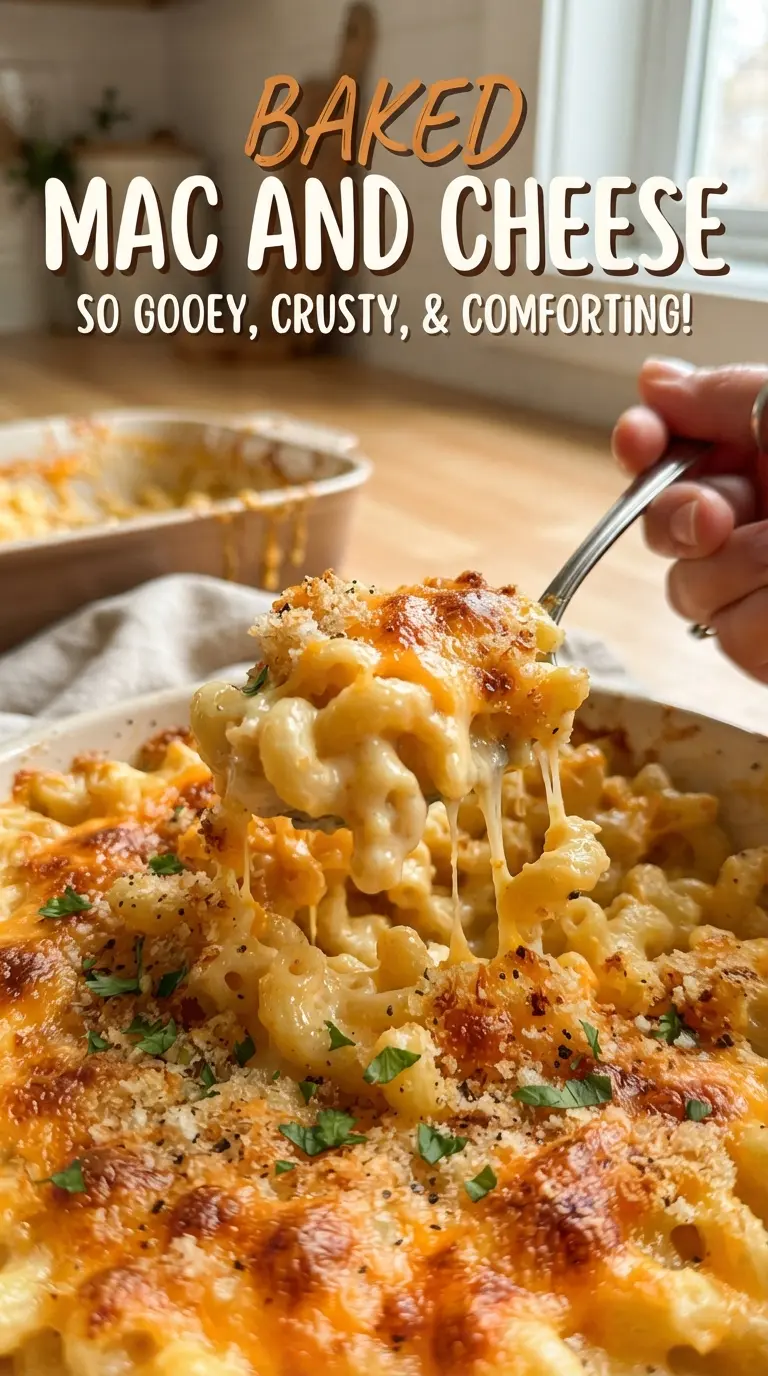
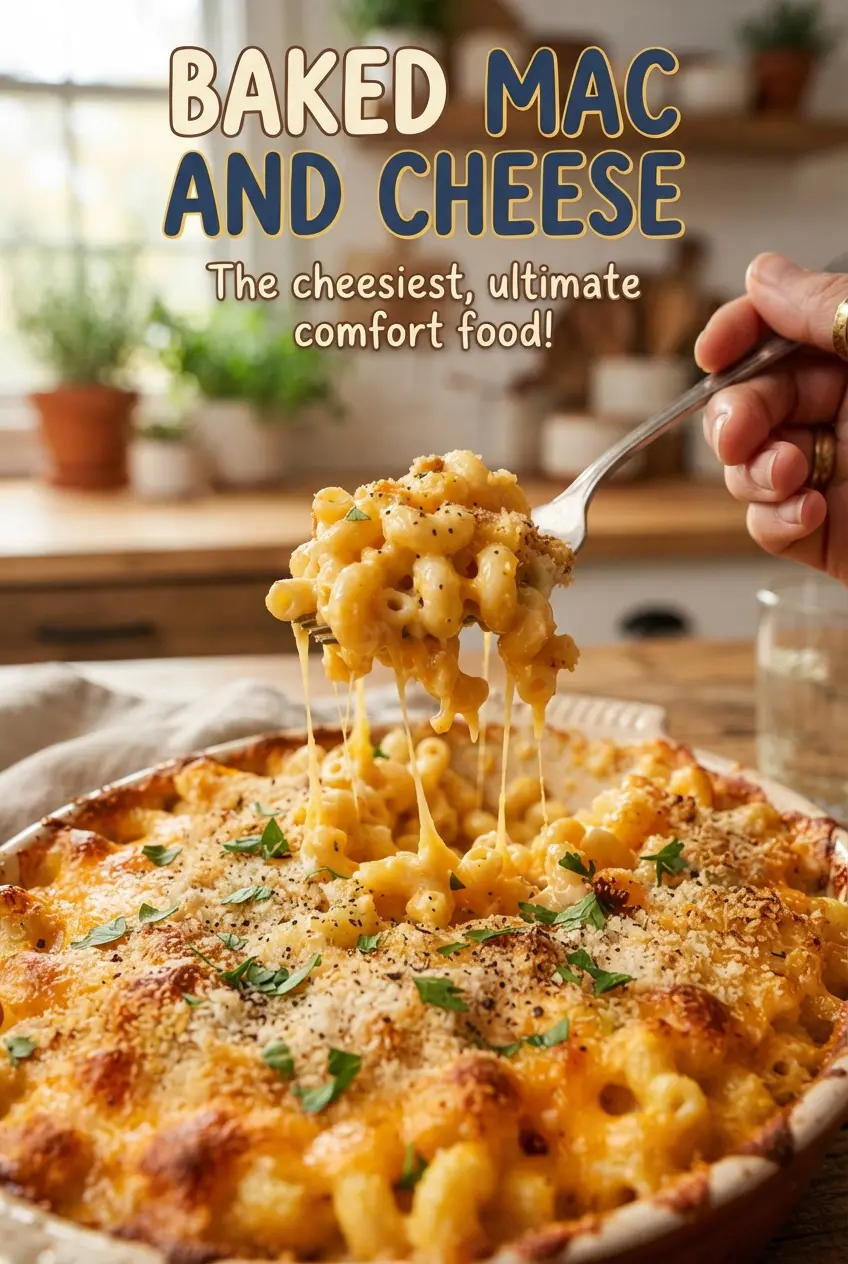
Baked mac and cheese earns its place on the table when the sauce clings to every noodle and the top turns deeply golden without drying out the middle. The best version isn’t just creamy; it has enough structure to slice, a little stretch from the cheese, and that browned crust that makes people fight for the corner pieces.
The key is building a sauce that starts as a proper roux and then gets thickened before the cheese goes in. That keeps the dairy smooth instead of grainy, and it gives the pasta something substantial to hold onto instead of sinking in a loose pool of milk. I also like the mix of sharp cheddar and Gruyere or Colby jack because cheddar brings the tang, while the second cheese keeps the flavor rounded and the texture melty.
Below, I’m walking through the parts that matter most: how thick the sauce should look before the cheese goes in, why the pasta needs to be undercooked, and how to avoid a greasy top or a soupy center. Those little details are what turn a decent pan of macaroni into the kind people ask for again.
The sauce coated the noodles perfectly, and the top baked into that crunchy-cheesy layer without the center turning dry. I used the Gruyere, and it gave the whole dish a deeper flavor than my usual version.
Save this baked mac and cheese for the nights when you want a creamy center, a browned cheese crust, and big stretchy scoops straight from the pan.
The Sauce Has to Thicken Before the Cheese Goes In
The mistake most people make is rushing the sauce and expecting the cheese to fix it later. It won’t. If the milk mixture is still thin when the cheese goes in, the finished mac turns loose and can separate in the oven. What you want is a sauce that lightly coats the back of a spoon and looks smooth, not watery, before any cheese touches the pan.
The pasta matters just as much. Cooking the macaroni two minutes under the package directions keeps it from going soft during baking. By the time it soaks up the sauce and finishes in the oven, it lands in that perfect middle ground: tender, but not mushy.
What Each Cheese Is Doing in the Pan
- Sharp cheddar — This is the backbone of the dish. It brings the sharp, familiar mac and cheese flavor and gives the sauce enough character to stand up to the milk and pasta. Pre-shredded works in a pinch, but block cheese melts smoother because it doesn’t carry anti-caking starch.
- Gruyere or Colby jack — Gruyere adds a nutty depth and stretches beautifully; Colby jack gives you a milder, creamier result. If you want a stronger baked top, use Gruyere. If you want a softer, kid-friendly flavor, Colby jack is the easier path.
- Evaporated milk — This is one of the quiet tricks in the recipe. It gives the sauce body without making it heavy, and it helps the bake stay creamy instead of turning grainy. Whole milk still matters here; lower-fat milk won’t give the same richness or stability.
- Dry mustard and smoked paprika — These don’t make the dish taste mustardy or smoky. They sharpen the cheese flavor and keep the sauce from tasting flat. Don’t skip them unless you absolutely have to.
Building the Bake So the Top Browns and the Middle Stays Creamy
Cooking the Roux Until It Smells Toasty
Melt the butter, whisk in the flour, and cook it for a full minute before adding the milk. You’re looking for a pale, smooth paste that smells slightly nutty, not raw and floury. If you add the milk too soon, the sauce can taste chalky later. Keep the heat moderate so the flour cooks without browning too fast.
Whisking in the Dairy Without Lumps
Add the whole milk and evaporated milk slowly, whisking as you go. The first splash will look thick and awkward; that’s normal. Keep whisking until the mixture turns smooth, then let it simmer until it thickens enough to cling to a spoon. If you rush this part, the sauce will bake up loose instead of creamy.
Melting the Cheese Off the Heat
Pull the pan off the burner before you stir in the cheese. High heat can make cheddar turn oily or grainy, especially if it’s already shredded and dry. Stir until the sauce looks glossy and fully melted, then fold in the pasta while the sauce is still warm and fluid. That helps every noodle get coated before it goes into the oven.
Baking Until Bubbling, Then Resting
Spread the mixture in the buttered dish, top it with the remaining cheese, and bake until the edges are bubbling and the top is deeply golden in spots. The center should still look creamy, not dry and crusted over. Let it rest for 10 minutes before serving or it will run all over the plate. That short rest helps the sauce settle into a sliceable, spoonable texture.
How to Adjust This Pan of Mac and Cheese for Different Tables
Make It Extra Sharp and Tangy
Swap part of the Colby jack for more sharp cheddar if you want a bolder, more grown-up flavor. The cheese sauce will be a little less mellow and a little more pronounced, which works well if the mac and cheese is serving as a side for rich meats or barbecue.
Use Gluten-Free Pasta
A sturdy gluten-free elbow pasta works here, but cook it just shy of al dente and watch it closely in the oven. GF pasta can soften fast, so the undercooked boil matters even more than usual. The sauce itself still works as written because the roux is what gives it structure.
Make It Richer for a Holiday Table
Fold in an extra half cup of cheese on top before baking if you want a thicker crust and a more indulgent finish. The center will still stay creamy as long as you don’t overbake it. This version is best when you want that dramatic cheese pull and a heavier side dish.
Storage and Reheating
- Refrigerator: Store covered for up to 4 days. The sauce firms up as it chills, but it stays creamy when reheated.
- Freezer: It freezes fairly well in a tightly wrapped baking dish or airtight container for up to 2 months, though the texture gets a little softer after thawing. Freeze in portions if you can.
- Reheating: Reheat covered in a 325F oven with a splash of milk stirred in over the top if it looks dry. The biggest mistake is blasting it uncovered, which dries out the edges before the center warms through.
Answers to the Questions Worth Asking
Baked Mac and Cheese
Ingredients
Equipment
Method
- Preheat the oven to 350°F and butter a 9x13-inch baking dish with a thin, even layer.
- Cook the elbow macaroni 2 minutes less than package directions, then drain well.
- In a Dutch oven, melt the butter and whisk in the flour, cooking for 1 minute to form a smooth roux with no dry flour streaks.
- Slowly whisk in the whole milk and evaporated milk, stirring until fully combined and glossy.
- Simmer the sauce for 5-6 minutes, whisking until it thickens, then season with salt, black pepper, dry mustard, and smoked paprika.
- Stir in 3 cups shredded sharp cheddar and 1 1/2 cups Gruyere (or Colby jack) until melted and smooth, then fold in the drained pasta until evenly coated.
- Pour the mac and cheese into the buttered dish and sprinkle the remaining cheese over the top in an even layer.
- Bake at 350°F for 25-30 minutes, until the center is bubbling and the top is golden, then rest 10 minutes before serving.