Glossy, jewel-bright cranberry sauce belongs on the pantry shelf just as much as it belongs beside a holiday roast. Canning it locks in that tart-sweet punch and gives you jars of whole berry sauce that hold their shape instead of turning into a loose, sugary jam. When it’s done right, the sauce sets softly in the jar, with enough body to spoon cleanly and enough brightness to cut through rich food.
The balance matters here. Cranberries bring the natural pectin and sharp flavor, sugar smooths the edge and helps the sauce thicken, and orange juice plus zest round everything out without making it taste flat. Bottled lemon juice isn’t there for flair; it keeps the acidity in the safe range for water bath canning, which is one of the details that separates a good pantry recipe from one you can trust for storage.
Below, I’ll walk through the part that usually trips people up: how thick the sauce should look before it goes into the jars, and what sealed jars should look like once they’ve cooled. That’s the difference between cranberry sauce that keeps beautifully and jars that look a little too thin on the shelf.
The sauce thickened right in the pot and the jars sealed cleanly. I opened one with roast chicken and it had that bright orange-cranberry balance without turning mushy.
Like this glossy whole berry cranberry sauce? Save it to Pinterest for pantry jars that seal cleanly and keep that bright orange-cranberry flavor all year.
The Part That Keeps Canned Cranberry Sauce from Turning Thin and Dull
The biggest mistake with canned cranberry sauce is stopping the cook too early. Cranberries need time to burst, release pectin, and thicken the syrup around them. If you ladle it into jars when it still looks watery, it may still be safe if the acidity is correct, but it won’t have that glossy, spoonable texture people expect when they open a jar later.
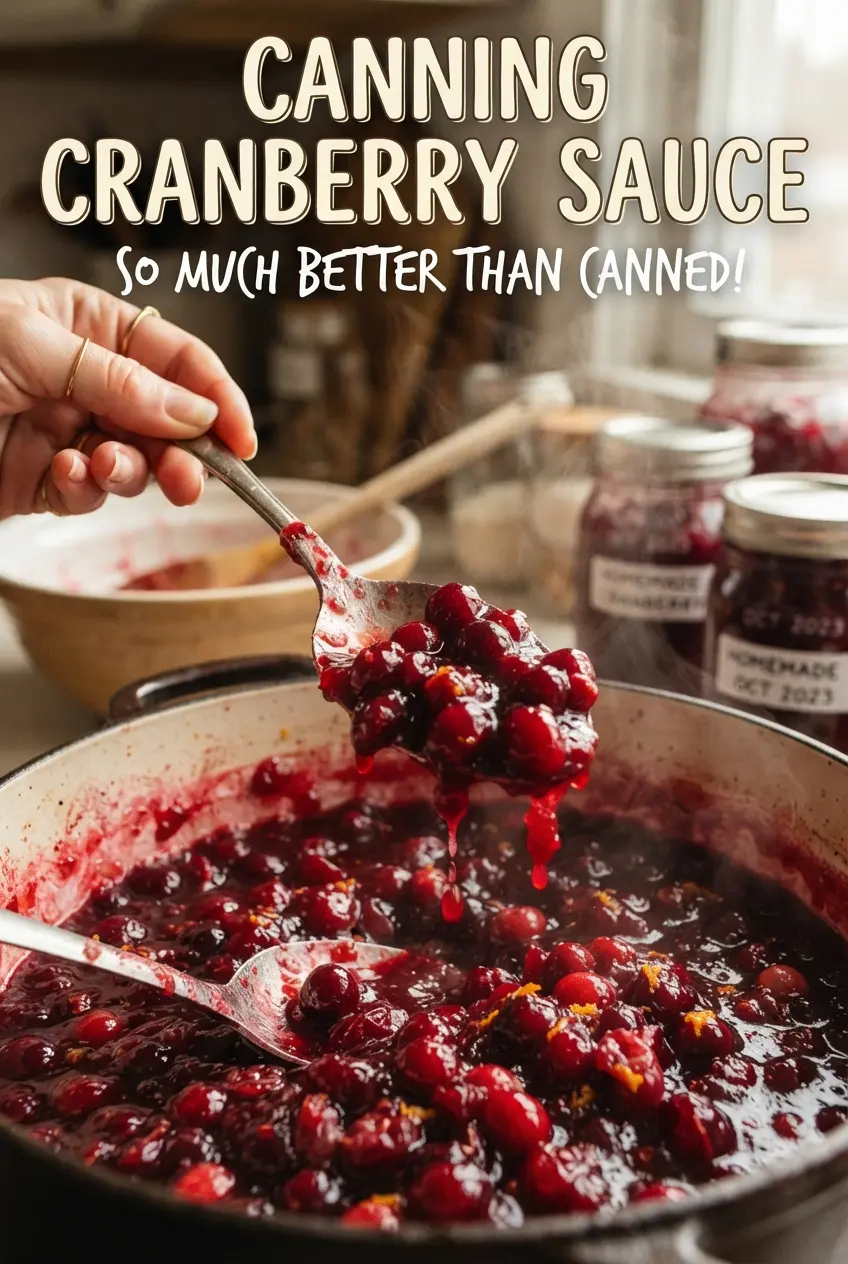
Bring the sugar, water, and orange juice to a full boil first so the sugar dissolves cleanly before the berries go in. That helps the sauce cook evenly instead of leaving grainy pockets at the bottom of the pot. Once the cranberries are in, keep the boil gentle and watch for a shift from floating berries in thin liquid to a saucy mixture where most of the berries have burst and the liquid looks slightly syrupy.
The last-minute orange zest matters because zest can turn bitter if it cooks too long. Stir it in after the sauce has thickened so the jar keeps that fresh citrus lift.
What Each Ingredient Is Actually Doing in the Jar
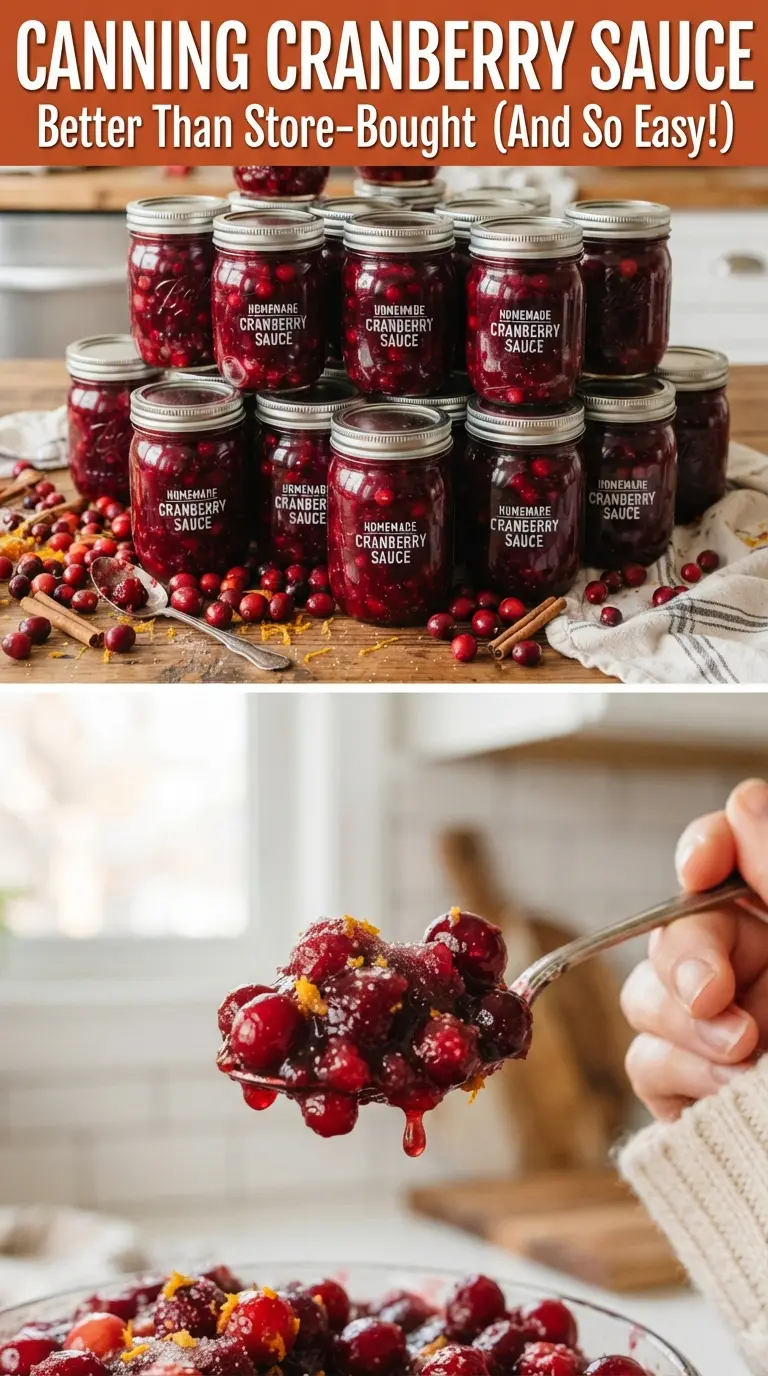
- Fresh cranberries — These are the backbone of the recipe. They bring the tartness, the color, and enough natural pectin to help the sauce set in a way that feels jammy without becoming stiff. Frozen cranberries work too; use them straight from frozen and expect a slightly longer cook time.
- Sugar — This softens the sharp cranberry bite and helps the sauce thicken as it cooks. Don’t cut it aggressively if you want the finished sauce to can and store with the right texture. Reducing it a little changes the balance, but it also changes the final body.
- Orange juice and zest — Orange juice rounds the cranberry flavor and gives the sauce a deeper fruit note, while zest adds the fresh aromatic finish. Fresh-squeezed juice tastes brighter, but bottled is fine here because the fruit is cooked and the citrus is supporting the canning liquid, not standing alone.
- Bottled lemon juice — This is the ingredient you don’t guess on. Bottled lemon juice gives reliable acidity for safe water bath canning, and fresh lemons can vary more than you’d want in a preserved recipe. The flavor disappears into the sauce, but the safety contribution doesn’t.
How to Cook It So the Sauce Thickens Before It Hits the Jars
Starting with the Syrup
Set the sugar, water, and orange juice over high heat and bring it to a true boil, stirring until the sugar disappears. You want the liquid clear and smooth before the cranberries go in, not sandy at the bottom. If the sugar isn’t dissolved first, the sauce can cook unevenly and leave a gritty texture in the finished jar.
Cooking Until the Berries Burst
Add the cranberries and bottled lemon juice, then keep the boil gentle for 10 to 12 minutes. The berries will start to pop and split, and the liquid will thicken from thin syrup into something glossy and spoonable. Don’t rush this stage; undercooked cranberries stay too firm and the sauce looks loose even after processing.
Finishing with Zest and Filling the Jars
Stir in the orange zest once the sauce has thickened, then ladle it into hot jars with 1/4-inch headspace. Wipe the rims clean and apply the lids fingertip tight, not cranked down hard. If the rims are sticky or the jars are overfilled, seals fail and you won’t know it until the jars cool.
Processing and Cooling Without Disturbing the Seal
Process the jars in a boiling water bath for 15 minutes, adjusting for your altitude. When the time is up, turn off the heat and let the jars rest in the canner for 5 minutes before lifting them out. That short rest helps prevent siphoning, where sauce bubbles out of the jars and leaves you with less liquid and a messy rim.
Make It with Honey for a Warmer Sweetness
You can replace part of the sugar with honey, but don’t swap all of it unless you want a darker, more floral sauce. Honey changes the flavor and can make the texture slightly looser, so keep at least some granulated sugar in the pot if you want the same set and shine.
Cranberry Sauce Without Orange
If you don’t want the citrus note, use water for the orange juice and keep the lemon juice exactly as written for safety. The finished sauce will taste sharper and more straightforward, which works well if you want a classic cranberry profile for savory dishes.
Lower-Sugar Version for Fresh Serving Only
You can reduce the sugar if you plan to eat the sauce right away or refrigerate it, but don’t use a reduced-sugar version for shelf-stable canning unless you’ve tested it with a reliable canning formulation. Less sugar means a tart, thinner sauce and less of that classic glossy finish.
How to Store the Sealed Jars
Refrigerator: Once opened, keep a jar refrigerated and use it within 2 to 3 weeks. Freezer: This sauce can be frozen in freezer-safe containers if you want a backup batch, but leave headspace because it expands. Reheating: Warm only the portion you need over low heat or in the microwave at short intervals; boiling it hard after opening can break down the texture and make it thinner than you want.
Answers to the Questions Worth Asking
Canning Cranberry Sauce
Ingredients
Equipment
Method
- Wash 12 half-pint jars, lids, and bands, then keep the jars hot by simmering them in water until you’re ready to fill.
- Set the lids and bands aside until needed, keeping everything clean and ready for hot packing.
- In a large pot, bring sugar, water, and orange juice to a boil, stirring until the sugar dissolves completely.
- Add fresh cranberries and bottled lemon juice, then boil gently for 10-12 minutes until the berries burst and the sauce thickens.
- Stir in orange zest and continue cooking just long enough to combine, then turn off the heat.
- Ladle the hot sauce into the hot jars, leaving 1/4-inch headspace.
- Wipe the jar rims clean, then apply lids and bands fingertip tight.
- Process the jars in a boiling water bath canner for 15 minutes, adjusting the processing time for altitude as directed for your location.
- Turn off the heat and let the jars rest in the canner for 5 minutes.
- Lift jars out and cool undisturbed for 24 hours.
- Check that the lids have sealed after cooling; store sealed jars in a cool, dark place for up to 1 year.
- Serve cranberry sauce chilled or at room temperature as a side with your meal.