Chicken thighs take on marinade better than almost any other cut, and this one gives you the kind of payoff that makes a plain package of chicken feel like a plan. The lemon and Dijon sharpen the flavor, the honey helps the surface caramelize, and the olive oil carries everything across the meat so every bite tastes seasoned instead of just sauced on the outside.
What makes this version work is the balance. Too much acid and the chicken can turn soft before it cooks; too little and the flavor stays flat. Here, the lemon juice and zest bring brightness without overpowering the meat, while garlic, oregano, thyme, and smoked paprika build a savory base that stands up to the grill or a hot skillet. Boneless, skinless thighs are forgiving, but they still need enough time in the marinade to pick up flavor.
Below you’ll find the one timing detail that keeps the texture right, plus a few smart swaps if you’re working with what you’ve got in the kitchen. The marinade is simple, but the small choices matter here.
I marinated the thighs for about 6 hours and they cooked up juicy with those caramelized edges everyone kept picking off the plate. The lemon, garlic, and Dijon tasted balanced, not too sharp, and the sauce clung nicely instead of sliding off.
Save these lemon-Dijon chicken thighs for the nights when you want a glossy, caramelized marinade that works on the grill or in a skillet.
The Part That Keeps Chicken Thigh Marinade From Tasting Flat
A good chicken thigh marinade needs more than acid and oil. It needs balance, and it needs enough salt to season the meat all the way through. The mistake I see most often is leaning too hard on lemon or vinegar, which makes the surface taste bright for a minute but leaves the rest of the chicken muddled and thin once it hits heat.
Dijon does a quiet but important job here. It helps emulsify the marinade so the oil, lemon juice, and honey cling together instead of separating into layers, and that means the chicken gets coated evenly. Honey also matters more than people think: it doesn’t just sweeten the marinade, it encourages browning and gives you those sticky-charred edges that make grilled thighs worth serving.
Marinating time matters too. Two hours is enough for flavor to move into the meat, but overnight can start to blur the texture if the lemon is too heavy-handed. This version is built to stay juicy while still tasting like something that was planned, not just tossed together.
What Each Ingredient Is Actually Doing Here

- Chicken thighs — Boneless, skinless thighs stay juicy over high heat and absorb marinade better than breasts. If you swap in chicken breast, cut the cook time and pull it as soon as it reaches temperature or it dries out fast.
- Olive oil — This carries the aromatics and helps the marinade coat every surface. A basic olive oil is fine here; save the expensive finishing oil for the table.
- Lemon juice and zest — Juice brings the acid, but zest brings the aromatic lemon flavor that doesn’t disappear in the heat. If you only use juice, the marinade tastes sharper and less layered.
- Dijon mustard — This is the emulsifier and the backbone. It keeps the marinade from breaking and gives the chicken a little savory depth without tasting mustardy once cooked.
- Honey — It softens the lemon and helps the chicken caramelize. Brown sugar can work in a pinch, but it won’t bring the same clean gloss.
- Garlic, oregano, thyme, smoked paprika, and pepper flakes — These are the seasoning spine. Fresh garlic matters here because it perfumes the marinade immediately, while the dried herbs hold up better than fresh ones during cooking.
The Marinade, the Rest Time, and the Heat
Whisking the Base Until It Stays Together
Start by whisking the oil, lemon juice, zest, Dijon, honey, garlic, and seasonings until the mixture looks thickened and slightly creamy. If it still looks separated, keep whisking; that emulsified texture is what helps the flavor cling to the chicken instead of sliding off in the bag or bowl. A little graininess from the Dijon is normal, but you don’t want obvious pools of oil sitting on top.
Coating the Chicken All the Way
Add the thighs and turn them until every piece is slicked with marinade. Use a bowl or bag that gives you enough room to move the chicken around, because cramped pieces don’t coat evenly. If the chicken sits in a puddle at the bottom, it will taste uneven no matter how long it marinates.
Letting the Marinade Do Its Work
Refrigerate for at least 2 hours and up to 24. Less than 2 hours and the flavor stays on the surface; much longer than 24 with this much lemon and you can start to lose that clean chicken texture. Before cooking, let the chicken sit out just long enough to lose the fridge chill so it sears instead of steaming.
Grilling or Searing for the Best Finish
Cook over medium-high heat, either on the grill or in a hot oiled skillet, until the outside is deeply browned with caramelized spots and the center reaches 165F. If the pan is too cool, the honey and mustard mixture turns sticky before it browns; if it’s too hot, the garlic can scorch. Rest the chicken for 5 minutes before serving so the juices settle back into the meat.
How to Adapt This When You Need a Different Finish
Dairy-Free and Naturally Gluten-Free
This marinade already fits both needs as written, as long as your Dijon is gluten-free. That makes it an easy go-to when you’re cooking for a mixed group and don’t want to build a separate marinade just to avoid a couple of ingredients.
Swap in Chicken Breasts
Chicken breast works, but it needs a shorter cook time and more attention at the pan or grill so it doesn’t dry out. Keep the marinade time the same, then cook just until the center reaches 165F and pull it right away.
Make It Spicier
Add another 1/4 teaspoon red pepper flakes or a pinch of cayenne. Keep the rest of the marinade the same so the heat doesn’t overpower the lemon and herbs; the point is a sharper finish, not a burnt-aftertaste kind of spice.
Storage and Reheating
- Refrigerator: Cooked chicken keeps well for 3 to 4 days. The surface stays flavorful, though the crisp edges soften a bit in storage.
- Freezer: Freeze the cooked chicken in an airtight container for up to 2 months. Thaw overnight in the fridge so it reheats evenly.
- Reheating: Warm it in a covered skillet over low heat with a splash of water or broth, or reheat gently in the oven. High heat dries out thighs faster than people expect once they’re already cooked.
Questions I Get Asked About This Recipe
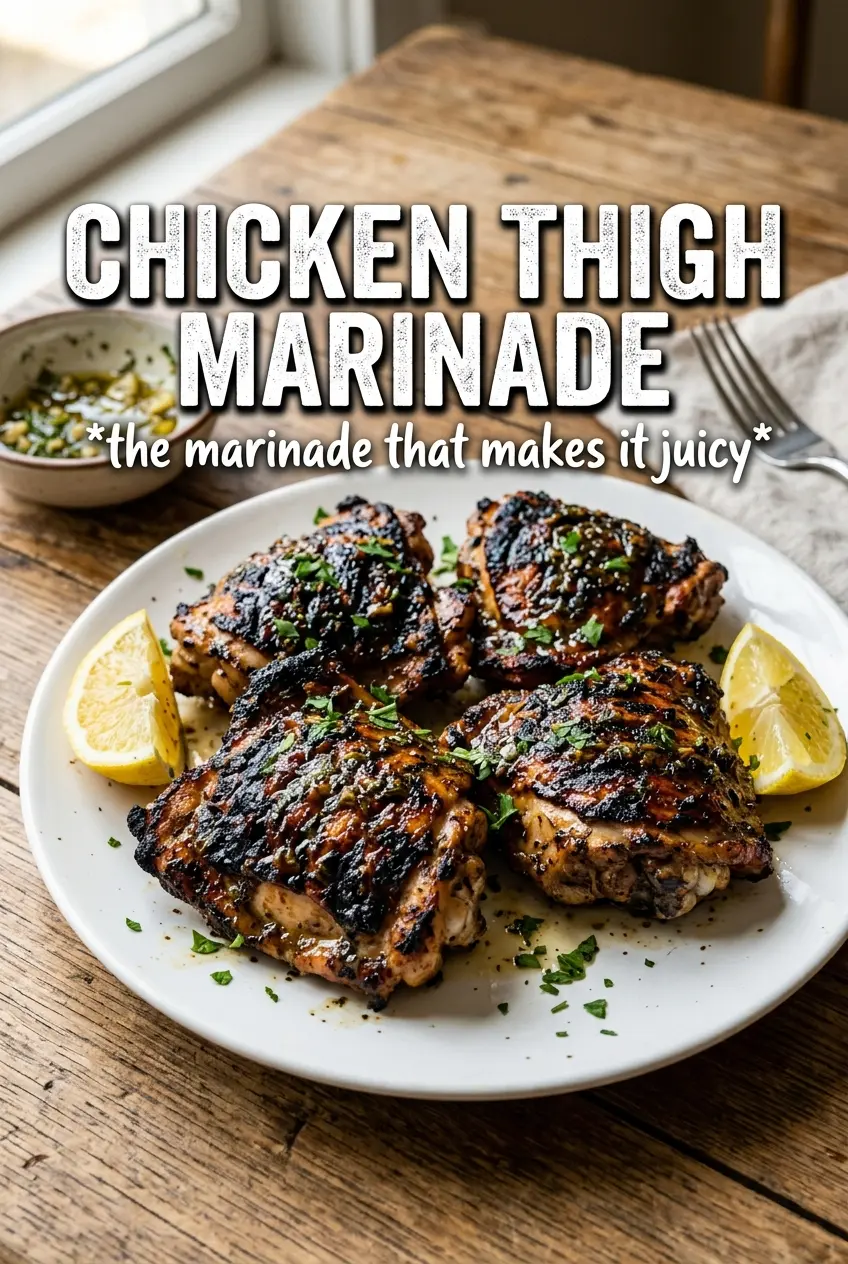
Chicken Thigh Marinade
Ingredients
Equipment
Method
- Whisk olive oil, lemon juice, lemon zest, minced garlic, Dijon mustard, honey, oregano, thyme, smoked paprika, salt, black pepper, and red pepper flakes until emulsified and smooth.
- Add boneless skinless chicken thighs to the marinade and toss until every piece is fully coated.
- Refrigerate the chicken at least 2 hours, up to 24 hours, so the flavors soak in and the surface looks well-coated.
- Grill the thighs over medium-high heat for 5-6 minutes per side, or pan-sear in a hot oiled skillet for 5-6 minutes per side, until caramelized char marks appear.
- Continue cooking until the internal temperature reaches 165°F, with a golden-browned, caramelized exterior.
- Rest the chicken for 5 minutes before serving so juices redistribute and the exterior stays lightly crisp.
- Serve with fresh herbs so you get visible green specks over the caramelized surface.