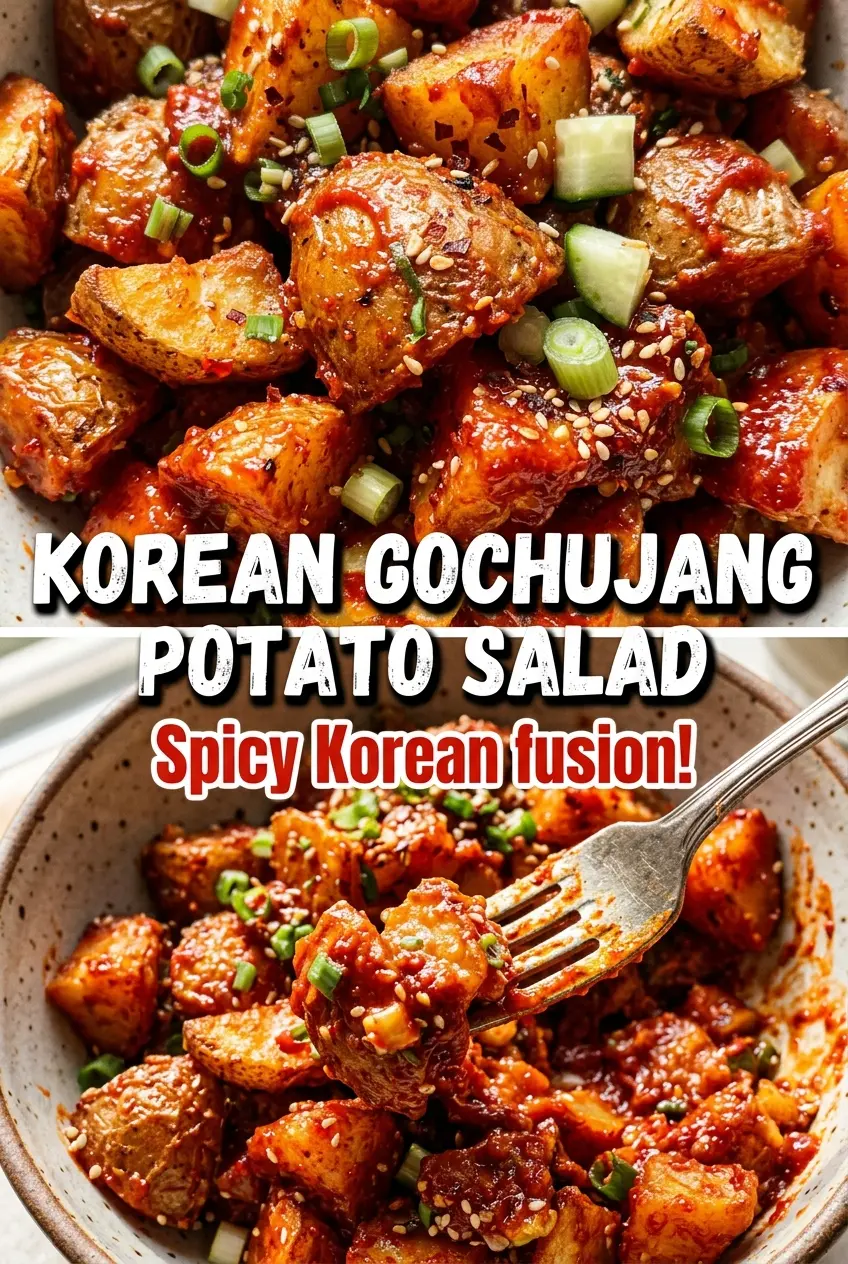
Crispy Gochujang Potato Salad hits that rare sweet spot where the potatoes stay crunchy at the edges, the dressing clings in a glossy red-orange coating, and every bite gives you heat, tang, and a little sweetness. It eats like a side dish that knows how to hold its own next to grilled meat, roasted chicken, or a simple fried egg, but it still feels bright enough to wake up a heavy plate.
The trick is keeping the potatoes dry enough to roast hard before they ever meet the dressing. Baby potatoes give you more surface area for browning, and that cooling time matters too, because hot potatoes turn the mayo-based dressing thin and greasy instead of creamy and clingy. Gochujang brings depth, not just spice, while rice vinegar and honey keep the whole thing balanced instead of flat.
Below, I’ll walk through the part most people skip — how to keep the potatoes crispy long enough to toss them well — plus the ingredient choices that matter most if you want this to taste like a dish you’d happily make again.
The potatoes stayed crispy even after tossing, and the gochujang dressing had just enough sweetness to balance the heat. I served it at room temp like suggested and it was gone in minutes.
Save this crispy gochujang potato salad for the next time you need a bold, room-temp side with crunchy edges and a spicy-sweet glaze.
The Crisp Comes First, or the Salad Turns Soft
The mistake with potato salads like this is treating the potatoes like they’re just a vehicle for dressing. They need enough heat and open space to develop real browning before anything creamy gets involved. If the potatoes crowd the pan, they steam. If they go into the dressing hot, they lose that crisp finish fast.
Roasting at 425°F gives the cut sides time to darken and tighten up. The thirty-minute cooling rest is not filler; it gives the surface starch a chance to set so the dressing grabs onto the potatoes instead of sliding off. That’s the difference between a bowl that stays textured and one that goes soft and muddled.
- Cut side down matters — halved baby potatoes caramelize best when the flat side sits on the pan. That contact is where the crust starts.
- Dry potatoes brown better — after washing, pat them dry so the oven can do its job instead of spending time steaming off extra moisture.
- Room-temperature dressing clings better — cold dressing can seize up a little and coat unevenly, while a room-temp mixture tosses more smoothly.
What the Gochujang, Mayo, and Honey Are Each Doing
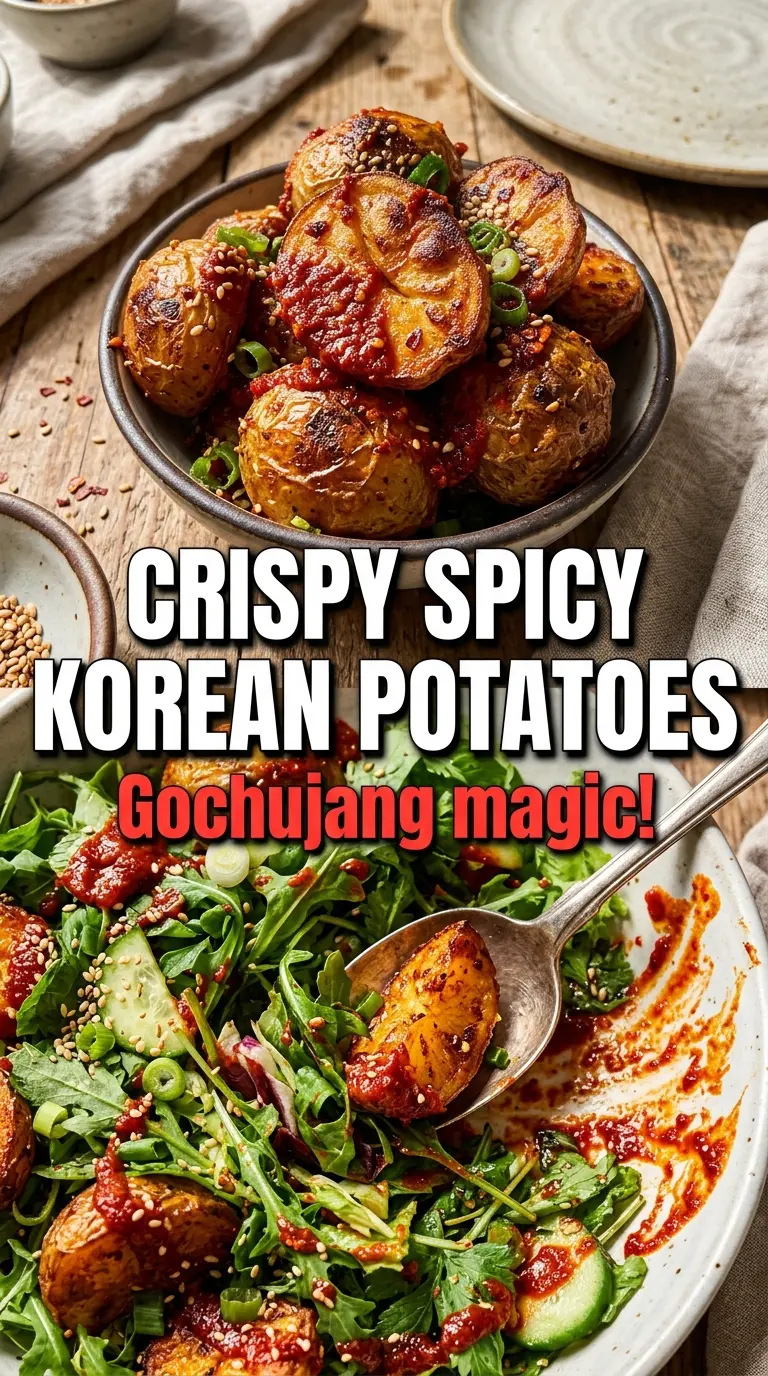
- Gochujang — this is the backbone of the dressing. It brings chili heat, fermented depth, and a little body. There isn’t a true substitute that gives the same flavor, but in a pinch you can blend miso, chili paste, and a touch more honey; it won’t taste the same, but it will still bring savoriness and heat.
- Mayonnaise — mayo softens the paste and helps the dressing coat the potatoes instead of pooling at the bottom of the bowl. Full-fat mayo works best here because it stays creamy and balanced against the spice.
- Rice vinegar — this keeps the dressing sharp enough to cut through the starch. Apple cider vinegar works if that’s what you have, but it will read a little fruitier and less clean.
- Honey — the sweetness rounds out gochujang’s heat and gives the glaze that sticky, polished finish. Maple syrup can work, though it tastes slightly deeper and less neutral.
- Sesame oil — a small amount goes a long way. It should smell nutty, not heavy; if it’s old or dull, the whole dressing loses lift.
How to Roast, Cool, and Toss Without Losing the Texture
Getting the Potatoes Deeply Browned
Heat the oven fully before the potatoes go in. A hot oven starts the browning immediately, which keeps the cut sides from drying into a pale, leathery surface. Toss the potatoes with oil, salt, and pepper until every piece looks lightly glossy, then spread them in a single layer with space between them. If they’re stacked, they’ll steam at the contact points and you’ll lose the crisp edges that make this salad work.
Cooling Before the Dressing Goes On
Let the potatoes sit for about 30 minutes after roasting. They should still be warm, but not hot enough to melt the mayo in the dressing. If you rush this stage, the dressing turns loose and oily, and the potatoes absorb it unevenly. You want the dressing to coat the outside, not soak into the crust right away.
Coating, Then Finishing
Mix the dressing until it looks smooth and glossy before it meets the potatoes. Toss gently so the crisp edges stay intact, then finish with sesame seeds and sliced green onions. The salad is best at room temperature, when the potatoes still have structure and the dressing tastes bright instead of heavy.
How to Adapt This for Different Tables and Different Diets
Make It Vegan
Swap the mayonnaise for a vegan mayo with enough body to hold the dressing together. The texture stays creamy, and the flavor still lands in the same place because the gochujang, vinegar, and sesame oil are doing most of the heavy lifting.
Make It Gluten-Free
Use a certified gluten-free gochujang, since some brands include wheat. Everything else in the recipe naturally fits a gluten-free table, so this swap keeps the texture and the balance intact.
Add More Crunch and Freshness
A handful of thinly sliced cucumber or shredded cabbage turns this into a more salad-like side with extra crunch. Add it at the very end so it stays fresh and doesn’t water down the dressing.
Storage and Reheating
- Refrigerator: Store for up to 3 days. The potatoes soften as they sit, but the flavor stays good.
- Freezer: I don’t recommend freezing this salad. The potatoes turn mealy and the dressing separates after thawing.
- Reheating: Serve it cold or let it come back to room temperature. If you want the potatoes warmer, spread them on a sheet pan and warm briefly in a 325°F oven; the microwave will wreck the texture fast.
Answers to the Questions Worth Asking
Crispy Gochujang Potato Salad
Ingredients
Equipment
Method
- Preheat the oven to 425°F and set a sheet pan inside to heat up for better browning.
- Toss the baby potatoes with olive oil, salt, and pepper until evenly coated with a light sheen.
- Spread potatoes in a single layer on the hot sheet pan and roast for 30-35 minutes, turning once if needed, until golden and crispy.
- Let the roasted potatoes cool for 30 minutes so they stay crisp instead of steaming.
- In a bowl, mix gochujang, mayonnaise, rice vinegar, honey, and sesame oil until smooth and glossy.
- Toss the cooled potatoes with the dressing until every piece is lightly coated.
- Top with sesame seeds and green onions for contrast and fresh color.
- Serve at room temperature so the exterior remains crisp.