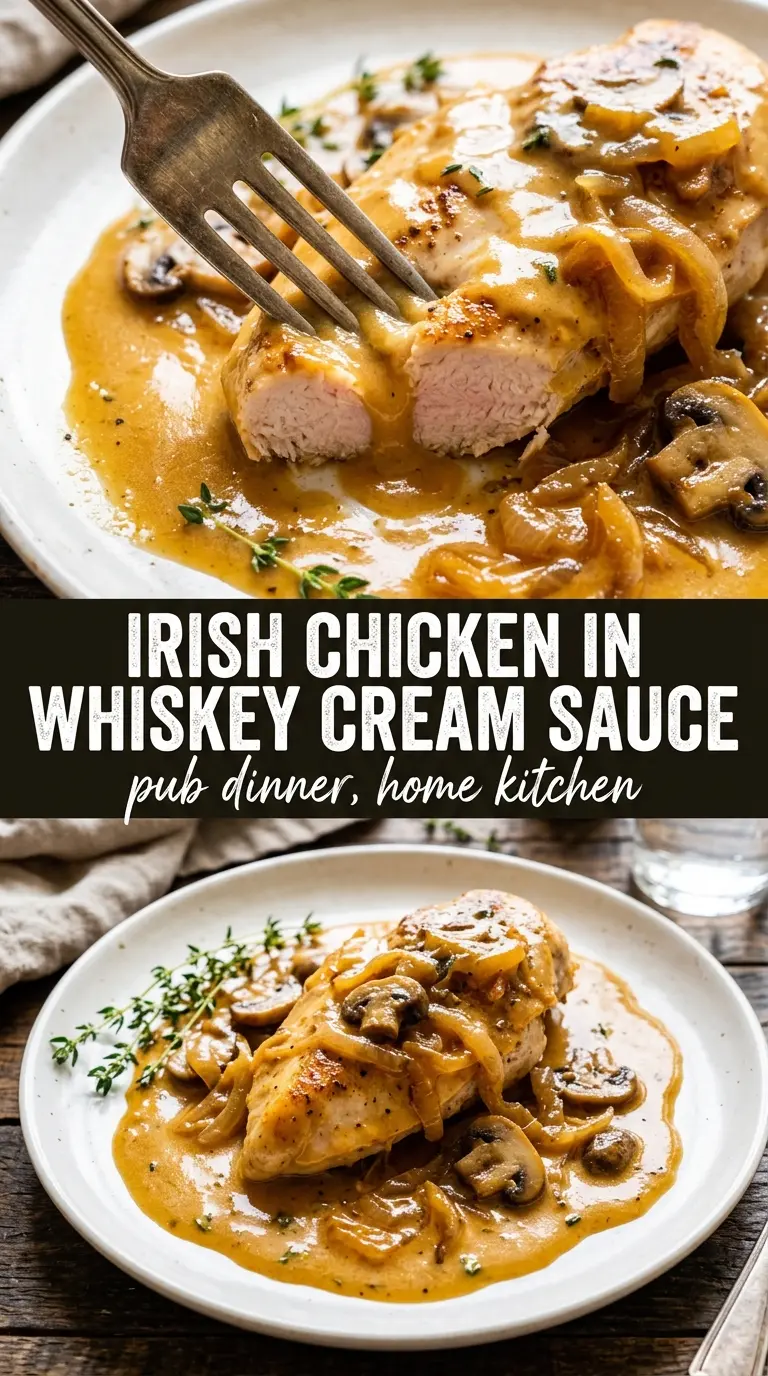
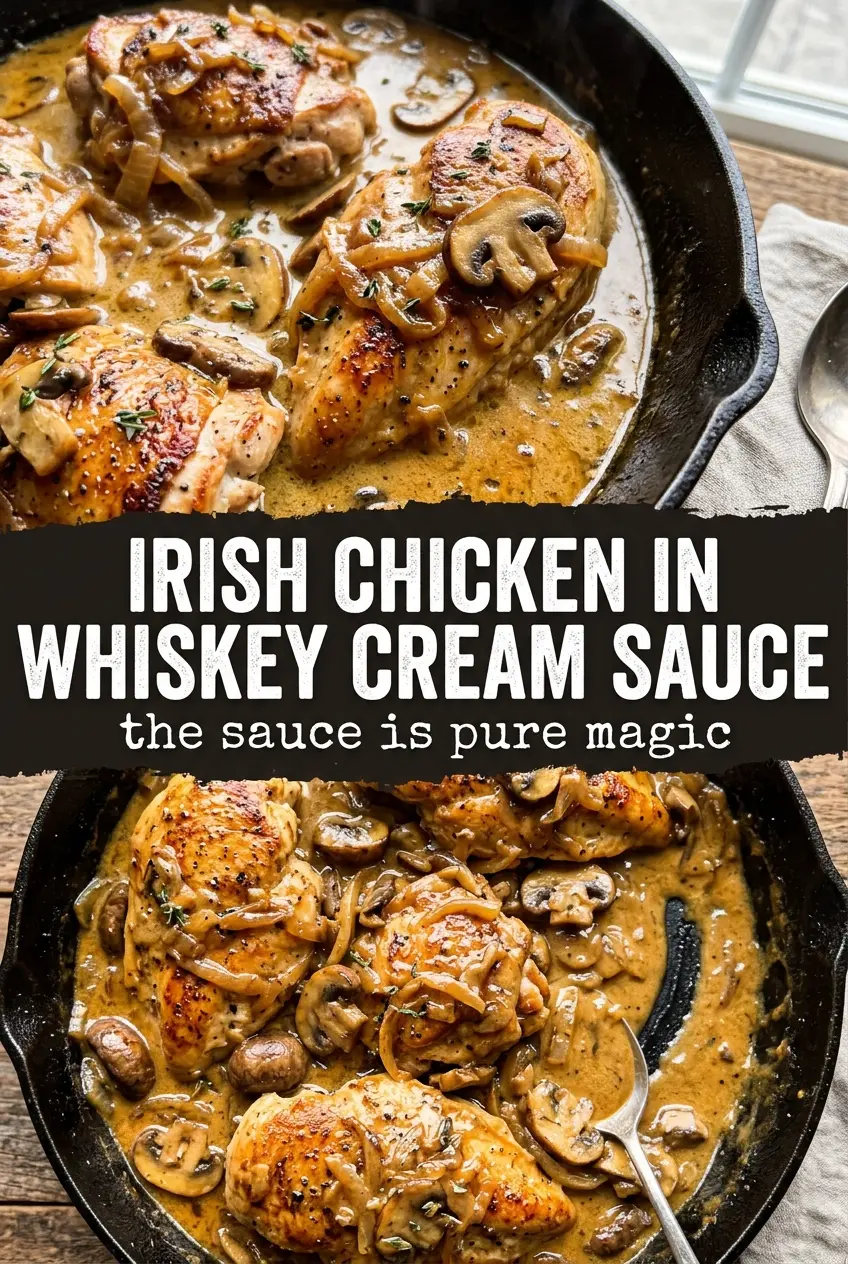
Golden seared chicken breasts wrapped in a whiskey cream sauce are the kind of dinner that stops a table for a second before anyone takes a bite. The chicken stays tender, the mushrooms bring that deep savory note, and the sauce turns silky and glossy without feeling heavy. It tastes polished enough for company, but it still comes together in one skillet with ordinary ingredients.
The part that makes this version work is the order. The chicken gets a hard sear first, which leaves behind browned bits that become the backbone of the sauce. Then the shallots and mushrooms cook long enough to lose their raw edge and pick up color before the whiskey goes in. That short simmer after the cream is added is what gives you a sauce that coats the back of a spoon instead of pooling thinly around the pan.
Below you’ll find the exact cues to watch for at each stage, plus a few smart swaps if you need them. If you’ve ever had cream sauce split, go grainy, or taste flat, this is the kind of recipe that clears up why it happened.
The sauce thickened up beautifully and never broke, even after I put the chicken back in. The whiskey flavor was there without taking over, and the mushrooms made it taste like I spent all afternoon on it.
Save this Irish Chicken in Whiskey Cream Sauce for the nights when you want a skillet dinner with an amber, mushroomy cream sauce that feels restaurant-worthy.
Why the Chicken Has to Brown Before the Sauce Goes In
The biggest mistake with a dish like this is rushing the first sear. If the chicken goes into a pan that isn’t hot enough, it steams and leaves you with pale meat and not enough flavor behind in the skillet. You want a deep golden crust and a pan that still has those browned bits stuck to the bottom when the chicken comes out.
That fond is the whole point. Once the shallots and mushrooms hit the butter, they pick up the flavor left from the chicken, then the whiskey loosens everything into the sauce. If the pan looks dry or the bits at the bottom are still stubbornly dark, the whiskey step fixes that. If the chicken is crowded, though, you’ll lose the browning and the sauce will taste flatter no matter how long you simmer it.
- High heat at the start gives you color fast. Medium heat is too gentle for a good crust here.
- Room-temperature chicken cooks more evenly and keeps the center from lagging behind the outside.
- Don’t move the chicken too early or it’ll tear and stick. It releases cleanly when the crust is ready.
- The same skillet matters because the sauce needs those pan drippings to taste complete.
What Each Ingredient Is Actually Doing in the Pan
- Irish whiskey adds warmth and a faint caramel edge that you can’t get from broth alone. Jameson works well because it’s smooth and not aggressively smoky.
- Heavy cream is the sauce’s body. Half-and-half can work in a pinch, but it won’t thicken as cleanly and it’s more likely to stay thin.
- Dijon mustard doesn’t make the sauce taste like mustard. It sharpens the cream and helps the sauce stay balanced instead of tasting flat.
- Cremini mushrooms bring a deeper savory flavor than white mushrooms. If they’re wet and crowded in the pan, they’ll steam, so give them space and cook until they brown.
- Shallots are worth using here because they melt into the sauce without the rough bite onions can leave behind.
- Fresh thyme is brighter than dried thyme at the end. The dried thyme in the seasoning step builds the base; the fresh thyme on top keeps the sauce from tasting heavy.
Building the Whiskey Cream Sauce Without Breaking It
Searing the Chicken Cleanly
Season the chicken well before it hits the pan, then lay it in the hot oil and leave it alone. You’re looking for a crust that is golden and dry to the touch before you turn it, not a pale surface with a few brown spots. If the pan is too crowded, lower the heat a touch and cook in batches so the chicken browns instead of steaming. Pull it at 165°F and set it on a plate while you build the sauce.
Letting the Shallots and Mushrooms Actually Color
Melt the butter in the same skillet and add the shallots and mushrooms. Cook them until the mushrooms stop looking spongy and start to pick up real color at the edges, then stir in the garlic for just a minute. Garlic burns fast, so if the pan feels hot enough to hiss sharply, slide it off the heat for a few seconds before adding it. This part should smell rich and savory, not sharp.
Adding the Whiskey Without a Harsh Bite
Take the pan off the heat before pouring in the whiskey, because alcohol can flare and the sudden hit of heat can make it taste harsh. Return it to the burner and let it bubble for a minute or two so the sharp edge cooks off. You’re not trying to boil it dry; you’re letting it reduce enough to pick up the browned bits from the pan. The aroma should turn rounder and sweeter as it simmers.
Finishing the Sauce So It Clings
Stir in the cream, broth, Dijon, and thyme, then let the sauce simmer gently until it coats the spoon and leaves a clear trail when you drag a spatula through it. A hard boil is what causes cream sauces to split, so keep the heat at a steady low simmer. Return the chicken to the skillet and spoon the sauce over the top for a minute or two so the meat warms through and soaks up the sauce before serving.
How to Adapt This Skillet Chicken for Different Tables
Dairy-Free Version
Use full-fat canned coconut cream instead of heavy cream and add it over low heat. The sauce will taste a little less classic and a little more rounded, but it still turns silky if you don’t boil it hard. Skip any thinner plant milks; they won’t give you the same body.
Gluten-Free
This dish is naturally gluten-free as written if your chicken broth and Dijon are certified gluten-free. That small label check matters because those two ingredients are the most common hidden source of gluten in a sauce like this.
No Whiskey on Hand
Use an equal amount of chicken broth with a small splash of apple cider vinegar or white wine vinegar to replace some of the brightness the whiskey would have added. You’ll lose the faint caramel warmth, but the sauce will still taste balanced and savory.
Storage and Reheating
- Refrigerator: Store leftovers in an airtight container for up to 3 days. The sauce will thicken as it chills.
- Freezer: I don’t recommend freezing this one. Cream sauces can separate after thawing, and the mushrooms soften too much.
- Reheating: Warm it gently in a covered skillet over low heat with a splash of broth or cream. High heat is the fastest way to split the sauce and dry out the chicken.
Answers to the Questions Worth Asking
Irish Chicken in Whiskey Cream Sauce
Ingredients
Equipment
Method
- Season the chicken breasts with salt, pepper, garlic powder, and dried thyme. Heat the olive oil in a large skillet over medium-high heat, then sear the chicken 5-6 minutes per side until golden and cooked through to 165°F, and remove to a plate.
- Melt the butter in the same pan. Cook the shallots and mushrooms 5-6 minutes until golden, then add the garlic and cook 1 minute.
- Remove the pan from the heat and carefully pour in the Irish whiskey. Return to medium heat and let the alcohol cook off for 1-2 minutes.
- Stir in the heavy cream, chicken broth, Dijon mustard, and fresh thyme leaves. Simmer 5-6 minutes until the sauce thickens.
- Return the chicken to the pan and spoon the whiskey cream sauce over each breast until coated. Garnish with fresh thyme sprigs right before serving.