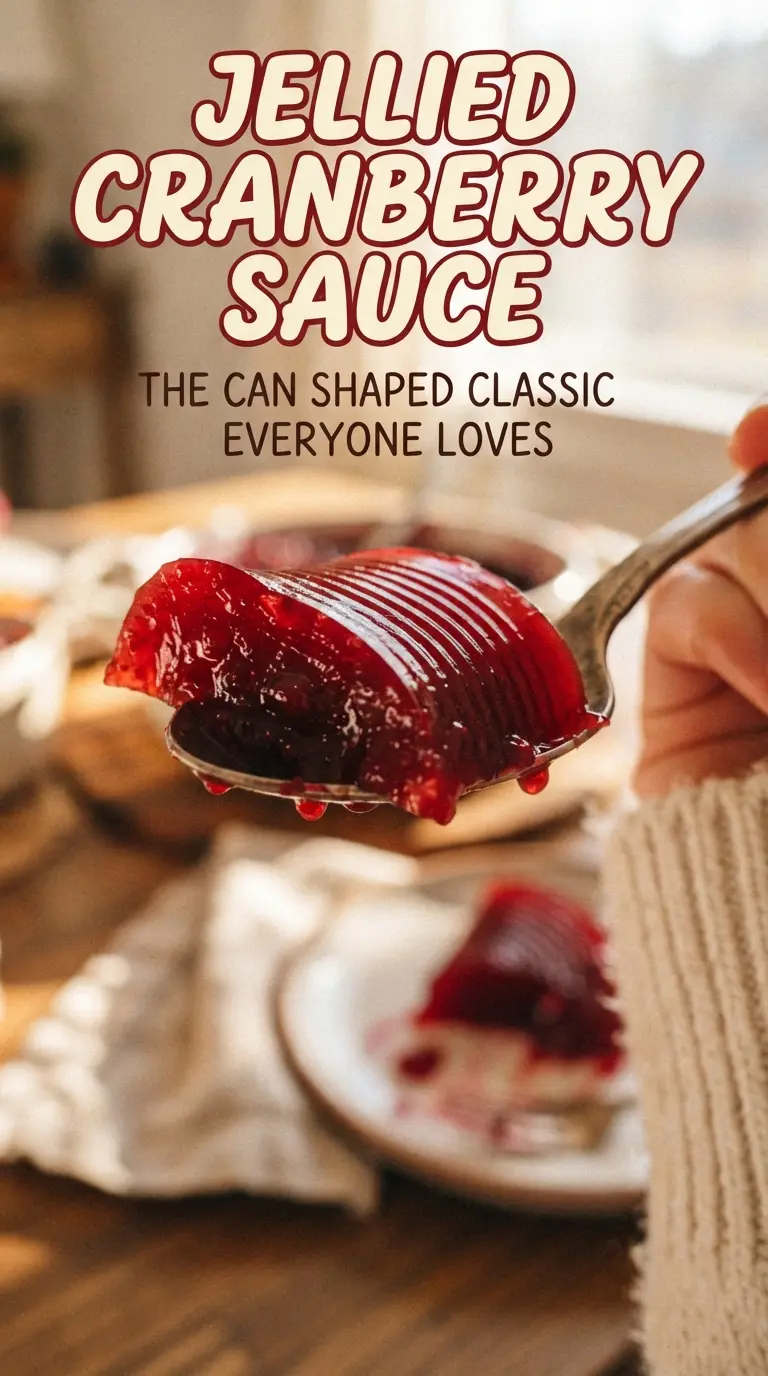
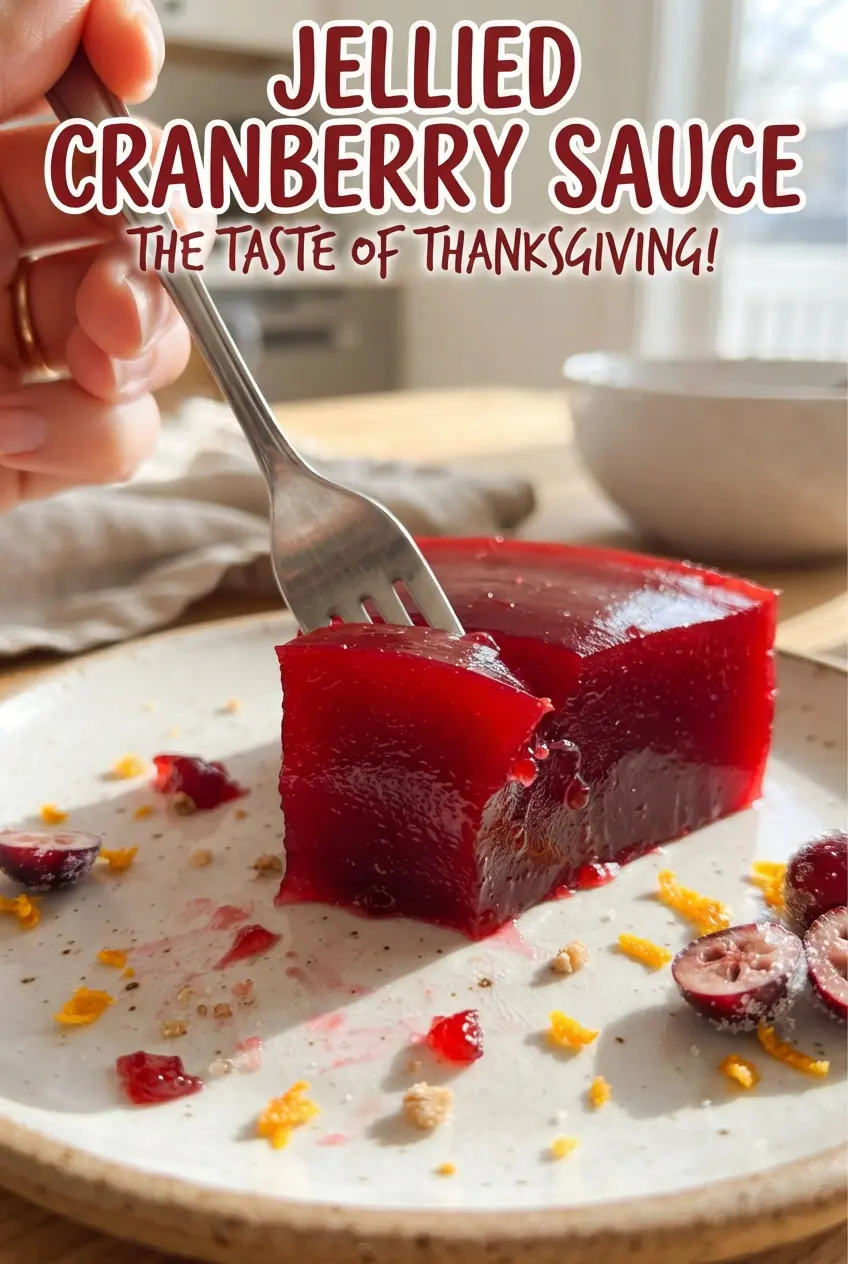
Jellied cranberry sauce sets up into that glossy, ruby-red slice that holds its shape on the plate and still tastes bright instead of flat. When it’s done right, you get a clean round or loaf that slices neatly, with a smooth texture and a sharp cranberry punch that cuts through rich holiday food without being overly sweet.
The trick is cooking the berries until every skin has burst, then pressing the mixture through a fine-mesh strainer until the puree is as smooth as you can get it. That step gives you the classic jelly-like finish instead of a loose, seedy sauce. A short second boil with lemon juice and salt wakes the flavor back up after straining, and the mixture thickens as it cools, so it needs the full chill time before you unmold it.
Below, I’ll show you the small details that keep the sauce glossy, sliceable, and easy to release from the mold, plus a few swaps and storage notes that make it easier to plan ahead.
I usually buy the canned version, but this set up beautifully in the loaf pan and sliced cleanly after chilling overnight. The lemon juice kept it from tasting one-note, and the texture was exactly what I wanted.
Save this glossy jellied cranberry sauce for the holidays when you want clean slices and bright cranberry flavor on the plate.
The Part That Keeps Jellied Cranberry Sauce from Turning Grainy
The biggest mistake with jellied cranberry sauce is stopping too soon on the strain. If you leave too much skin and pulp behind, the texture turns loose and a little rough instead of smooth and sliceable. Pressing the puree through a fine-mesh strainer takes a minute longer, but it’s what gives you that classic molded finish that unmolds cleanly and cuts into tidy rounds.
The second important detail is the short boil after straining. That’s where the mixture tightens up and the lemon juice sharpens the flavor after all that sugar. If you undercook this stage, the sauce can set softly and slump when sliced; if you cook it too hard for too long, the flavor gets dull and the texture can turn sticky instead of glossy.
What Each Ingredient Is Actually Doing in This Molded Cranberry Sauce
- Fresh cranberries — These bring the pectin that helps the sauce set without any extra gelatin. Fresh or frozen both work; if you use frozen, cook from frozen and give them the full simmer so every berry bursts.
- Sugar — This isn’t just for sweetness. It balances the tart cranberries and helps the finished sauce set into that firm, shiny slice. Cutting it much lower changes the texture and gives you something looser and sharper.
- Water — The water gives the berries enough room to cook down before the puree is strained. Use the full amount so the cranberries don’t scorch before they burst.
- Lemon juice — The lemon keeps the flavor lively and helps the sauce taste bright instead of heavy. Fresh lemon is best here because the acidity tastes cleaner.
- Pinch of salt — You won’t taste it as salt, but it keeps the cranberry flavor from tasting flat once the sugar goes in.
Cooking It Down, Straining It Smooth, and Letting It Set
Boiling Until the Berries Burst
Combine the cranberries, sugar, and water in a pot and bring it to a full boil. Once it starts bubbling steadily, simmer until every berry has popped and the mixture looks thick and jammy, about 10 minutes. If you still see a lot of whole cranberries, the sauce won’t strain cleanly and you’ll end up with a textured finish instead of a smooth mold.
Pressing Out the Pulp
Set a fine-mesh strainer over a bowl or clean pot and push the mixture through, scraping the underside and stirring the solids against the mesh. This is where patience pays off. The more puree you extract, the smoother and more defined the finished slice will be. Don’t force the skins through; they’re the part that keeps the texture gritty.
Finishing the Cook
Return the strained puree to the pot with the lemon juice and salt, then boil for 3 to 4 minutes while stirring. You’ll notice it thickening slightly and becoming shinier as it reduces. That short final boil wakes up the flavor and gives the pectin a little more help setting the sauce. If you skip this part, the mold can end up softer than you want.
Chilling in the Mold
Pour the mixture into a lightly oiled mold, loaf pan, or even a clean can, then chill it at least 6 hours, preferably overnight. The sauce firms as it cools, so don’t judge it while it’s still warm. To unmold, run a knife around the edge and invert it onto a plate; if it resists, dip the bottom of the mold briefly in warm water and try again.
How to Change the Texture, Sweetness, or Shape Without Ruining the Set
Use Frozen Cranberries
Frozen cranberries work just as well as fresh. Add them straight to the pot without thawing, and expect them to take a minute or two longer to burst. The final texture and set stay the same.
Make It Less Sweet
You can trim the sugar a little, but not too far if you want that firm, sliceable finish. Less sugar gives you a sharper, more tart sauce, but it also softens the set and makes unmolding trickier.
Use a Different Mold
A loaf pan gives you the easiest slices, but a decorative mold or clean can makes the traditional round shape. Lightly oil whatever you use, then chill long enough for the edges to pull away cleanly before inverting.
Storage and Reheating
- Refrigerator: Store covered for up to 1 week. The texture stays firm, though the surface can weep a little if it sits uncovered.
- Freezer: It freezes well for up to 2 months, but the texture can loosen slightly after thawing. Wrap it tightly and thaw in the refrigerator.
- Reheating: This is meant to be served cold or cool, not reheated. If it softens too much at room temperature, chill it again before slicing so it holds its shape.
Answers to the Questions Worth Asking
Jellied Cranberry Sauce
Ingredients
Equipment
Method
- In a saucepan, combine fresh cranberries, sugar, and water, then bring to a boil over medium-high heat. When boiling, simmer for 10 minutes until all the berries burst and the mixture thickens slightly, then reduce heat to keep it at a steady simmer.
- Pour the hot cranberry mixture into a fine-mesh strainer set over a bowl. Press firmly with a spatula to push all the pulp through, scraping to extract as much puree as possible, then discard the skins.
- Return the strained cranberry puree to the saucepan and stir in lemon juice and salt. Bring back to a boil, then boil for 3-4 minutes while stirring until the mixture looks glossy and slightly thickened.
- Pour the hot jellied cranberry puree into a lightly oiled mold, loaf pan, or clean can. Smooth the top, then chill at least 6 hours or overnight until fully firm.
- Run a knife around the edge of the chilled cranberry mold, then invert onto a plate. Slice into rounds to serve.