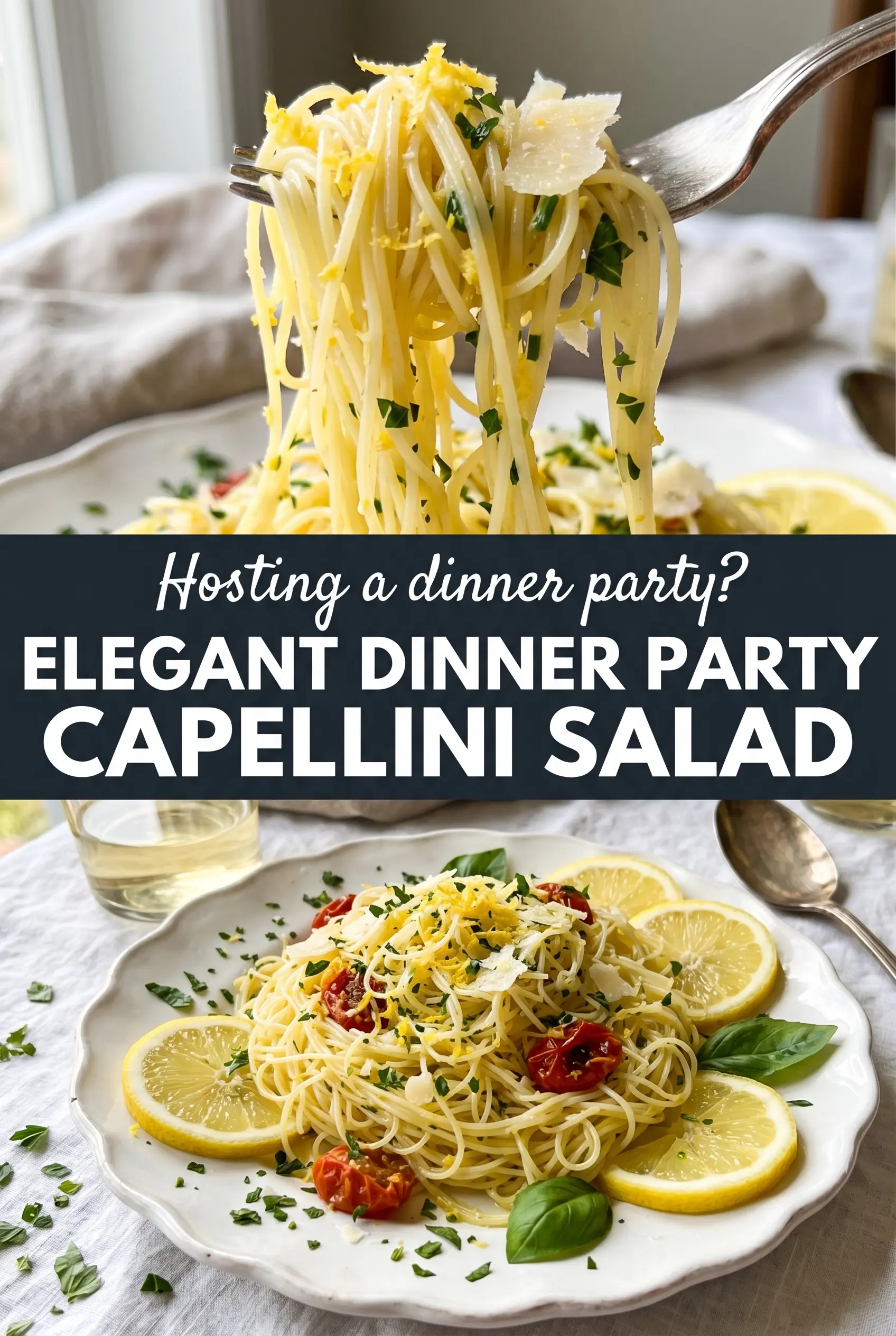
Thin capellini turns into something memorable here: light, glossy, and coated in a lemon dressing that clings to every strand without drowning the pasta. The fresh herbs and Parmesan keep it from tasting plain, and the cherry tomatoes bring just enough sweetness to balance the sharp citrus.
What makes this version work is the treatment of the pasta and the dressing. Angel hair needs only a few minutes in boiling water, then a cold rinse so it stops cooking before it turns mushy. The dressing is simple, but the balance matters: enough olive oil to round out the lemon juice, enough zest to keep the citrus flavor bright, and garlic just minced fine enough to season the whole bowl without taking over.
Below, I’ve included the small details that make a big difference, from keeping capellini from clumping to the best swaps when you need this salad to fit what’s in your kitchen.
The lemon dressing coated the capellini perfectly, and chilling it for 30 minutes made the flavors settle in without the pasta getting sticky. I added the tomatoes at the end like you suggested and they stayed fresh and bright.
Save this lemon capellini salad for the days when you want a chilled pasta side that stays light, glossy, and full of fresh herbs.
Why Capellini Needs a Gentler Hand Than Regular Pasta Salad
Angel hair looks sturdy enough in the pot, then falls apart fast once it gets tossed with dressing and mix-ins. That’s the part most pasta salad recipes gloss over. Capellini doesn’t want heavy stirring or a thick, mayonnaise-style coating. It wants a light dressing and a quick, careful toss so the strands stay separate instead of collapsing into a sticky nest.
Rinsing the pasta after cooking is one of the few times I’ll tell you to break the usual pasta rule. Here, it stops the cooking at the right moment and washes off enough surface starch to keep the salad from clumping while it chills. The 30-minute rest matters too, because the lemon and garlic settle into the pasta and the Parmesan softens into the dressing instead of sitting on top in dry little patches.
What the Lemon, Herbs, and Parmesan Are Each Doing Here
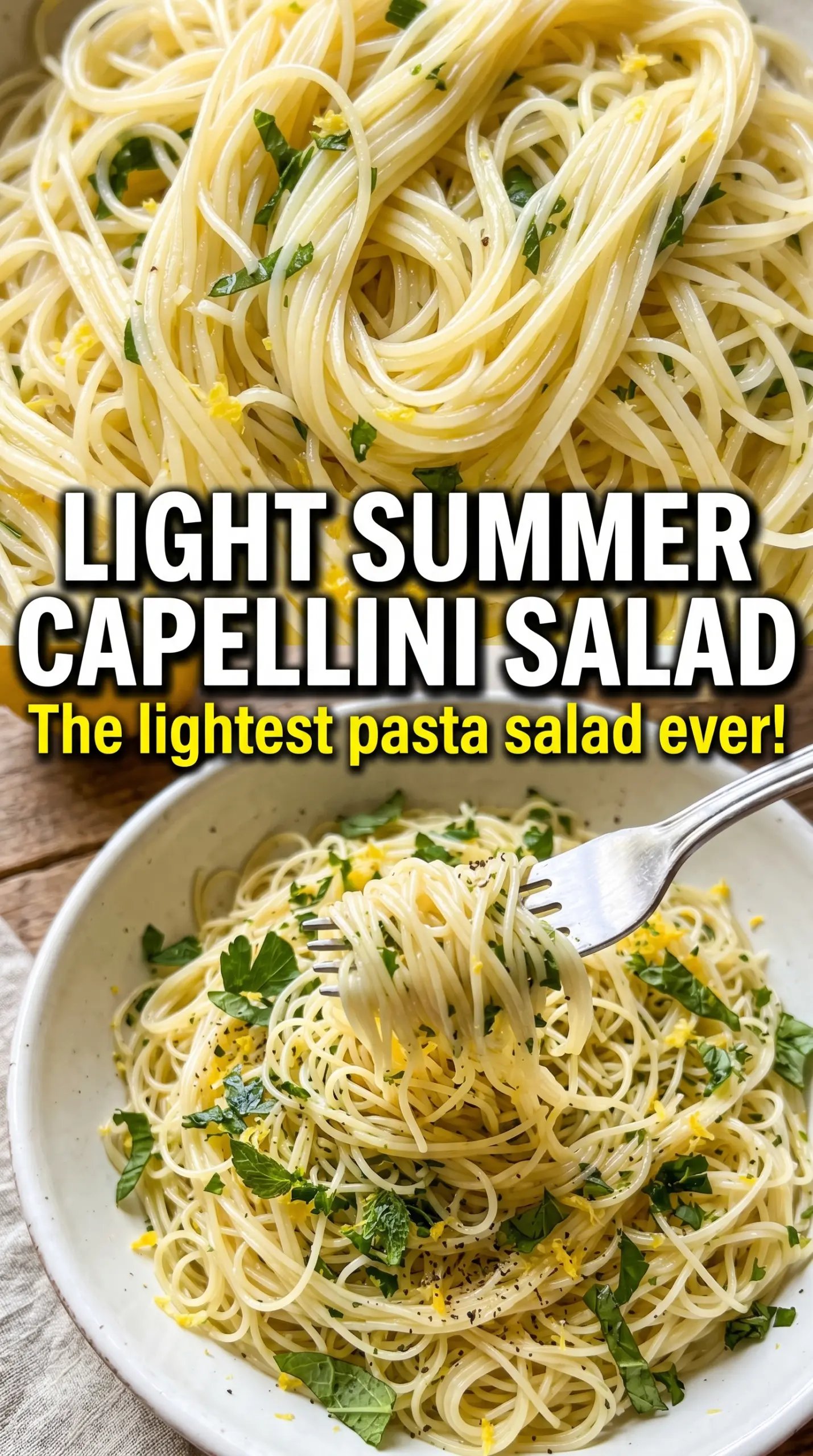
- Capellini — This is the backbone, and its delicate shape is why the salad feels light instead of dense. If you swap in spaghetti or linguine, the salad will eat heavier and won’t absorb the dressing quite the same way.
- Fresh lemon juice and zest — Juice gives the sharpness; zest gives the perfume. Don’t skip the zest or the dressing tastes flat and one-note, especially after chilling.
- Olive oil — This rounds out the acid and helps the lemon cling to the pasta. A decent extra-virgin olive oil matters here because there’s nowhere for a harsh or bland oil to hide.
- Parmesan — It adds salt, umami, and a little body to the dressing. Finely grated Parmesan melts into the warm pasta better than big shreds, which can clump instead of coating.
- Parsley and basil — These keep the salad fresh and give it a clean herbal finish. Add them after the pasta cools a bit so they stay bright instead of turning dark and limp.
- Cherry tomatoes — They bring sweetness and juicy contrast. Halve them so their flavor leaks into the bowl without making the salad watery.
How to Keep the Pasta Light, Glossy, and Never Mushy
Cook the Pasta Just to Tender
Boil the capellini until it’s just tender, usually a minute or so shy of what the package suggests if you know your stove runs hot. Angel hair goes from done to mushy fast, and it keeps softening as it sits. Drain it promptly, then rinse under cold water until it’s no longer steaming. That quick cool-down is what keeps the strands from sticking together later.
Whisk the Dressing Until It Looks Unified
Mix the olive oil, lemon juice, zest, garlic, salt, and pepper in a bowl until the garlic is evenly suspended and the dressing looks lightly emulsified. You’re not building a thick vinaigrette here, but you do want the oil and lemon to stop separating immediately. If the garlic is left in rough pieces, it hits the palate too sharply and never really softens into the salad.
Toss in Layers, Not All at Once
Add the pasta first and coat it with the dressing before the herbs, Parmesan, and tomatoes go in. That order matters because the bare noodles grab the lemon mixture better than a bowl already crowded with add-ins. Use tongs or your hands and lift gently instead of stirring hard. If you beat it around, the capellini will break and the whole salad turns dense.
Chill It Before Serving
Thirty minutes in the fridge gives the dressing time to settle into the pasta and the flavors time to come together. Serve it cold or just slightly cool, not straight from the mixing bowl while the dressing still tastes sharp. If it seems a little dry after chilling, loosen it with a spoonful of olive oil and a squeeze of lemon, then toss once more.
How to Adapt This for Different Tables and Pantry Situations
Make It Dairy-Free
Leave out the Parmesan and add a little more salt plus a few extra spoonfuls of olive oil. You’ll lose the savory depth that cheese brings, but the salad stays bright and clean, which works well if you want the lemon to lead.
Use Gluten-Free Capellini
A gluten-free angel hair works well here, but it needs close attention because many versions break down faster than wheat pasta. Pull it from the water as soon as it’s tender and rinse it well so it doesn’t turn gummy during the chill time.
Swap the Herbs Around What’s Fresh
If basil is missing, use more parsley and add a little dill or mint for a different kind of freshness. Keep the total amount of herbs about the same so the salad still tastes balanced rather than grassy.
Storage and Reheating
- Refrigerator: Keeps for 2 to 3 days. The pasta softens a bit as it sits, and the herbs lose some of their edge, but the flavor stays good.
- Freezer: I don’t recommend freezing this salad. The capellini turns soft and the fresh herbs go dull once thawed.
- Reheating: Serve it cold or let it sit at room temperature for 10 to 15 minutes. If it seems tight from the fridge, toss in a small drizzle of olive oil before serving instead of heating it, which only makes the pasta fragile.