Chicken marinade works best when it does two things at once: it seasons the meat all the way through and helps it brown into those golden, slightly sticky edges people keep going back for. The lemon, garlic, mustard, and Worcestershire give it depth without turning the chicken sharp or muddy, and the honey helps the surface char instead of drying out on the grill.
The part that matters most is balance. Too much acid and the chicken can turn tough if it sits too long; too little oil and the spices never really cling. This version lands in the sweet spot, with enough lemon to brighten the meat and enough olive oil to carry the herbs and keep the chicken juicy after cooking.
Below, I’ve included the exact reason this marinade stays flavorful after grilling, what each ingredient is actually doing, and a few practical swaps if you need to work with what’s already in your kitchen.
The chicken came off the grill with the best lemon-garlic char, and the marinade actually clung to the meat instead of sliding off. I used thighs, let them sit about 6 hours, and they were juicy with those little caramelized edges everyone fought over.
Save this chicken marinade for juicy grilled chicken with lemon, garlic, and caramelized herb-charred edges.
The Part That Keeps Chicken Marinade from Tasting Flat
The mistake most marinades make is leaning too hard in one direction: all acid, no fat; all garlic, no salt; all sweetener, no real seasoning. This one works because it layers flavor in the right order. The olive oil carries the spices, the lemon brightens the chicken, the Dijon and Worcestershire add savory backbone, and the honey helps the surface pick up color on the grill.
Timing matters here. Chicken breasts only need enough time to absorb flavor without getting stringy, while thighs can sit a little longer and stay forgiving. If your marinade tastes sharp in the bowl, that’s fine. It should taste a touch stronger than you want the finished chicken to taste, because the heat will soften everything.
What Each Ingredient Is Actually Doing in the Bowl
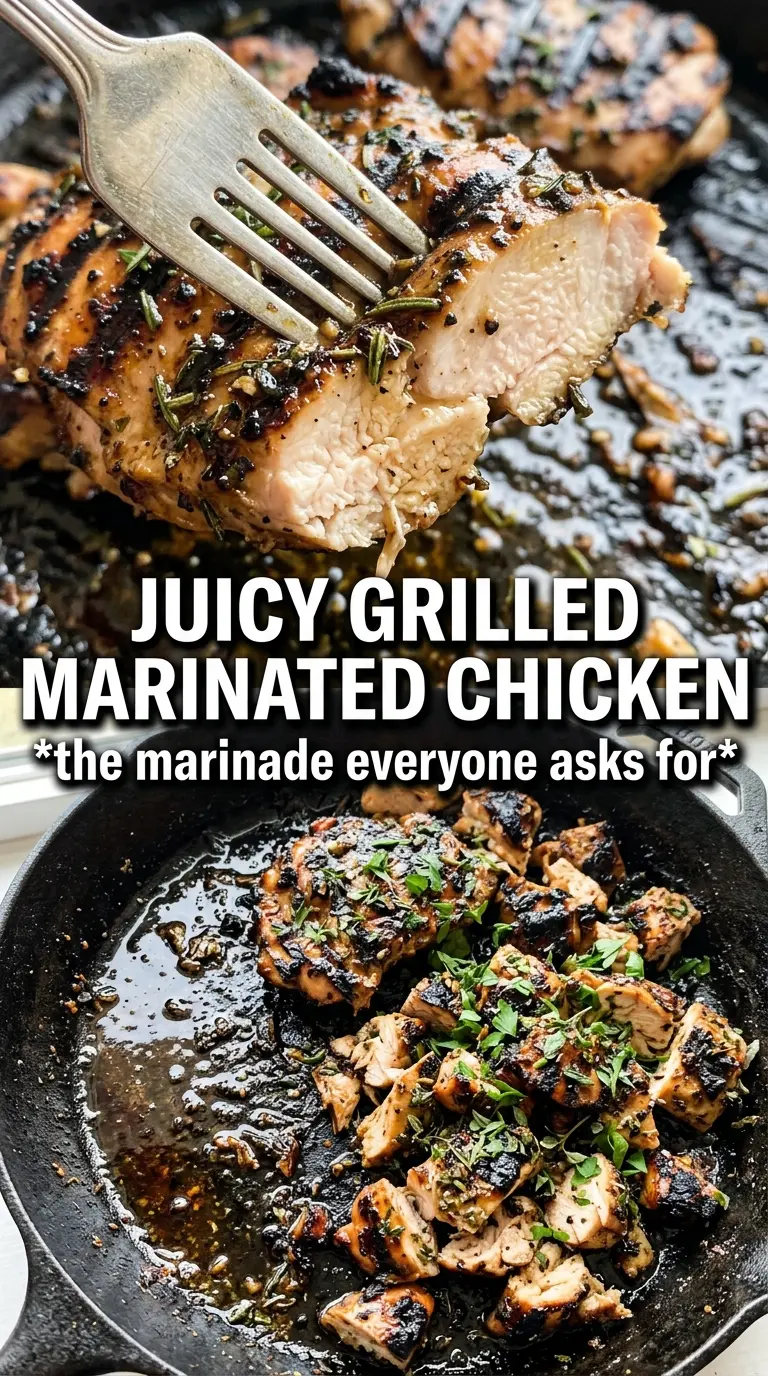
- Olive oil — This helps the herbs and spices coat the chicken evenly and keeps the surface from drying out on the grill. A basic extra-virgin olive oil is fine here.
- Lemon juice and zest — The juice brings brightness, but the zest is where the deeper lemon aroma lives. Don’t skip the zest if you want the marinade to taste fresh instead of just acidic.
- Garlic — Fresh minced garlic gives the marinade its backbone. Garlic powder won’t taste the same, though you can use 1 teaspoon in a pinch if that’s what you have.
- Dijon mustard — This helps the marinade emulsify so it clings to the chicken instead of pooling at the bottom. Yellow mustard works in a pinch, but the flavor will be sharper and less rounded.
- Honey — A little sweetness balances the lemon and helps the chicken caramelize. If you skip it, the finished chicken tastes leaner and browns less evenly.
- Worcestershire sauce — This adds savory depth that makes the marinade taste cooked, even before it hits the grill. There isn’t a perfect swap, but soy sauce can stand in if needed.
- Oregano, smoked paprika, salt, black pepper, and red pepper flakes — These are the seasoning layer that keeps the chicken from tasting one-note. Smoked paprika gives the grill flavor a head start.
Building the Marinade So It Coats, Char, and Stays Juicy
Whisking the Base Until It Emulsifies
Start by whisking the oil, lemon juice, zest, garlic, Worcestershire, Dijon, honey, and spices until the mixture looks glossy and slightly thickened. You want the honey and mustard fully dissolved into the liquid so the chicken gets an even coating. If the marinade looks separated, keep whisking for another 20 to 30 seconds. That small bit of extra mixing pays off later when the chicken browns more evenly.
Coating the Chicken Without Drowning It
Add the chicken and turn it until every piece is slicked with marinade. Use a bag or a shallow dish, then move the chicken around once or twice during the marinating time so the top pieces don’t sit dry. The chicken should look seasoned, not submerged in a puddle of oil. If there’s a lot of liquid at the bottom, the chicken still marinates, but it won’t pick up as much surface flavor before grilling.
Grilling Until the Edges Turn Golden
Grill over medium-high heat and don’t move the chicken too early. Let it sear long enough to release cleanly from the grates; if it sticks, it’s not ready to flip yet. Thighs usually take 6 to 7 minutes per side, and breasts usually need 5 to 6 minutes per side, depending on thickness. Pull the chicken when the thickest part reaches 165°F, then rest it for 5 minutes so the juices settle back into the meat instead of running onto the cutting board.
Swap in yogurt for a richer, tangier marinade
Replace half the olive oil with plain whole-milk yogurt if you want a thicker coating that clings to the chicken and browns well. The marinade will taste creamier and a little more mellow, and it works especially well on chicken breasts. Don’t use all yogurt here, or the mixture gets too thick to coat evenly.
Make it gluten-free without losing the savory edge
Use a certified gluten-free Worcestershire sauce, since that’s the only ingredient here that commonly causes a problem. The rest of the marinade already fits naturally into a gluten-free meal, and the flavor stays the same.
Turn it into an oven or stovetop dinner
If you don’t want to grill, sear the chicken in a hot skillet and finish it in a 400°F oven, or bake it entirely on a sheet pan. You’ll lose the smoky char from the grill, but the lemon, garlic, and paprika still give you a deeply seasoned main dish.
Storage and Reheating
- Refrigerator: Cooked chicken keeps for 3 to 4 days in an airtight container. The flavor stays good, though the grilled edges soften a bit.
- Freezer: The cooked chicken freezes well for up to 2 months. Slice it first for faster thawing, then wrap it tightly so it doesn’t dry out.
- Reheating: Warm it gently in a covered skillet over low heat with a splash of water or chicken broth, or use the microwave at half power. High heat is what dries out marinated chicken and makes the texture stringy.
Questions I Get Asked About This Recipe
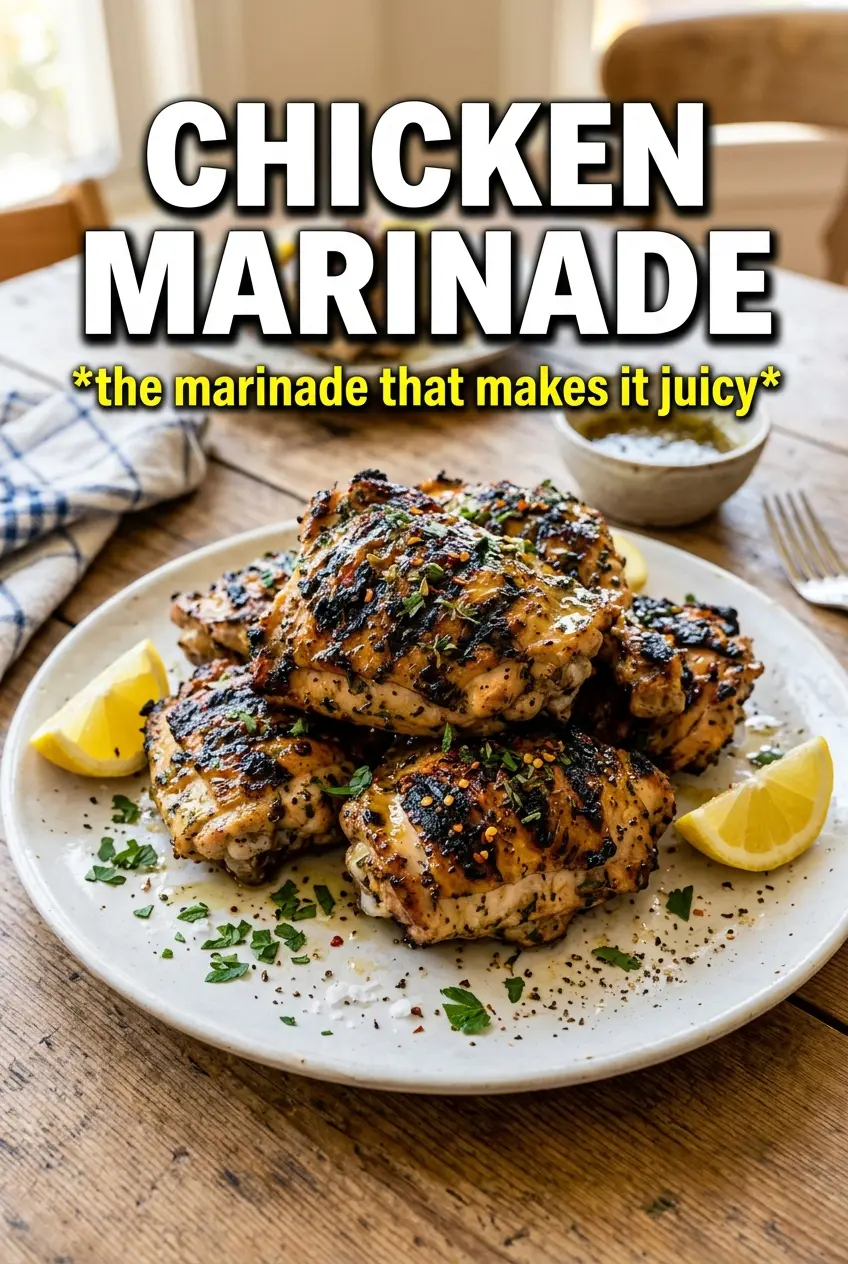
Chicken Marinade with Lemon, Garlic & Dijon
Ingredients
Equipment
Method
- Whisk the olive oil, lemon juice, lemon zest, minced garlic, Worcestershire sauce, Dijon mustard, and honey until smooth and fully combined.
- Whisk in dried oregano, smoked paprika, salt, black pepper, and red pepper flakes until evenly dispersed and no dry spices remain.
- Add the boneless chicken breasts or thighs and toss until every piece is coated in the marinade.
- Cover and refrigerate to marinate for at least 2 hours or up to 24 hours, until the surface looks glossy and well seasoned.
- Preheat the grill over medium-high heat; the grates should be hot enough to sizzle immediately when chicken touches.
- Grill the chicken for 6-7 minutes per side for thighs (or 5-6 minutes per side for breasts) with visible golden char marks forming.
- Continue grilling until the thickest part reaches an internal temperature of 165°F, with juices running clear when pierced.
- Transfer the chicken to a plate and rest for 5 minutes so the juices reabsorb, then slice and serve.
- Finish with fresh herbs and lemon wedges for serving, adding a bright squeeze of lemon right before eating.