Cold pesto clings to every ridge of the pasta, and that matters here. Fusilli catches the basil sauce in the twists, the tomatoes burst with sweetness, and the mozzarella pearls soften just enough after a short chill to turn the whole bowl into something that tastes bright, creamy, and complete. This is the kind of pasta salad that disappears fast at a cookout because it doesn’t eat like a side dish that was dragged out of the fridge and forgotten.
The trick is tossing the pasta with pesto while it’s still slightly warm. That helps the sauce coat the noodles instead of sitting in a green puddle at the bottom of the bowl. A little lemon juice wakes up the basil and keeps the salad from tasting heavy, and the chill time gives the pasta a chance to absorb the seasoning instead of tasting flat right after mixing.
Below you’ll find the one step that keeps pesto pasta salad from getting greasy, plus a few smart swaps if you want to make it dairy-free or pack it for lunch the next day.
The pesto coated the pasta perfectly after a short rest, and the lemon kept it from tasting heavy. I made it for a potluck and the bowl was scraped clean before dinner was even served.
Save this pesto pasta salad for a bright, make-ahead side with basil, tomatoes, and mozzarella in every bite.
The Reason Pesto Needs a Warm Pasta Base
Pesto pasta salad fails when everything gets mixed cold. The sauce stays tight, the noodles don’t pick up enough seasoning, and the whole bowl tastes like separate ingredients instead of one dish. Tossing the pasta with pesto while it’s still warm loosens the basil and oil just enough to coat every piece evenly.
Rinsing the pasta under cold water stops the cooking fast, but it also strips away some surface starch. That’s fine here because the warm pasta gets a second chance to grab onto the pesto before the salad chills. If the pasta sits around and turns completely cold before you season it, the sauce won’t cling the same way and you’ll need more pesto than the recipe calls for.
What Each Ingredient Is Actually Doing in This Salad
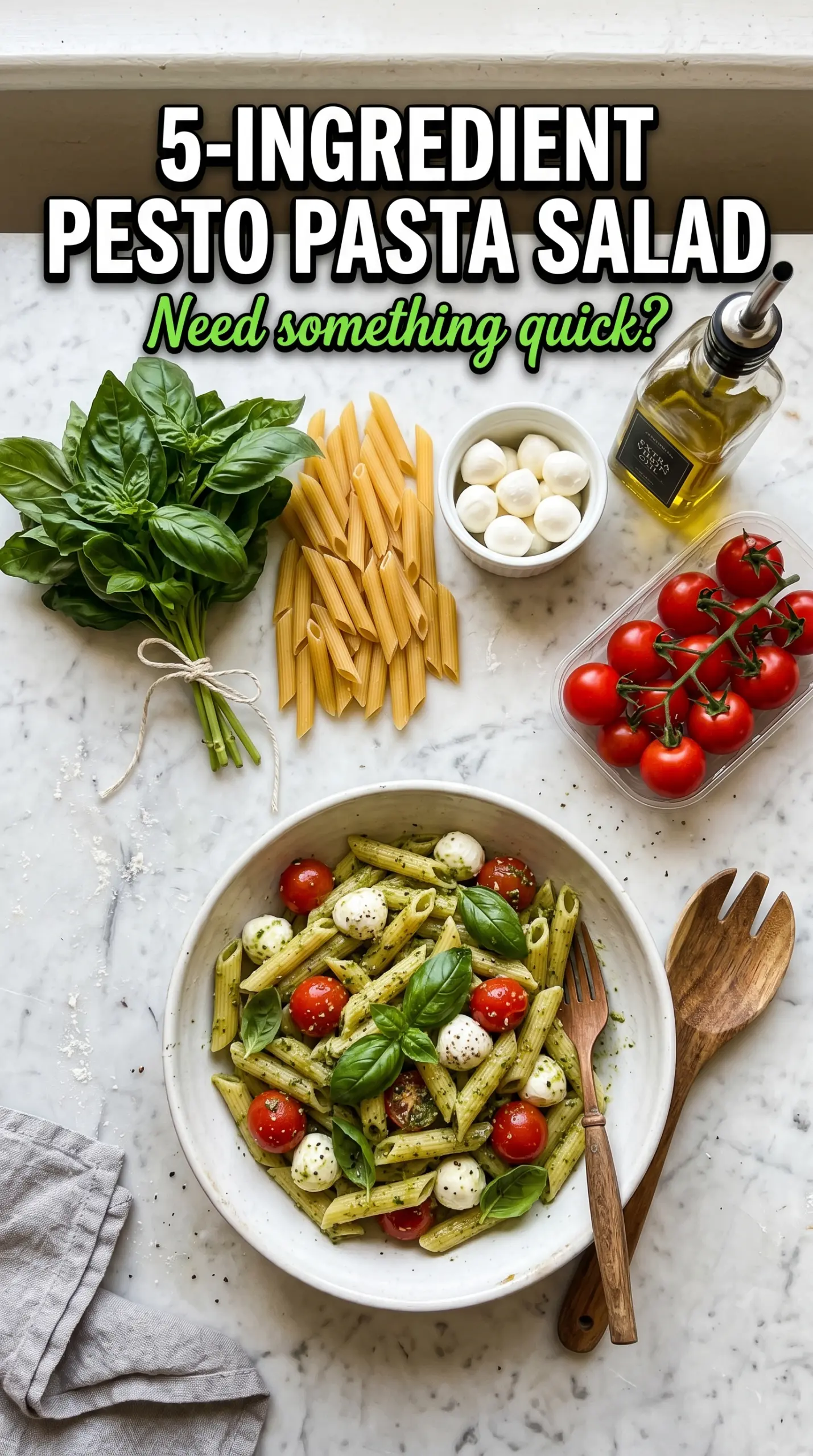
- Fusilli or penne — These shapes hold pesto better than long pasta. Fusilli gives you the best coating because the spirals trap the sauce in the grooves, but penne works well if that’s what you have.
- Basil pesto — This is the backbone of the salad, so use one you actually like on its own. Store-bought pesto is fine, but if it tastes flat from the jar, a small squeeze of lemon and a little extra Parmesan usually brings it back.
- Cherry tomatoes — They bring the juicy pop that keeps the salad from feeling heavy. Halve them so their juices mingle with the pesto instead of rolling around whole and missing the dressing.
- Fresh mozzarella pearls — The soft, milky bites cool the sharpness of the basil and Parmesan. If you only have a larger ball, cube it small so it distributes evenly.
- Pine nuts — Toasting them is worth the extra minute. Raw pine nuts can taste dull, but toasted ones add a buttery crunch that makes the texture of the salad feel finished.
- Lemon juice — This keeps the pesto from eating like straight oil. Add it after the pesto is on the pasta so the acid brightens the whole bowl instead of disappearing into the sauce.
Building the Salad So the Pasta Stays Coated, Not Greasy
Cooking the Pasta for Salad
Cook the pasta until it’s just al dente, then drain it and rinse it under cold water right away. You want the noodles cool and set, but not mushy, because they’ll soften a little more as they sit with the dressing. If you overcook the pasta, it turns soft after chilling and the salad loses its shape.
Coating with Pesto While the Pasta Is Still Slightly Warm
Move the rinsed pasta into a large bowl and add the pesto while there’s still a little warmth left in the noodles. Stir until every piece looks evenly coated before anything else goes in. This is the moment that decides whether the salad tastes balanced or patchy, so take the time to work the sauce through the pasta first.
Finishing with the Add-Ins
Fold in the tomatoes, mozzarella, pine nuts, Parmesan, and lemon juice gently so the cheese stays whole and the tomatoes don’t collapse. Season at the end, then taste after the salad has chilled, because cold food always needs a little more salt than you think. If it tastes dull after resting, add a small pinch of salt and another squeeze of lemon rather than more pesto.
How to Adapt This Pesto Pasta Salad for Different Tables
Dairy-Free Version with the Same Bright Basil Punch
Use a dairy-free pesto or make your own without Parmesan, then skip the mozzarella and add extra cherry tomatoes or avocado just before serving. You’ll lose the creamy milky bite, but the salad stays fresh and herb-forward instead of tasting like a compromise.
Gluten-Free Pasta That Still Holds the Sauce
Use a sturdy gluten-free pasta shape, and stop cooking it as soon as it reaches tender with a little bite. GF pasta softens faster after chilling, so toss it with pesto while it is just warm and plan to serve it the same day for the best texture.
No Pine Nuts, Still Plenty of Crunch
Swap in toasted slivered almonds, chopped walnuts, or sunflower seeds. Pine nuts taste the most classic, but another toasted nut gives you the same crunch and a little more budget-friendly flexibility.
Storage and Reheating
- Refrigerator: Keeps for 3 to 4 days in an airtight container. The pasta will absorb some of the pesto as it sits, so the salad may look a little drier on day two.
- Freezer: I don’t recommend freezing this salad. The mozzarella turns grainy and the tomatoes lose their fresh texture after thawing.
- Reheating: Serve it cold or let it sit at room temperature for 15 to 20 minutes before eating. If it seems tight from the fridge, stir in a small spoonful of pesto or a drizzle of olive oil instead of heating it, which can make the cheese soft and the pasta limp.
Answers to the Questions Worth Asking
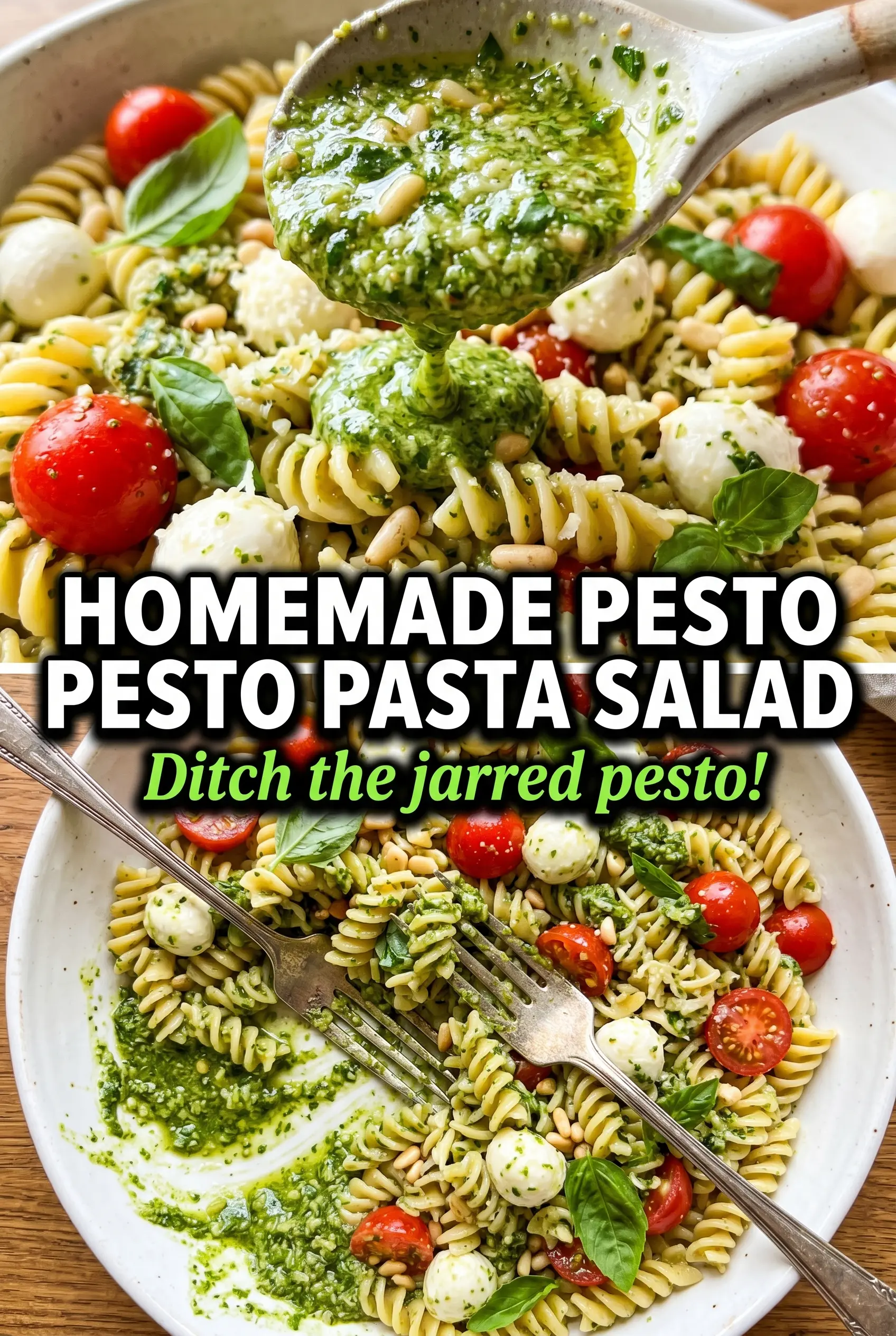
Pesto Pasta Salad
Ingredients
Equipment
Method
- Cook fusilli or penne pasta according to package directions until tender, using a boil. Drain and rinse with cold water to stop cooking and cool the pasta quickly, then shake off excess water.
- Toast pine nuts on a sheet pan in an oven at 350°F for 5 to 7 minutes, shaking once halfway, until lightly golden and fragrant. Let them cool for 2 to 3 minutes so they don’t melt the pesto.
- In a large bowl, toss warm pasta with basil pesto until evenly coated and glossy.
- Add cherry tomatoes and fresh mozzarella pearls, then add toasted pine nuts and Parmesan cheese.
- Drizzle in lemon juice and add salt and pepper to taste, then toss gently until everything is distributed evenly and the tomatoes are coated.
- Refrigerate the pesto pasta salad for at least 1 hour so the flavors develop and the texture firms up slightly.
- Just before serving, garnish with fresh basil leaves for a bright green finish.