Roasted butternut squash and Brussels sprouts turn into a pan of caramelized edges, tender centers, and just enough bite to keep every forkful interesting. The squash goes sweet and creamy, the Brussels sprouts crisp up at the cut sides, and the pecans and cranberries bring crunch and tartness that keep the whole dish from feeling heavy. It lands in that sweet spot where a side dish gets all the attention, then disappears faster than the main course.
The trick is giving the vegetables enough heat and space to brown instead of steam. A hot oven and a single sheet pan do the heavy lifting here, and the maple-balsamic finish gets tossed on at the end so it clings without making the vegetables soggy. Toasted pecans matter more than people think; they add a deeper, nuttier flavor that stands up to the sweet squash and tangy cranberries.
Below, I’ve included the timing details that keep the Brussels sprouts from going soft, plus a few practical swaps if you need to work with what’s already in the pantry.
The Brussels sprouts got those crisp little edges I was hoping for, and the maple balsamic tied everything together without making the pecans soggy. I served it with roast chicken and there wasn’t a spoonful left.
Save these roasted butternut squash and Brussels sprouts for the nights when you want caramelized vegetables, tart cranberries, and toasted pecans in one warm side.
The Secret to Caramelized Vegetables Instead of Steamed Ones
The difference between a deeply browned sheet pan and a pale, soft one comes down to moisture and crowding. Brussels sprouts and squash both release steam as they roast, and if they’re piled up, that steam hangs around long enough to soften the edges you want crisp. Spread everything out in a single layer and use a hot oven so the surfaces dry out and brown before the centers overcook.
The other thing worth paying attention to is cut size. Squash cubes and Brussels sprout halves should be close enough in size that they finish together. If the squash pieces are much smaller, they’ll collapse before the sprouts get color; if they’re too large, the sprouts will be done before the squash turns tender.
What Each Ingredient Is Doing in This Dish
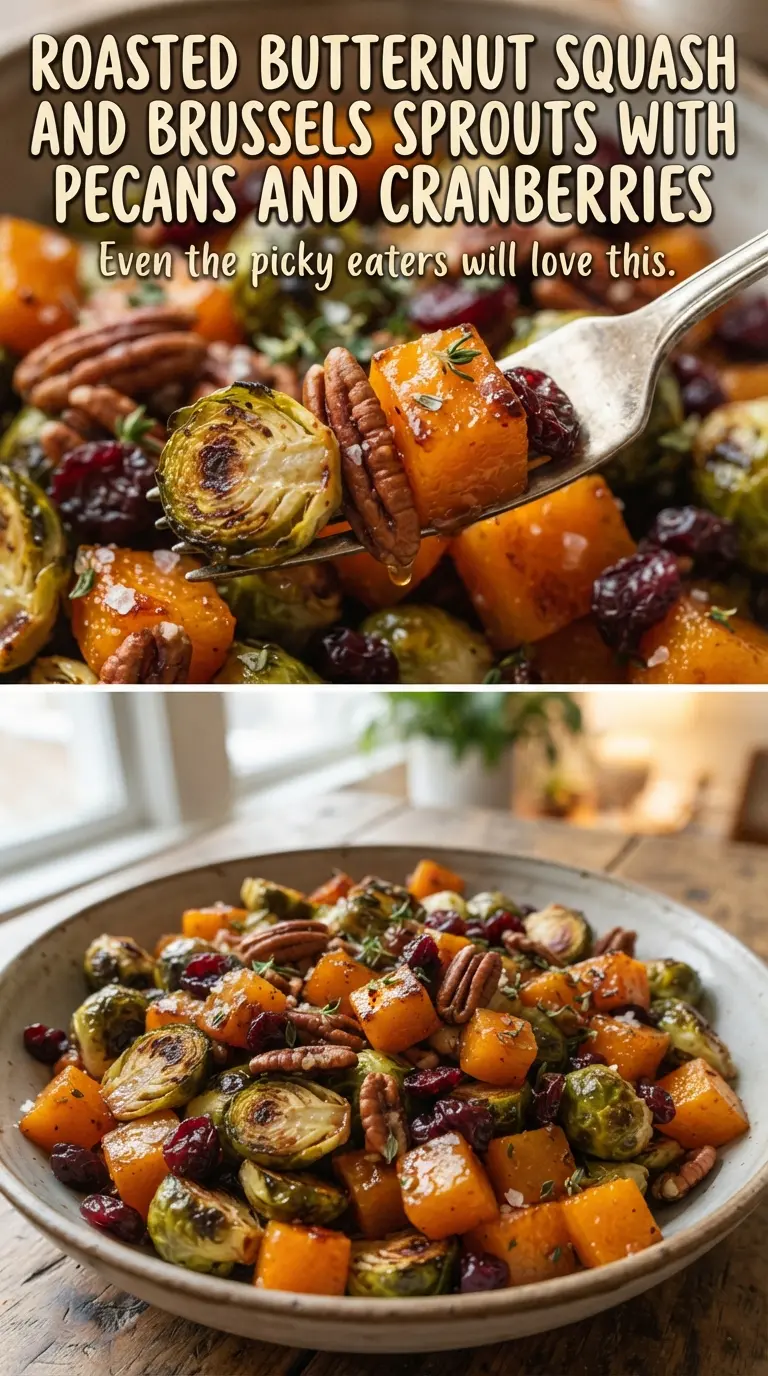
- Butternut squash — This brings the sweetness and soft, creamy bite that balance the sharper Brussels sprouts. Cut it into even cubes so it roasts at the same pace; uneven chunks are the fastest way to end up with mushy squash and underdone sprouts.
- Brussels sprouts — Halved sprouts give you the best of both worlds: tender centers and browned, almost frizzled cut sides. Fresh sprouts roast better than pre-shaved ones here because the halved shape holds up and caramelizes instead of drying out.
- Olive oil — This is what helps the vegetables brown and keeps the seasonings sticking. You don’t need an expensive bottle for roasting, but don’t skimp enough that the pan looks dry; a light, even coating is what keeps the edges from scorching before the centers are tender.
- Maple syrup and balsamic vinegar — Together they make the finish glossy, sweet, and tangy. Add them after roasting so the maple doesn’t burn in the oven and the balsamic keeps its sharpness.
- Pecans — Toasted pecans add crunch and a buttery, nutty note that makes the dish feel finished. If you only have raw pecans, toast them in a dry skillet or in the oven for a few minutes until fragrant; skipping that step makes the topping taste flat.
- Dried cranberries — They bring a tart chew that cuts through the sweetness of the squash and maple. If yours are very dry, toss them in with the warm vegetables so they soften slightly and don’t feel tough against the roasted pieces.
Building the Sheet Pan so Everything Browns at the Same Pace
Coating the Vegetables Evenly
Toss the squash and Brussels sprouts with the oil, salt, and pepper until every cut surface looks lightly slicked. Dry patches brown unevenly and can turn leathery before the rest of the tray is finished. The goal is a thin, even coat, not a puddle of oil at the bottom of the bowl.
Roasting Hot and Leaving Room
Spread the vegetables on a large sheet pan with space around them, then roast at 425F until the edges are darkening and the Brussels sprouts are crisp at the cut sides. If the pan is crowded, the vegetables trap moisture and steam instead of caramelizing. Halfway through, toss them once so the underside gets a chance to meet the hot pan.
Finishing After the Oven
Whisk the maple syrup and balsamic vinegar together, then toss it with the roasted vegetables, cranberries, and pecans while everything is still warm. Warm vegetables absorb the glaze just enough to coat without going limp. If you add the nuts too early, they lose their crunch; if you add the glaze too early, it can scorch.
Three Ways to Make This Side Dish Fit the Table
Make It Vegan-Friendly Without Changing the Flavor
This recipe is already naturally vegan, so you don’t have to change a thing for a plant-based table. The maple-balsamic glaze gives you plenty of richness without butter, and the pecans supply the savory depth people often expect from a roasted vegetable side.
Swap the Pecans for What You Have
Walnuts work well if that’s what’s in the pantry, though they taste a little earthier and less buttery. Pumpkin seeds are the best nut-free swap; they keep the crunch, but they won’t bring the same rich, toasted flavor, so the dish leans a little brighter and lighter.
Dial Down the Sweetness
If you want a less sweet version, cut the maple syrup slightly and add a little more balsamic. That keeps the glaze from reading candy-like and lets the roasted vegetables stay center stage instead of turning the whole dish into a sweet side.
Storage and Reheating
- Refrigerator: Store leftovers in an airtight container for up to 4 days. The vegetables soften a bit, but the flavor holds up well.
- Freezer: It freezes, but the texture changes enough that I only do it when I’m not picky about crispness. Freeze in a flat layer, then reheat from thawed for the best shot at restoring some texture.
- Reheating: Warm on a sheet pan in a 400F oven until heated through. The microwave works in a pinch, but it softens the sprouts and turns the pecans chewy, which is the main mistake to avoid.
Questions I Get Asked About This Recipe
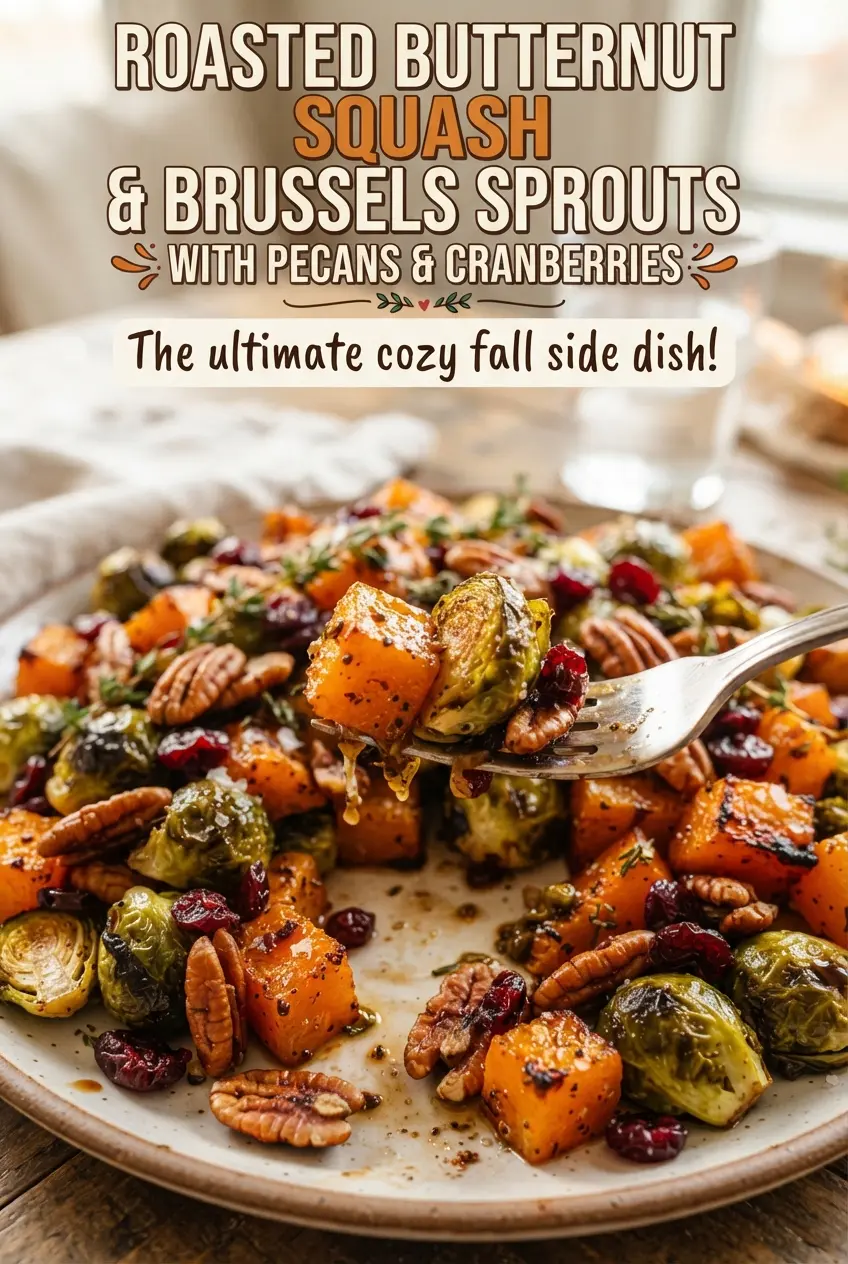
Roasted Butternut Squash and Brussels Sprouts with Pecans and Cranberries
Ingredients
Equipment
Method
- Preheat oven to 425F and position a rack in the middle. This high heat helps the squash caramelize and the Brussels sprouts brown.
- Toss butternut squash and Brussels sprouts with olive oil, salt, and black pepper on a large sheet pan. Make sure everything is evenly coated for consistent browning.
- Roast 25-30 minutes, tossing halfway, until tender and caramelized. Look for golden edges on both the squash cubes and halved Brussels sprouts.
- Whisk maple syrup and balsamic vinegar until smooth. The mixture should look glossy and well combined.
- Toss the roasted vegetables with the maple balsamic, dried cranberries, and pecans—serve warm. The pecans should stay crisp and the cranberries should lightly warm through.