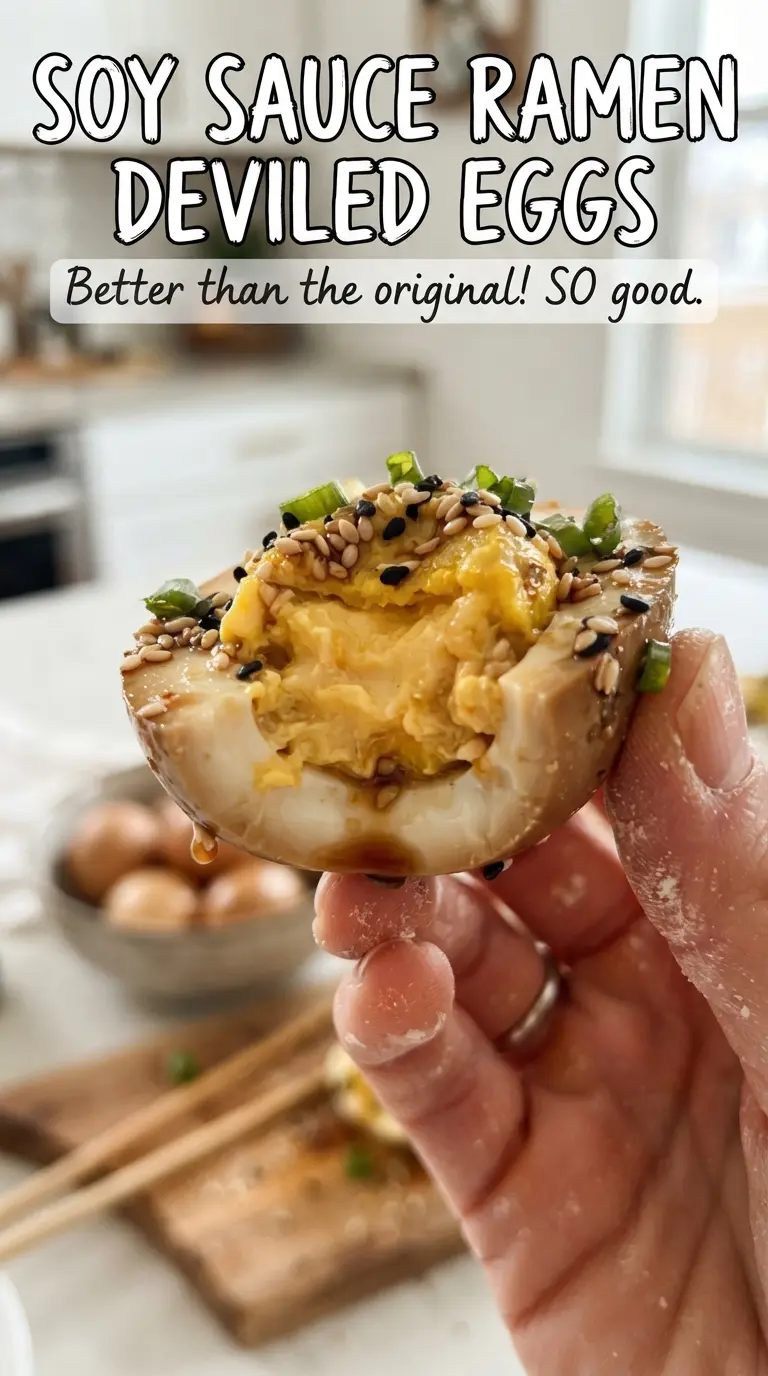
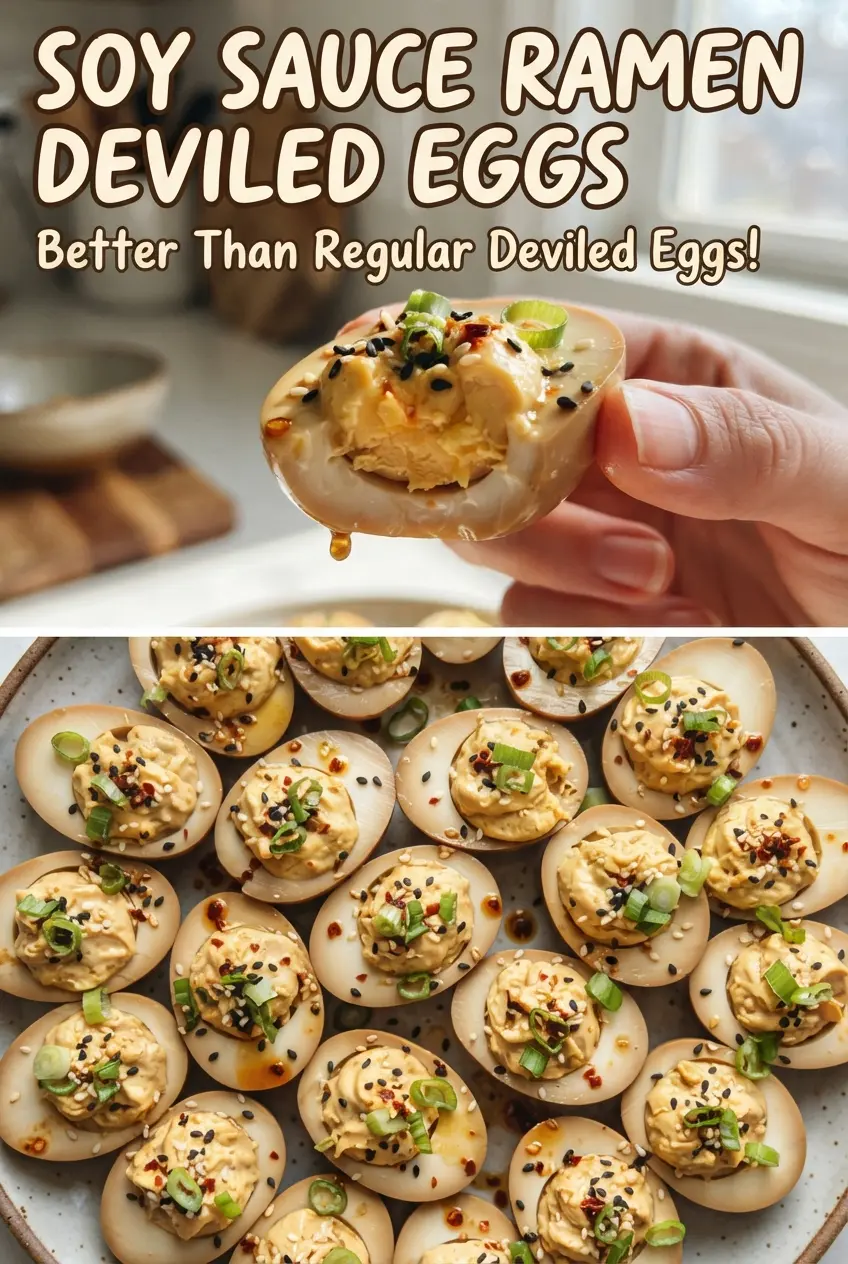
Amber soy-marinated egg whites give these deviled eggs a deeper, saltier, more savory bite than the usual picnic version, and that change makes the filling taste richer without adding much work. The yolks stay creamy, the whites pick up color and seasoning all the way through, and the final plate looks like something you planned instead of something you rushed.
The trick is in the marinade. Soy sauce, water, mirin, and sugar create a balanced bath that seasons the whites without turning them harsh or overly salty. Japanese mayonnaise brings a silkier texture than standard mayo, while sesame oil and rice vinegar keep the filling round instead of flat. A little sriracha is enough to wake everything up without taking over.
Below you’ll find the timing that keeps the eggs easy to peel, the marinade length that gives you good color without a rubbery white, and a few smart swaps if you need to adjust for what’s in your fridge.
The soy marinade gave the whites that gorgeous amber edge, and the filling stayed extra smooth with the Japanese mayo. I made them in the morning and they held up beautifully for our dinner spread.
Like the salty-sweet soy marinade and creamy yolk filling? Save these ramen-style deviled eggs for your next appetizer board.
The Marinade Is Doing More Than Coloring the Egg Whites
Most deviled eggs stop at a seasoned filling, but this version starts earlier. The peeled eggs sit in a soy, mirin, water, and sugar bath long enough for the whites to take on flavor and that deep amber tint without becoming tough. If the marinade is too strong or the eggs sit too long, the whites go from pleasantly savory to aggressively salty, so timing matters here more than in a standard deviled egg recipe.
The other thing that matters is using a balanced marinade, not straight soy sauce. Water keeps the salt level in check, mirin softens the edges, and a little sugar helps the color develop evenly. That balance is what gives you whites that taste seasoned all the way through instead of just stained on the outside.
- Eggs — A 10-minute boil gives you firm yolks that still mash smoothly. If the yolks go chalky, they were cooked too long.
- Soy sauce — Use a good all-purpose soy sauce here. It provides the color and the backbone of the marinade; tamari works if you need a gluten-free option, though the flavor will be a touch rounder.
- Japanese mayonnaise — This is what makes the filling lush. Standard mayo works in a pinch, but Japanese mayo gives a richer, silkier result and a little extra tang.
- Mirin — Don’t skip this unless you have to. It softens the soy and helps the marinade taste layered instead of sharp.
What Each Ingredient Is Actually Doing in This Recipe
- Primary ingredient (the star) — Quality matters most. Choose the best you can find.
- Cooking medium (oil, butter, or broth) — This carries flavors and prevents dryness.
- Seasonings (salt, pepper, spices, herbs) — Layer flavors so nothing overpowers. Build depth gradually.
- Aromatics (garlic, onion, herbs) — Cook with fat to bloom flavors. Become the foundation.
- Supporting ingredients — Complement the main ingredient without overpowering it.
- Sauce or liquid (if applicable) — Brings flavors together. Balance richness with acid.
- Acid (lemon, vinegar, wine, or other) — Brightens and prevents flat-tasting results.
- Final finish (garnish, glaze, or sauce) — Prevents one-dimensional taste and adds visual appeal.
Building the Filling So It Stays Creamy After It Puffs in the Fridge
Boil, chill, and peel with care. Ten minutes in boiling water sets the yolks for clean slicing and mashing. Get the eggs into an ice bath right away so the cooking stops and the shells release more easily. If the shells cling, the eggs were probably too fresh; a few extra days in the fridge before cooking helps.
Marinate the whites until they’re tinted, not cured. Four hours gives you a good amber color and noticeable seasoning. Keep the eggs fully submerged, and turn them once if the liquid level doesn’t cover them evenly. Go much longer and the texture starts to tighten, which is the quickest way to lose that soft bite.
Mash the yolks until the mixture looks glossy. The mayonnaise, sesame oil, rice vinegar, and sriracha should turn the yolks into a smooth paste with no dry crumbles. If the filling looks stiff, add a tiny bit more mayo; if it tastes heavy, a few drops of vinegar will lift it without making it sharp.
Pipe and finish cold. The whites should be patted dry before filling so the topping stays put. Sesame seeds, nori, and green onion give you crunch, salt, and a fresh finish, and they also make the eggs look cleaner on the platter than a plain sprinkle of paprika ever could.
Make Them Milder for a Bigger Crowd
Cut the soy sauce back by 2 tablespoons and replace that amount with water if you’re serving people who like deviled eggs but don’t want a strong soy hit. You’ll still get color and seasoning, just with a gentler finish.
Gluten-Free Version
Use tamari instead of standard soy sauce and check your mayonnaise label. Tamari gives you the same deep savory base and nearly the same color, so the finished eggs still taste balanced and look the part.
No Japanese Mayo on Hand
Regular mayonnaise works, but add a few extra drops of rice vinegar to mimic the brighter, slightly sweeter profile of Japanese mayo. The filling will still pipe well; it just won’t have quite the same silky richness.
Make-Ahead Party Prep
Marinate the eggs and mix the filling up to a day ahead, but keep the whites and filling separate until an hour or two before serving. The whites hold their best texture when they’re not sitting filled for too long.
Storage and Reheating
- Refrigerator: Store assembled deviled eggs in a covered container for up to 2 days. The garnish stays freshest on day one, and the whites can pick up a little more salt as they sit.
- Freezer: Don’t freeze them. Egg whites turn rubbery and watery after thawing, and the filling loses its smooth texture.
- Reheating: Serve these cold straight from the fridge. If they sit out, let them warm only slightly, because heat makes the filling loose and dulls the sesame and nori garnish.
Answers to the Questions Worth Asking
Soy Sauce Ramen Deviled Eggs
Ingredients
Equipment
Method
- Bring a pot of water to a boil, then boil the large eggs for 10 minutes. Visual cue: the yolks should be fully set with firm whites.
- Immediately transfer the eggs to an ice bath to chill. Visual cue: eggs feel cold to the touch within 5 minutes.
- Peel the eggs once chilled. Visual cue: clean shells removed without tearing the whites.
- Whisk together soy sauce, water, mirin, and sugar until the sugar dissolves. Visual cue: the marinade looks evenly tinted.
- Submerge the peeled eggs in the marinade and refrigerate for 4 hours. Visual cue: the egg whites turn an amber-brown color.
- Halve the marinated eggs lengthwise and remove the yolks. Visual cue: the whites look glossy and amber along the cut.
- Mash the yolks with Japanese mayonnaise, sesame oil, rice vinegar, and sriracha until smooth. Visual cue: the filling becomes a thick, uniform golden paste.
- Pipe the yolk filling into the amber egg whites. Visual cue: the filling forms a neat mound in each half.
- Top with toasted sesame seeds, thin nori strips, and sliced green onions. Visual cue: garnish is visible on top with a light green and dark nori contrast.