Deeply browned beef, onions cooked down until sweet, and a wine-braised sauce that clings to every bite are what make this stew worth making again and again. It doesn’t taste flat or heavy. The long simmer turns the chuck tender without shredding it to pieces, and the carrots keep enough shape to give the pot some structure.
The key is in the order. The beef needs a hard sear in batches so it browns instead of steaming, and the onions need time in the same pot to pick up all that flavor before the wine goes in. The flour cooks with the beef for a few minutes, which keeps the sauce from tasting raw and helps it thicken naturally as it braises. Burgundy brings depth, but the real work is done by patience and a gentle simmer.
Below you’ll find the small details that matter most, from how dark the sear should be to what to do if your stew looks thin at the end. The final parsley finish matters more than it sounds like it would.
The beef got meltingly tender and the sauce thickened up beautifully after the full simmer. I loved how the wine and onions made it taste rich without being muddy.
Save this wine-braised beef stew for a slow-simmered dinner with tender chuck, sweet onions, and a glossy French-style sauce.
The Sear and Simmer Order That Keeps the Beef Tender
If the beef goes into the pot before the pan is hot enough, it throws off liquid and turns gray instead of building the deep flavor this stew depends on. Work in batches and let each piece sit until it releases naturally from the pot with a dark crust on the outside. That crust is not a bonus; it is the base of the sauce.
Once the onions go in, use the same pot and take your time. They need to soften and pick up the browned bits left behind by the beef, which is where the stew gets its depth. The gentle simmer matters just as much as the sear. A hard boil will tighten the meat and muddy the sauce.
What the Wine, Flour, and Bouquet Garni Are Each Doing Here

- Beef chuck — This is the cut that earns the long cook. Chuck has enough connective tissue to turn silky after braising, while leaner cuts dry out before the sauce has time to develop. Cut it into true 2-inch pieces so it stays substantial after two hours in the pot.
- Red Burgundy — A dry red with good acidity keeps the stew from tasting heavy. If Burgundy is out of reach, use another dry Pinot Noir or a light-bodied red you would actually drink. Skip sweet reds; they make the sauce taste jammy instead of savory.
- Flour — The flour does more than thicken. Stirring it with the browned beef cooks off the raw taste and gives the braising liquid a little body so it coats the meat instead of pooling at the bottom. Don’t add a lot more than the recipe calls for or the sauce turns pasty.
- Bouquet garni — The tied herbs perfume the stew without leaving stems and bay leaf fragments behind. If you don’t want to tie your own, tuck thyme, parsley stems, and bay leaf into a small piece of cheesecloth or a tea infuser so you can lift them out cleanly at the end.
- Carrots and onions — Both need enough time in the pot to soften without collapsing. Slice the onions thin so they melt into the sauce, but keep the carrots in big enough pieces that they still have a little bite when the beef is done.
Building the Stew So the Sauce Stays Glossy
Getting the Beef Brown, Not Gray
Season the beef before it hits the oil, then sear it in a hot pot without crowding. If the pieces sit too close together, they steam and lose the browned edges that give the stew its backbone. You’re looking for a deep mahogany crust, not a light tan color. Pull each batch when it releases cleanly from the pot.
Letting the Onions Take Over the Pot
After the beef comes out, the onions go into the same pot and stay there until soft and golden. They will pick up the browned bits stuck to the bottom, which is where the flavor lives. If the pot looks dry, a small splash of water helps loosen the bits without scorching them. By the end, the onions should look almost jammy.
Cooking the Flour Into the Base
When the beef returns, sprinkle the flour over it and stir for a few minutes before adding the wine. That short cook takes away the raw flour taste and helps the sauce thicken later. If you dump the liquid in immediately, the flour can clump and leave the braise cloudy. Stir until everything looks lightly coated and pasty around the edges.
Finishing with a Gentle Braise
Pour in the wine, scrape the bottom of the pot, then add the carrots, garlic, bouquet garni, and enough stock or water to just cover the beef. Bring it to a gentle simmer, then lower the heat and partly cover the pot. The liquid should barely move. After about two hours, the meat should yield easily to a fork and the sauce should look thick enough to coat the back of a spoon. Finish with parsley after the heat is off so it stays bright.
How to Adapt This Stew for Different Tables and Schedules
For a deeper, richer sauce
Use beef stock instead of water and let the onions cook until they pick up a little color before the flour goes in. The stew will taste rounder and more concentrated. If you want even more depth, chill it overnight and reheat the next day; the flavors settle into each other and the sauce thickens as it sits.
Gluten-free version
Skip the all-purpose flour and dust the beef with a gluten-free flour blend or tapioca starch instead. The texture will still be glossy, but the sauce may be a little lighter, so let it simmer uncovered for the last 15 minutes if it needs tightening.
If you want it ahead of time
This stew is even better the next day. Cool it completely, then refrigerate it in a covered container. The fat rises and firms up, which makes it easy to lift off if you want a cleaner, less rich sauce before reheating.
If you need a wine-free version
Replace the wine with extra beef stock plus 1 to 2 tablespoons of red wine vinegar stirred in at the end. You lose some of the wine’s roundness, but the vinegar brings back the brightness that keeps the stew from tasting flat.
Storage and Reheating
- Refrigerator: Keeps well for 4 days. The sauce will thicken as it chills.
- Freezer: Freezes well for up to 3 months. Cool completely first and leave a little room at the top of the container.
- Reheating: Warm it slowly over low heat on the stove with a splash of stock or water. A hard boil can tighten the beef and make the sauce split at the edges.
Questions I Get Asked About This Recipe
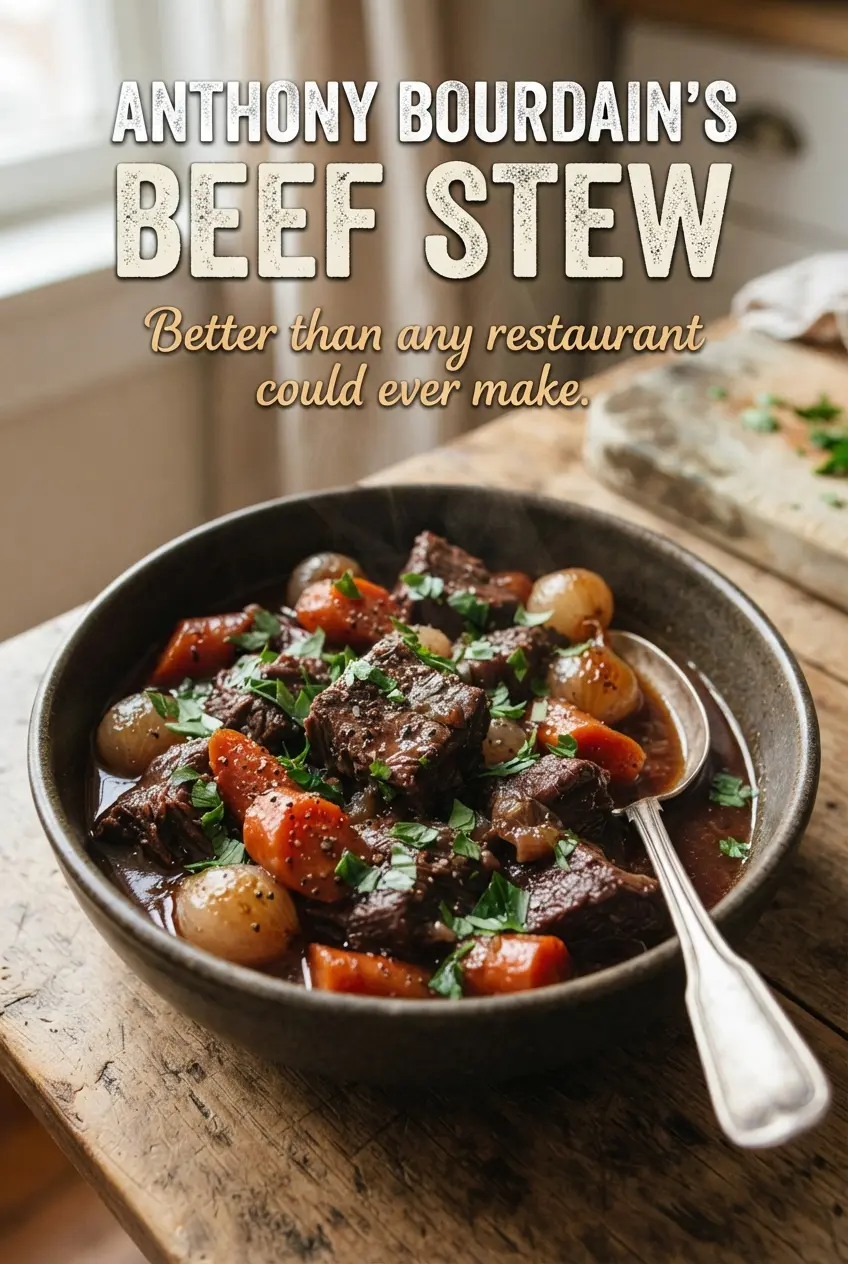
Anthony Bourdain-Style Beef Stew
Ingredients
Equipment
Method
- Season the beef chuck cubes with salt and black pepper, then pat the surfaces evenly so they brown well. Heat the olive oil in a very hot Dutch oven and sear the beef in batches until deeply browned, about 5-7 minutes per batch, then set aside.
- Cook the thinly sliced onions in the same pot until soft and golden, stirring occasionally, about 10 minutes. The onions should look translucent and lightly caramelized.
- Return the browned beef to the pot, sprinkle with all-purpose flour, and stir until browned, about 3-4 minutes. You should see a deeper color coating the beef.
- Pour in the red Burgundy wine and scrape the bottom of the Dutch oven to loosen browned bits. Add the carrots, garlic, bouquet garni, and enough water or beef stock to just cover the beef.
- Simmer the stew gently, partly covered, until the beef is very tender and the sauce is thick, about 2 hours at a steady simmer. The surface should show small bubbles, and the liquid should reduce to a spoon-coating consistency.
- Remove the bouquet garni and discard it. Finish by stirring in chopped fresh parsley off the heat so it stays bright.