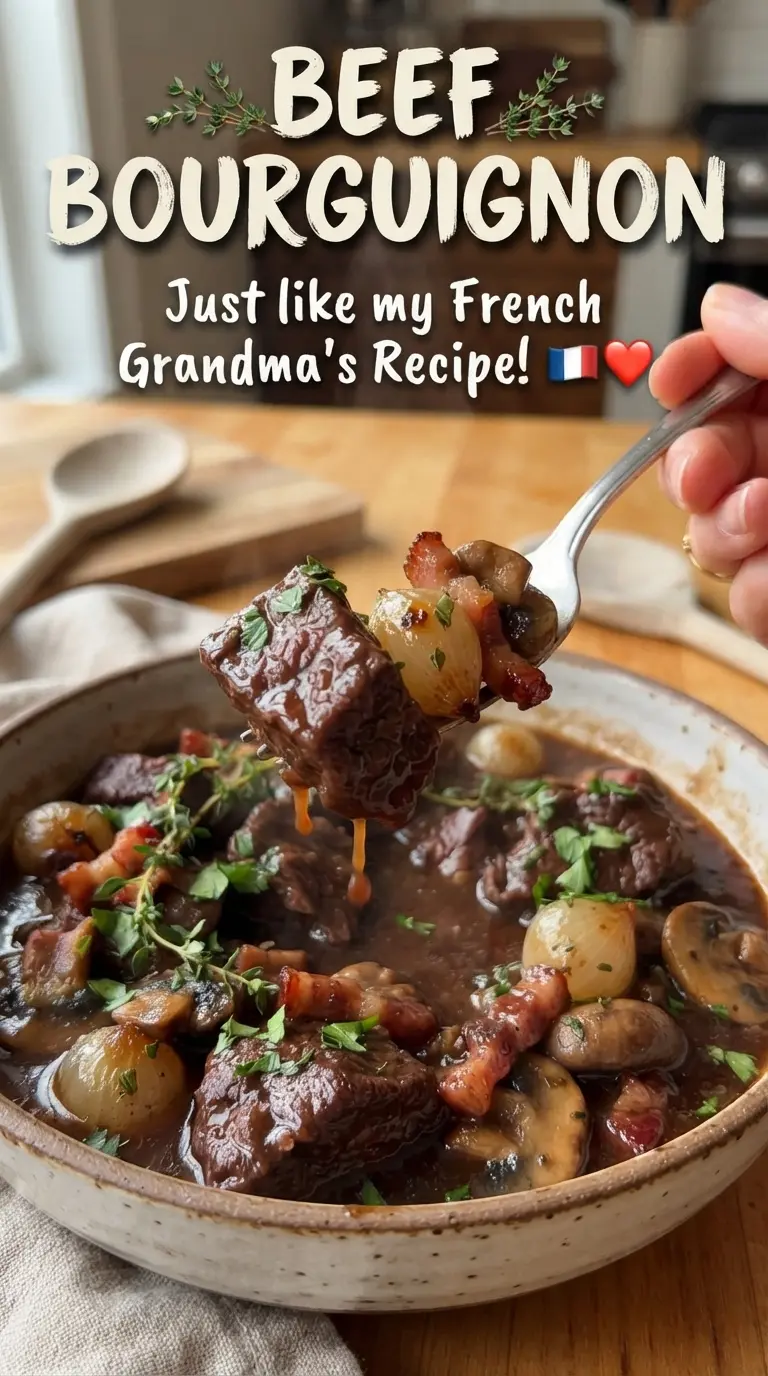
Beef Bourguignon turns a tough cut of beef into spoon-tender chunks under a glossy red wine sauce that tastes far deeper than the short ingredient list suggests. The bacon brings smoke and salt, the wine gives the stew its backbone, and the slow oven braise does the work that a quick simmer never can. When it’s done right, the beef stays intact but yields at the touch of a fork, and the sauce clings instead of running thin across the plate.
What makes this version reliable is the order of the work. Browning the bacon first gives you fat for searing the beef, and that browned fond is what builds the sauce. The flour and tomato paste cook with the vegetables before the liquid goes in, which keeps the stew from tasting raw or dusty. I also cook the mushrooms and pearl onions separately at the end, so they keep their own flavor instead of disappearing into the braise.
Below you’ll find the cue I use for knowing when the beef is actually ready, plus the small finish that makes the sauce taste round and polished instead of flat.
The beef was fall-apart tender after three hours, and the sauce thickened up beautifully once I swirled in the butter at the end. I loved that the mushrooms stayed browned instead of getting mushy in the pot.
Save this Beef Bourguignon for the kind of night when you want deep red wine sauce, tender beef, and browned mushrooms in every bite.
The Part That Keeps the Beef Tender Instead of Stringy
The beef needs a hard sear before it ever sees the oven. That browning is not just for color; it creates the deep, savory base that makes the wine sauce taste cooked instead of thin and boozy. If you crowd the pot, the meat steams and the surface stays pale, which is the fastest way to end up with a stew that tastes flat even after hours in the oven.
The other trap is heat. Once the wine and broth go in, the pot should come to a gentle simmer before it goes into the oven, not a rolling boil. A calm braise keeps the chuck fibers from tightening up too early, and it gives the sauce time to reduce into something silky around the meat instead of separating into broth and fat.
- Chuck roast — This cut has the connective tissue that turns meltingly tender over a long braise. Leaner beef will dry out before the sauce develops.
- Dry red wine — Use something you’d drink, but it does not need to be expensive. A dry Burgundy, Pinot Noir, or Cabernet all work; just avoid sweet wine, which throws the balance off.
- Bacon lardons — They bring smoky depth and the fat you need for searing. Pancetta can stand in if that’s what you have, but regular bacon gives a stronger, more familiar stew flavor.
- Tomato paste and flour — These build body before the liquid goes in, which is why the sauce finishes glossy instead of watery. Cook them for the full couple of minutes so the raw flour taste disappears.
What Each Ingredient Is Actually Doing in This Recipe
- Primary ingredient (the star) — Quality matters most. Choose the best you can find.
- Cooking medium (oil, butter, or broth) — This carries flavors and prevents dryness.
- Seasonings (salt, pepper, spices, herbs) — Layer flavors so nothing overpowers. Build depth gradually.
- Aromatics (garlic, onion, herbs) — Cook with fat to bloom flavors. Become the foundation.
- Supporting ingredients — Complement the main ingredient without overpowering it.
- Sauce or liquid (if applicable) — Brings flavors together. Balance richness with acid.
- Acid (lemon, vinegar, wine, or other) — Brightens and prevents flat-tasting results.
- Final finish (garnish, glaze, or sauce) — Prevents one-dimensional taste and adds visual appeal.
Building the Braise in the Right Order
Rendering the Bacon and Searing the Beef
Cook the bacon until it gives up its fat and the edges begin to crisp, then lift it out and use that fat to brown the beef in batches. The beef should release easily when the crust forms; if it sticks hard, give it another minute. Don’t rush this part, because pale meat means less flavor in the finished stew. Pat the beef dry first or the surface will steam before it browns.
Softening the Vegetables and Cooking Out the Paste
Onions and carrots go into the pot after the beef comes out and need enough time to lose their raw edge. When the garlic, flour, and tomato paste hit the pan, stir until the mixture looks thick and brick-colored. That short cooking time matters because uncooked flour tastes chalky and tomato paste needs heat to turn from sharp to round.
The Oven Braise
Once the wine and broth are in, scrape the bottom of the pot until the fond dissolves into the liquid. Add the beef and bacon back in, bring everything to a simmer, then cover and transfer to the oven. Three hours is a starting point, not a rule; the beef is ready when a spoon slides through a piece with almost no resistance. If the sauce looks thin at the end, keep the lid off for the last 15 minutes in the oven.
The Mushroom and Pearl Onion Finish
Brown the mushrooms and pearl onions in butter separately so they keep their shape and pick up color before they go into the stew. If you add them straight to the braise, they’ll turn soft and one-note. Stir them into the pot for the last 20 minutes so they soak up the sauce without losing their own texture. Finish with parsley and the last bit of butter for a sauce that looks glossy and tastes rounded.
How to Adapt This for Different Tables
Make it gluten-free
Skip the all-purpose flour and thicken the stew by reducing it uncovered for the last 20 to 30 minutes. The sauce won’t be quite as velvety at first, but it still gets plenty of body from the collagen in the beef and the long braise.
Wine-free version
Replace the wine with more beef broth plus 1 to 2 tablespoons of red wine vinegar added at the end. You’ll lose some of the classic Bourguignon depth, but the stew will still have a rich, savory braising liquid instead of a flat broth.
Make it ahead
This stew is even better the next day. Chill it overnight, then reheat gently so the sauce has time to loosen and the flavors meld; the fat will also rise to the top, making it easy to skim if you want a cleaner sauce.
Extra-rich finish
Swirl in the final tablespoon of butter only after the pot comes off the heat. That last pat of butter gives the sauce a sheen and softens the edge of the wine without making it taste heavy.
Storage and Reheating
- Refrigerator: Store covered for up to 4 days. The sauce thickens as it chills, and the flavor deepens.
- Freezer: Freezes well for up to 3 months. Cool completely first and leave a little space at the top of the container.
- Reheating: Warm gently on the stovetop over low heat or in a 300F oven, covered, until hot. Don’t boil it hard or the beef can dry out and the sauce can turn greasy.
Answers to the Questions Worth Asking
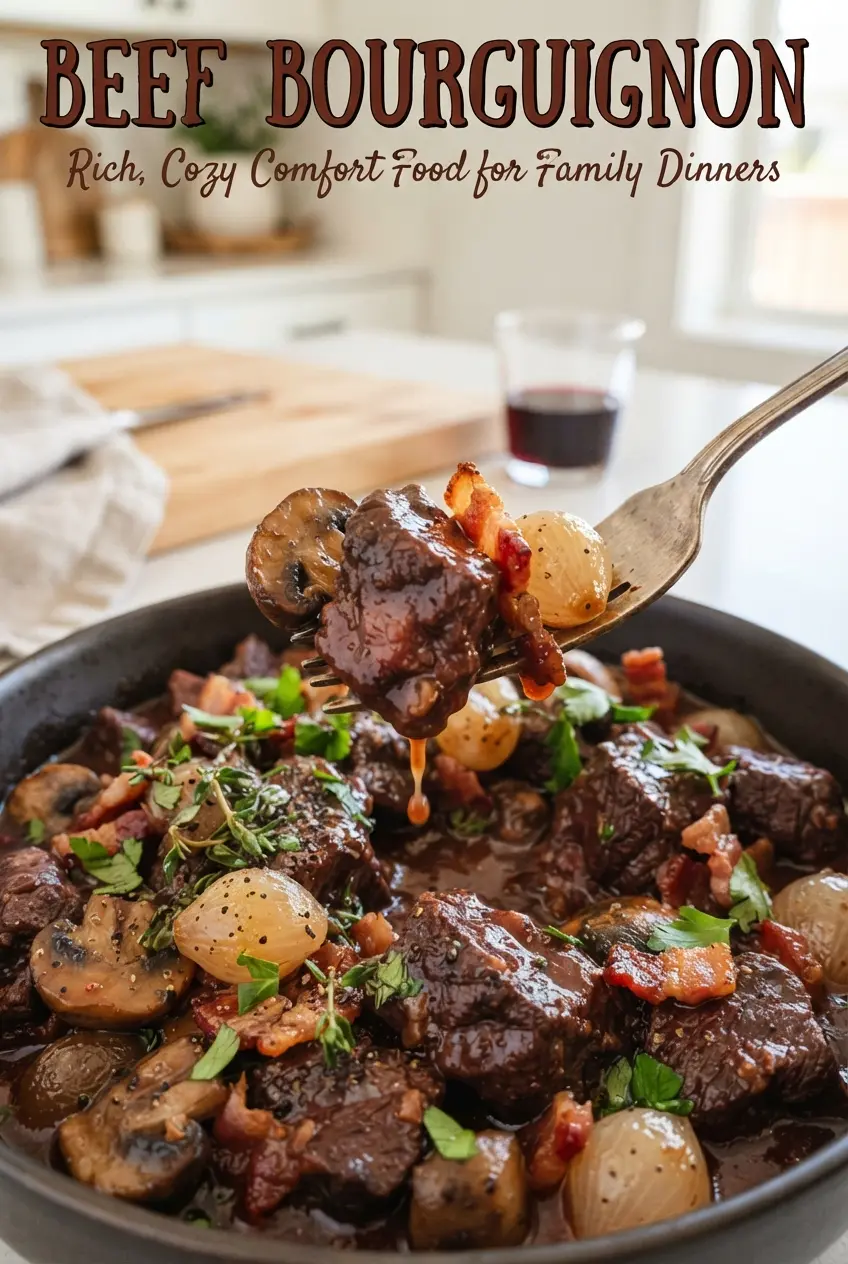
Beef Bourguignon
Ingredients
Equipment
Method
- Preheat oven to 325F. Brown the bacon in olive oil in a Dutch oven until golden, then set aside.
- Pat beef dry, season with salt and black pepper, and sear in batches in the bacon fat until deeply browned. Keep batches from overcrowding so the beef gets strong color.
- Cook the sliced onion and carrots for 5 minutes in the Dutch oven. Add the minced garlic, flour, and tomato paste, and cook for 2 minutes until fragrant.
- Add the red wine, beef broth, thyme, bay leaves, beef, and the reserved bacon to the pot. Bring to a simmer, cover, and braise in the oven for 3 hours until the beef is tender and the sauce looks glossy.
- Brown the pearl onions and mushrooms in butter in a skillet until browned. Add them to the stew for the last 20 minutes of braising.
- Remove the herbs and bay leaves, then swirl in the remaining butter until melted and silky. Top with chopped parsley and serve hot.