Caldillo is the kind of beef stew that doesn’t taste heavy, even though it eats like a full meal. The broth stays light and savory, the beef turns tender without falling apart, and the roasted green chiles give every spoonful a clean heat that lingers instead of overpowering. Potatoes soak up the tomato-rich broth and turn the bowl into something that feels both rustic and balanced.
What makes this version work is the layering. The beef gets browned first so the stew has a deeper base than a simple simmered soup, then the onions, garlic, chiles, tomatoes, cumin, and oregano cook long enough to lose their raw edges before the broth goes in. That short step matters. It keeps the finished broth from tasting flat or watery, and it gives the chile flavor a chance to blend into the meat instead of sitting on top of it.
Below, I’ve included the little details that matter most: when to add the potatoes so they stay intact, how to keep the broth clear and flavorful, and what to change if you’re working with different green chiles.
The beef got melting tender and the potatoes held together just right. I loved how the roasted green chiles stayed bright in the broth instead of getting lost.
Save this Caldillo Mexican Beef Stew for the nights when you want tender beef, roasted green chiles, and a brothy tomato base with warm tortillas.
The Step That Keeps the Broth from Tasting Thin
Most caldillo recipes go wrong in one of two places: the meat is never browned enough, or the aromatics are rushed straight into liquid. Browning the beef in batches matters because crowded meat steams instead of sears, and steamed beef leaves you with a pale broth that tastes thin even after hours of simmering. You want dark edges on the cubes and brown bits stuck to the bottom of the pot.
The other key is giving the chiles, tomatoes, cumin, and oregano a few minutes in the pot before the broth goes in. That short cook softens the tomato, wakes up the cumin, and lets the green chile flavor bloom. If you dump everything in at once, the stew still works, but it tastes flatter and the chile heat doesn’t spread evenly through the broth.
What the Chiles, Potatoes, and Broth Are Each Doing Here
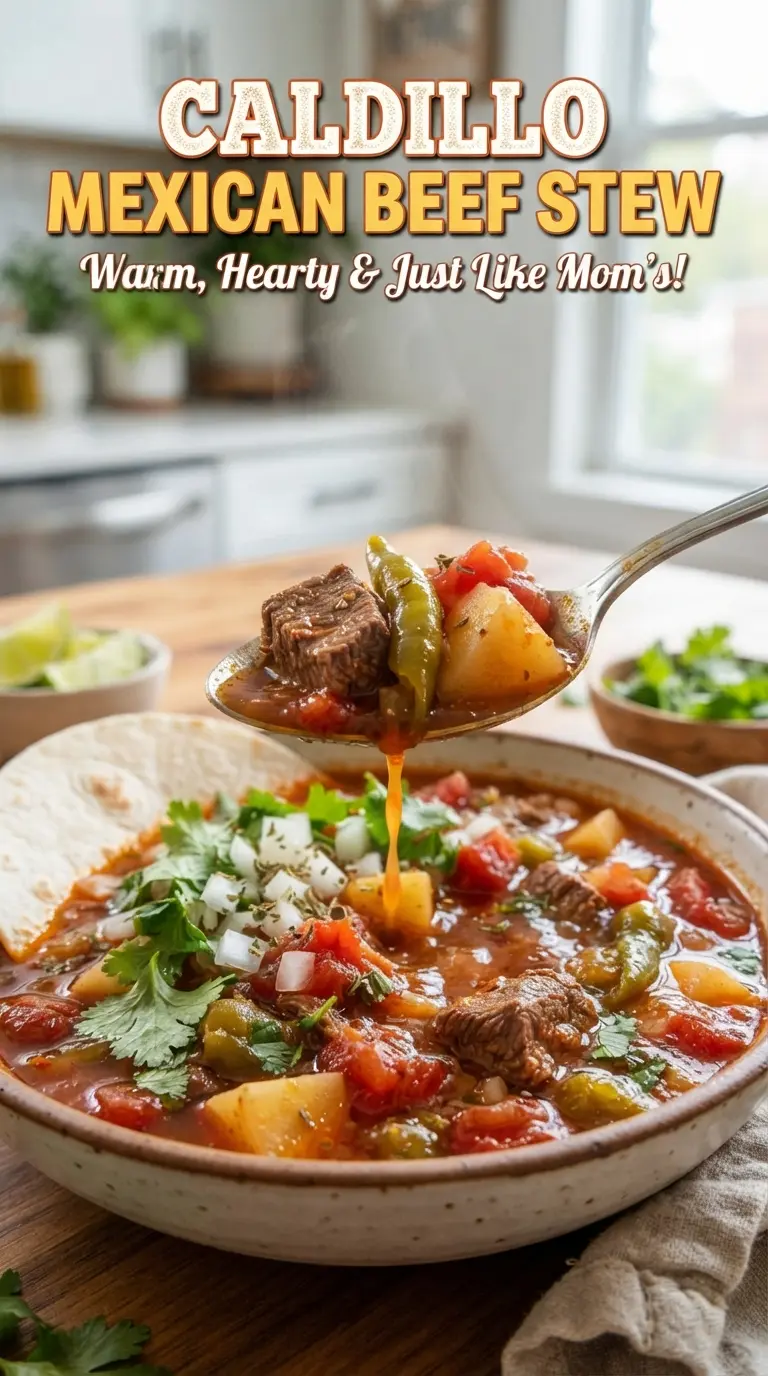
- Beef chuck — This cut has enough fat and connective tissue to turn tender during the long simmer. Lean stew meat won’t give you the same silky texture. If you need a substitute, use brisket cut into chunks and simmer a little longer until it gives easily under a spoon.
- Roasted green chiles — Hatch or Anaheim chiles bring the dish’s signature flavor: bright, earthy heat without a heavy smoky taste. Fresh green peppers won’t give the same result. If you can’t find roasted chiles, roast Anaheim or poblano peppers under the broiler until blistered, peel them, and chop them before adding.
- Potatoes — They thicken the broth just enough and make the stew satisfying. Waxy potatoes hold their shape best, while russets will break down faster and make the broth cloudier. Cut them into even cubes so they finish at the same time.
- Beef broth — This is the liquid backbone of the stew, so use one you’d actually sip. A weak broth makes the whole pot taste flat. If yours is salted heavily, hold back a little on the stew salt until the end.
Building the Pot in the Right Order
Browning the Beef in Batches
Heat the oil until it shimmers, then add the beef in a single layer with space between the pieces. You want the cubes to sizzle immediately; if the pot is crowded, lower the heat and work in more batches. Browned edges mean flavor is developing, and the bits left in the pot will become part of the broth later. Don’t stir constantly. Let each side sit long enough to pick up real color.
Softening the Aromatics
Add the onion to the same pot and cook it until it turns translucent and starts to look glossy, then add the garlic for just a minute. Garlic burns fast, and burnt garlic will dominate the stew with bitterness. Once the garlic smells fragrant, stir in the green chiles, tomatoes, cumin, and oregano. Cook that mixture for about 3 minutes so the tomatoes break down and the spices stop tasting raw.
Long Simmer, Then the Potatoes
Pour in the broth and return the beef to the pot, scraping the bottom well. That scraping pulls up the browned bits that carry the deepest flavor. Cover the pot and simmer gently until the beef is nearly tender, then add the potatoes. If the potatoes go in too early, they’ll collapse before the meat is ready; if they go in too late, they’ll stay chalky in the center. You’re looking for potatoes that cut cleanly with a spoon but still hold their shape.
The Finish
When the potatoes are tender and the beef yields easily, turn off the heat and stir in the cilantro. Taste the broth and adjust the salt only at the end, after the liquid has reduced a little and the flavors have concentrated. Serve with lime wedges and warm tortillas so each bowl gets a sharp squeeze of acid and something soft to soak up the broth.
How to Adapt Caldillo for Different Kitchens
Use poblano peppers instead of Hatch chiles
Poblanos give you a milder, slightly deeper chile flavor. Roast and peel them first, just like Hatch or Anaheim peppers, so the stew still has that clean, tender chile texture instead of raw vegetable notes.
Make it heartier with extra vegetables
Carrots or zucchini can go in with the potatoes if you want more vegetables in the pot. Carrots hold their shape well; zucchini softens faster and makes the stew a little looser. Don’t add delicate vegetables too early or they’ll disappear into the broth.
Swap in a leaner protein
Beef sirloin will work if you want a leaner stew, but it won’t turn as silky as chuck. Cut the simmer time back a little and watch closely so it stays tender instead of dry. The broth will taste cleaner, but it won’t have the same rich body.
Storage and Reheating
- Refrigerator: Keeps well for 4 days. The flavor deepens overnight, and the broth may thicken a little as the potatoes relax.
- Freezer: Freezes well for up to 3 months, but the potatoes will soften a bit after thawing. For the best texture, cool completely before freezing in airtight containers.
- Reheating: Warm it slowly on the stovetop over medium-low heat until hot all the way through. A hard boil can break up the potatoes and make the beef stringy, so keep the simmer gentle.
Questions I Get Asked About This Recipe

Caldillo Mexican Beef Stew
Ingredients
Equipment
Method
- Season the beef cubes with salt and black pepper, then pat to help them brown. Brown in batches in hot vegetable oil in a Dutch oven until well browned, about 5 minutes per batch, and transfer to a plate.
- Add diced onion to the Dutch oven and cook for 4 minutes, stirring, until softened. Add minced garlic and cook for 1 minute, stirring until fragrant and not browned.
- Stir in roasted green chiles, diced Roma tomatoes, ground cumin, and dried Mexican oregano. Cook for 3 minutes, and you should see the mixture darken slightly and smell aromatic.
- Pour in the beef broth, then add the browned beef and stir to combine. Cover and simmer for 1 1/2 hours, keeping a steady bubble and checking occasionally to ensure it stays simmering.
- Add cubed potatoes, then cover and continue simmering for 25 to 30 minutes, until tender. When pierced with a fork, the cubes should break easily without falling apart.
- Turn off the heat and top the stew with chopped fresh cilantro. Serve with lime wedges and warm tortillas for dipping and spooning.