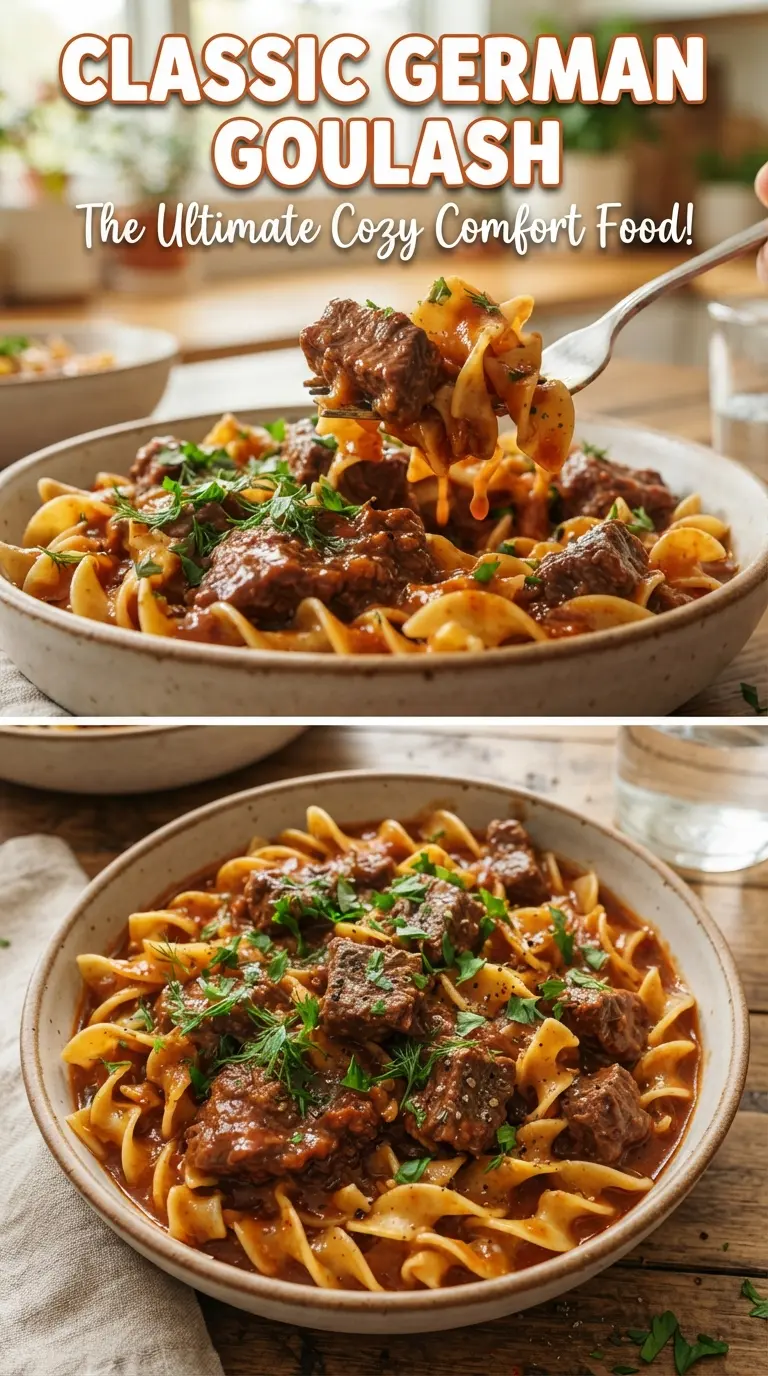
Thick, paprika-dark gravy clinging to tender beef is what makes German goulash worth the long simmer. The onions melt down until they almost disappear, turning the pot into a deep, savory sauce instead of a broth with meat in it. By the time it hits the table, the beef cubes are soft enough to pull apart with a spoon, and the sauce has that rounded, slow-cooked flavor that makes this dish feel bigger than the ingredient list.
The trick here is patience with the onions and restraint with the heat once the paprika goes in. Paprika burns fast and turns bitter, so it only gets a minute in the pot before the vinegar and broth go in to cool everything down. The flour slurry gets added at the end, after the beef is already tender, which keeps the gravy smooth instead of pasty. If you’ve had goulash that tasted thin or flat, this version fixes both problems with a heavier onion base and a better balance of sweet paprika, hot paprika, and marjoram.
Below you’ll find the one stage people rush most, the ingredient that matters more than the beef does, and the small finishing move that gives the gravy its glossy, spoon-coating texture. Serve it with spaetzle if you can, because that’s the combination that makes the whole pot feel complete.
The onions cooked down into the richest gravy and the beef was fall-apart tender after the full simmer. I served it over buttered egg noodles and there wasn’t a drop left.
Save this Classic German Goulash for the nights when you want tender beef, sweet paprika gravy, and spaetzle on the plate.
The Quiet Reason This Goulash Tastes Deep Instead of Watery
German goulash lives or dies on the onions. Four pounds sounds excessive until they cook down into the body of the sauce, giving you sweetness, thickness, and that dark, rounded base that makes the gravy taste like it’s been simmering all day. If you rush them, the pot ends up tasting like seasoned beef in broth. If you let them soften and color, the whole dish changes.
The other place people miss is the paprika. It needs only a short minute in the hot fat with the tomato paste and caraway before the liquid goes in. Any longer and the spices can scorch, which gives the sauce a dusty bitterness that never cooks out. The vinegar looks small, but it matters because it wakes up the onions and keeps the final gravy from tasting heavy.
- The onions are not a garnish here. They dissolve into the sauce and do the work of thickening, sweetening, and rounding out the beef.
- Sweet paprika provides the color and warmth. Hot paprika adds a little lift, but it should stay in the background.
- Caraway gives the dish its unmistakable German edge. Toasting it briefly in the pot brings out more flavor than adding it later.
- Flour goes in only after the beef is tender. Added too early, it can make the gravy chalky before the meat has a chance to soften.
What Each Ingredient Is Actually Doing in the Pot
- Beef chuck — This cut has the fat and connective tissue that break down into tenderness over a long simmer. Leaner beef won’t give you the same soft texture or the same body in the sauce.
- Onions — Use the full amount and slice them evenly so they cook at the same rate. This is the backbone of the gravy, and a smaller amount leaves the dish flat and thin.
- Sweet paprika and hot paprika — Sweet paprika gives the deep brick color and the mellow base flavor; hot paprika adds a gentle edge. If you only have mild paprika, use it and add a pinch of cayenne if you want more heat.
- Tomato paste — It adds depth, color, and a little concentrated sweetness. Let it fry briefly with the spices so it loses the raw tinny note.
- Red wine vinegar — This keeps the sauce from tasting heavy. If you need a substitute, use apple cider vinegar in the same amount, but expect a slightly fruitier finish.
- Marjoram and bay leaves — Marjoram gives the stew its classic herbal note without taking it over. Dried thyme can stand in if needed, but the flavor will lean less traditional.
Getting the Gravy Right From the First Browned Batch
Building the Beef Base
Season the beef first, then brown it in batches in hot oil. Crowding the pan steams the cubes and leaves you with gray meat instead of the browned edges that deepen the final flavor. You do not need to cook the beef through here; you only want a dark crust on the outside and fond stuck to the pan. That fond becomes part of the sauce later, so don’t wash it away.
Cooking the Onions Until They Collapse
Stir the sliced onions in the same pot and let them cook slowly until they soften, turn golden, and shrink down by a lot. This takes time, and the pot will look overloaded before it starts to make sense. If the onions start sticking hard before they soften, lower the heat and add a splash of broth or water to loosen the pan. The goal is deep sweetness, not browned bits from high heat.
Bloooming the Paprika Without Burning It
Add the garlic, then stir in the sweet paprika, hot paprika, caraway, and tomato paste for just a minute. The spices should smell fragrant and warm, not sharp or scorched. As soon as they bloom, add the vinegar and broth so the heat drops fast. This is the point where the sauce gets its color and depth, and it is also the easiest place to ruin it if you walk away.
Letting Time Finish the Work
Return the beef to the pot with the marjoram and bay leaves, cover it, and let it simmer until the meat is tender enough to break apart with a spoon. Check once or twice during the cook to keep the simmer gentle; a hard boil tightens beef and can make the sauce greasy. When the meat gives easily, stir in the flour slurry and simmer until the gravy turns glossy and coats the spoon. Pull the bay leaves before serving so nobody bites into one.
How to Adapt This for Different Tables and Leftovers
Gluten-Free Version
Skip the flour slurry and thicken the goulash by simmering it uncovered for the last 15 to 20 minutes. The sauce won’t get quite as silky as the flour version, but it will still cling nicely to spaetzle or noodles. If you want a little extra body, mash a few of the onions against the side of the pot before serving.
No Hot Paprika on Hand
Use all sweet paprika and add a small pinch of cayenne if you want heat. The dish will still taste like German goulash, but the finish will be a little cleaner and less smoky-spicy. Keep the cayenne light; this stew should warm the palate, not turn into a chili.
Make-Ahead and Storage
The flavor gets better after a night in the fridge, once the paprika and onions settle in. Store it covered in the refrigerator for up to 4 days, or freeze it for up to 3 months once fully cooled. Reheat it gently on the stove over low heat with a splash of broth; hard boiling can make the beef dry and can split the gravy.
Answers to the Questions Worth Asking
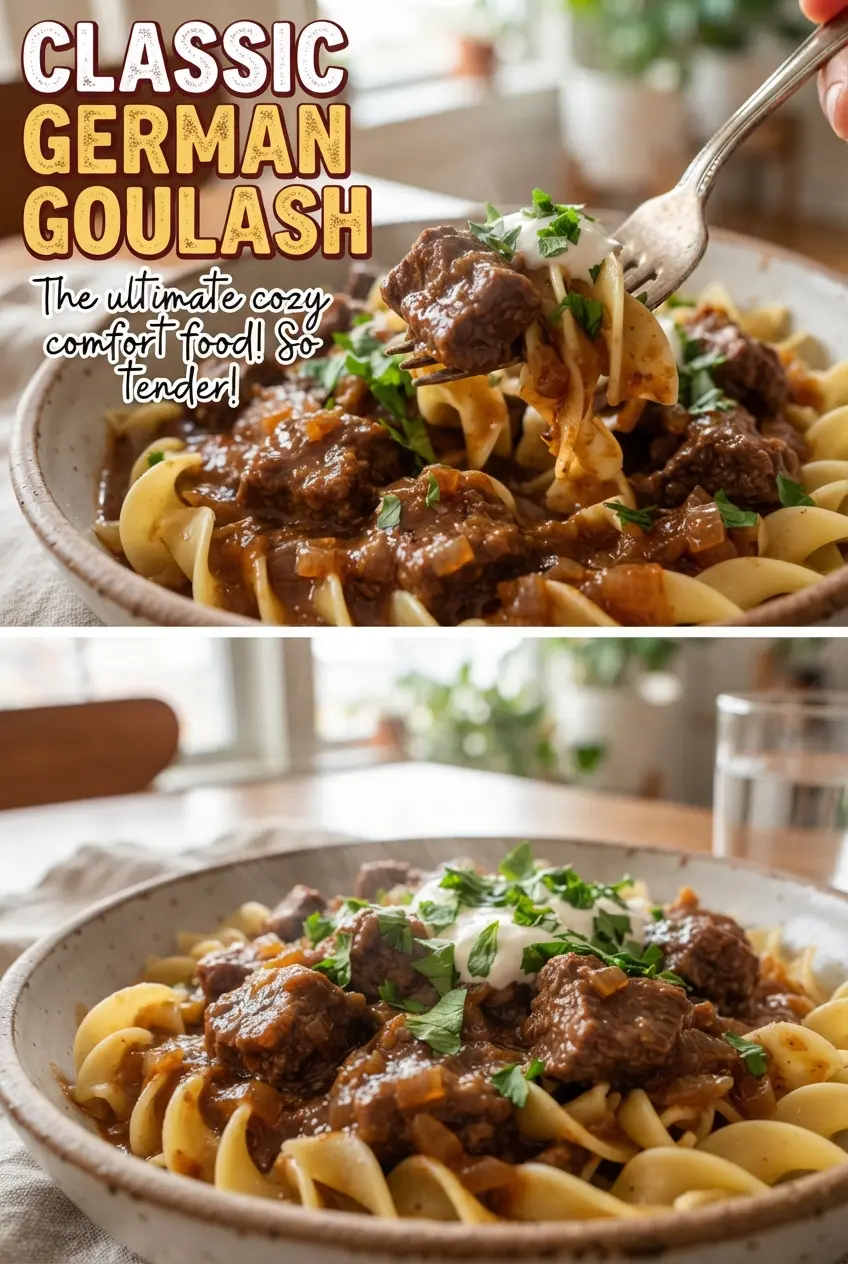
Classic German Goulash
Ingredients
Equipment
Method
- Season the beef chuck cubes with salt and black pepper. Heat the vegetable oil in a Dutch oven over medium-high heat until shimmering, then brown the beef in batches to avoid crowding.
- Add the sliced onions to the drippings and cook 15-20 minutes until soft and golden. Stir in the minced garlic and cook 1 minute, until fragrant.
- Stir in the sweet paprika, hot paprika, caraway seeds, and tomato paste. Cook for 1 minute, stirring constantly so the spices bloom without scorching.
- Add the red wine vinegar, beef broth, dried marjoram, and bay leaves, then add the browned beef back into the pot. Cover and simmer for 2 hours, stirring occasionally, until the beef is very tender.
- Remove the bay leaves, then stir in the flour slurry (all-purpose flour mixed with water). Simmer for 10 minutes until the gravy thickens and clings to the meat.
- Serve the goulash hot over buttered spaetzle or egg noodles. Spoon extra thick paprika-onion gravy over each serving.