Deep, beer-braised beef stew has a way of turning a regular pot of dinner into something worth slowing down for. The beef goes tender, the broth turns dark and rich, and the potatoes and carrots soak up every bit of the savory, slightly tangy sauce. This version keeps the flavor grounded and balanced, not heavy, with enough acidity and mustard to keep the stew tasting bright even after a long simmer.
The trick is building the base in layers. Browning the beef first gives you the browned bits that become part of the sauce, and cooking the onions until they’re properly golden adds sweetness that plain simmering never gives you. The dark beer, paprika, caraway, Dijon, and a small splash of vinegar work together here: one brings depth, one brings warmth, one brings that unmistakable German edge, and one keeps the broth from tasting flat.
Below, you’ll find the small details that matter most, from when to add the potatoes so they hold their shape to the one step that keeps the broth from turning muddy. If you’ve ever had beef stew that tasted dull or one-note, this method fixes that.
The beef came out fork-tender and the broth had this deep, almost malty flavor from the beer without tasting bitter. I loved that the potatoes held together and the carrots were sweet against the mustardy sauce.
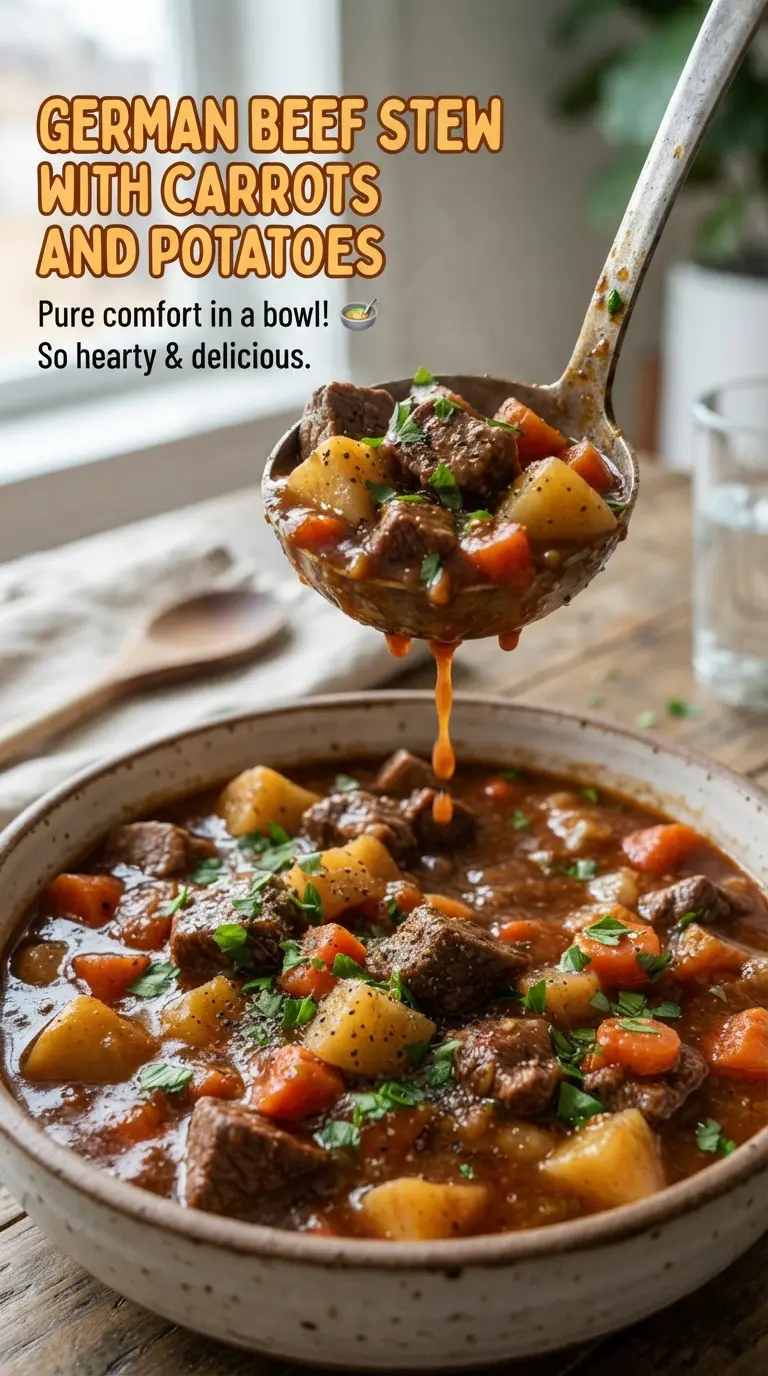
Save this beer-braised German beef stew for the kind of night when you want tender beef, carrots, and potatoes in a deep savory broth.
The Sear and Simmer Balance That Keeps the Broth Deep, Not Muddy
The biggest mistake in a stew like this is rushing the browning. If the beef goes into the pot crowded, it steams instead of sears, and you lose the savory foundation that makes the whole stew taste cooked in layers instead of all at once. Brown the beef in batches and leave the crust alone until it releases easily; that crust is where the depth comes from.
The other place people go wrong is letting the beer or broth wash away the flavor they just built. After the onions soften and the spices bloom, the liquid needs to be scraped in while the bottom is still hot, so the fond dissolves into the sauce instead of sticking there and burning. A gentle simmer after that keeps the beef tender and the broth clear enough to taste rich, not gritty.
What Each Ingredient Is Actually Doing in This German Stew
- Beef chuck — This is the cut that makes the stew work. It has enough connective tissue to turn tender during the long simmer, while leaner cuts dry out before the broth has time to develop.
- German dark beer — This gives the stew its malty backbone and deeper color. Use a beer you’d actually drink; a harsh, overly bitter beer will dominate the pot. A dunkel or similar dark lager is the best fit.
- Sweet paprika and caraway — Paprika adds warmth and color, while caraway gives the stew that unmistakable German note. Don’t swap in smoked paprika unless you want a smokier, less traditional flavor.
- Dijon mustard and red wine vinegar — These keep the broth from tasting flat after a long cook. The mustard melts into the sauce, and the vinegar adds a small, sharp lift that makes the beef taste beefier.
- Potatoes and carrots — Add them late so they hold their shape. If they go in too early, they turn soft and muddy before the beef is finished.
Building the Stew in the Right Order
Browning the Beef for Real Flavor
Season the beef, dust it with flour, and brown it in batches in the butter or oil. The flour helps the sauce thicken later, but only a light coating is enough; too much turns gummy. You want deep brown edges, not gray meat, and you should hear a steady sizzle when the pieces hit the pot. If the pan looks crowded, stop and split the batch again.
Cooking the Onions Until They Turn Sweet
Once the beef is out, the onions go into the same pot and cook until golden, about 8 to 10 minutes. This is where the stew stops tasting like browned meat in broth and starts tasting rounded and complete. Stir in the garlic, tomato paste, paprika, and caraway for just a minute so they bloom without scorching. If the tomato paste darkens too fast or the spices start to smell sharp instead of warm, lower the heat right away.
Letting the Beer and Broth Do the Heavy Lifting
Pour in the beer and scrape up every browned bit from the bottom, then add the broth, mustard, vinegar, and bay leaves. The liquid should come to a gentle simmer, not a hard boil, before the beef goes back in. A hard boil makes the meat tighten up and can turn the broth cloudy. Cover the pot and let it cook slowly until the beef is close to tender and the sauce tastes layered instead of raw.
Finishing with Potatoes, Carrots, and Parsley
Add the potatoes and carrots once the beef has already had its long simmer. They need less time than the meat, and adding them at the end keeps the texture clean. Cook until the potatoes are just tender at the center and the carrots yield without breaking apart. Pull out the bay leaves and finish with parsley right before serving so the stew tastes fresh against all that deep, savory richness.
How to Adapt This Stew Without Losing the Character of the Dish
Gluten-Free Version
Skip the flour on the beef and brown it plain, then thicken the finished stew with a small cornstarch slurry if needed. Everything else in the pot already works for a gluten-free version as long as your beer and broth are certified gluten-free. The texture stays hearty, though the sauce will be a little lighter unless you reduce it uncovered at the end.
Dairy-Free Cooking Fat Swap
Use oil instead of butter when browning the beef and starting the onions. You lose a little of the roundness butter adds, but the dark beer, paprika, and beef broth carry the flavor, so the stew still tastes full and rich. A neutral oil keeps the fond intact and won’t fight the beer.
No Dark Beer on Hand
Replace the beer with more beef broth plus 1 to 2 teaspoons of brown sugar or molasses for some of the missing maltiness. You won’t get the same depth, but the stew will still have a good, savory body if you keep the paprika, mustard, and vinegar in place. Don’t use a very bitter ale here; it can make the sauce taste harsh after a long simmer.
Make It Ahead for Better Flavor
This stew tastes even deeper the next day after the flavors settle together. Cook it fully, cool it quickly, and refrigerate it overnight before reheating. The potatoes will soften a touch, but the broth becomes more cohesive and the beef tastes more infused with the sauce.
Storage and Reheating
- Refrigerator: Keeps well for 4 days. The broth thickens as it chills and the potatoes soften a bit, which is normal.
- Freezer: Freezes well for up to 3 months, though the potatoes can get a little softer after thawing. For the best texture, freeze in portions and thaw overnight in the refrigerator.
- Reheating: Warm it gently on the stove over low heat, covered, until hot all the way through. A hard boil can break up the potatoes and tighten the beef, so go slow and add a splash of broth if the sauce has thickened too much.
Answers to the Questions Worth Asking
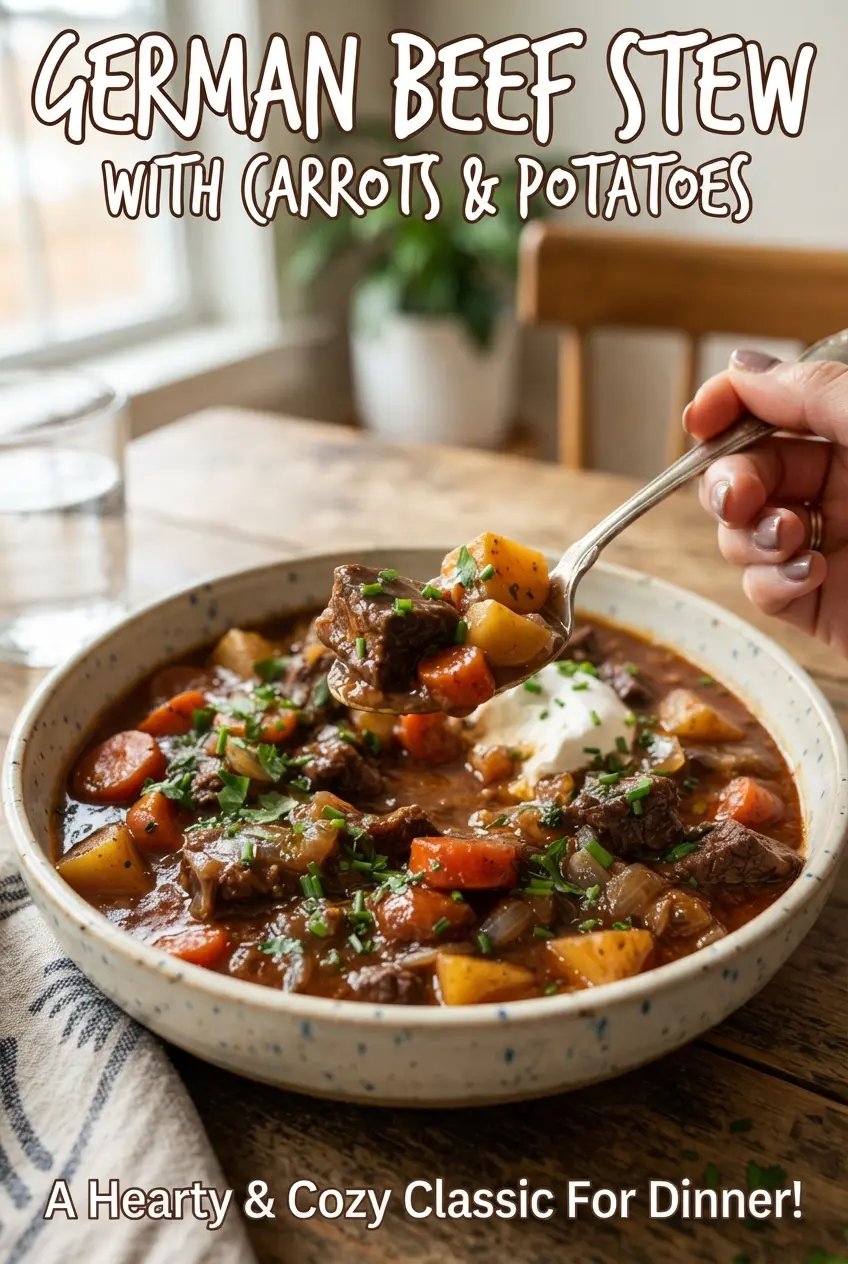
German Beef Stew with Carrots and Potatoes
Ingredients
Equipment
Method
- Season the beef cubes with salt and black pepper, then toss with the all-purpose flour until lightly coated.
- Heat butter or oil in a Dutch oven over medium-high heat and brown the beef in batches until deeply browned on the outside; do not crowd the pot.
- In the same pot, cook the sliced onions for 8-10 minutes until golden.
- Add the minced garlic, tomato paste, sweet paprika, and caraway seeds, and cook for 1 minute until fragrant.
- Pour in the German dark beer and scrape up the browned bits from the bottom of the pot.
- Add the beef broth, Dijon mustard, red wine vinegar, and bay leaves.
- Return the browned beef to the pot, cover, and simmer at 180°F (82°C) for 1 1/2 hours with occasional gentle stirring; the surface should show a steady, not furious, simmer.
- Add the cubed potatoes and thick-sliced carrots to the pot.
- Simmer uncovered or partially covered for 45-60 minutes at 180°F (82°C) until the potatoes are tender and the carrots are cooked through.
- Remove the bay leaves, then top the stew with chopped fresh parsley just before serving.