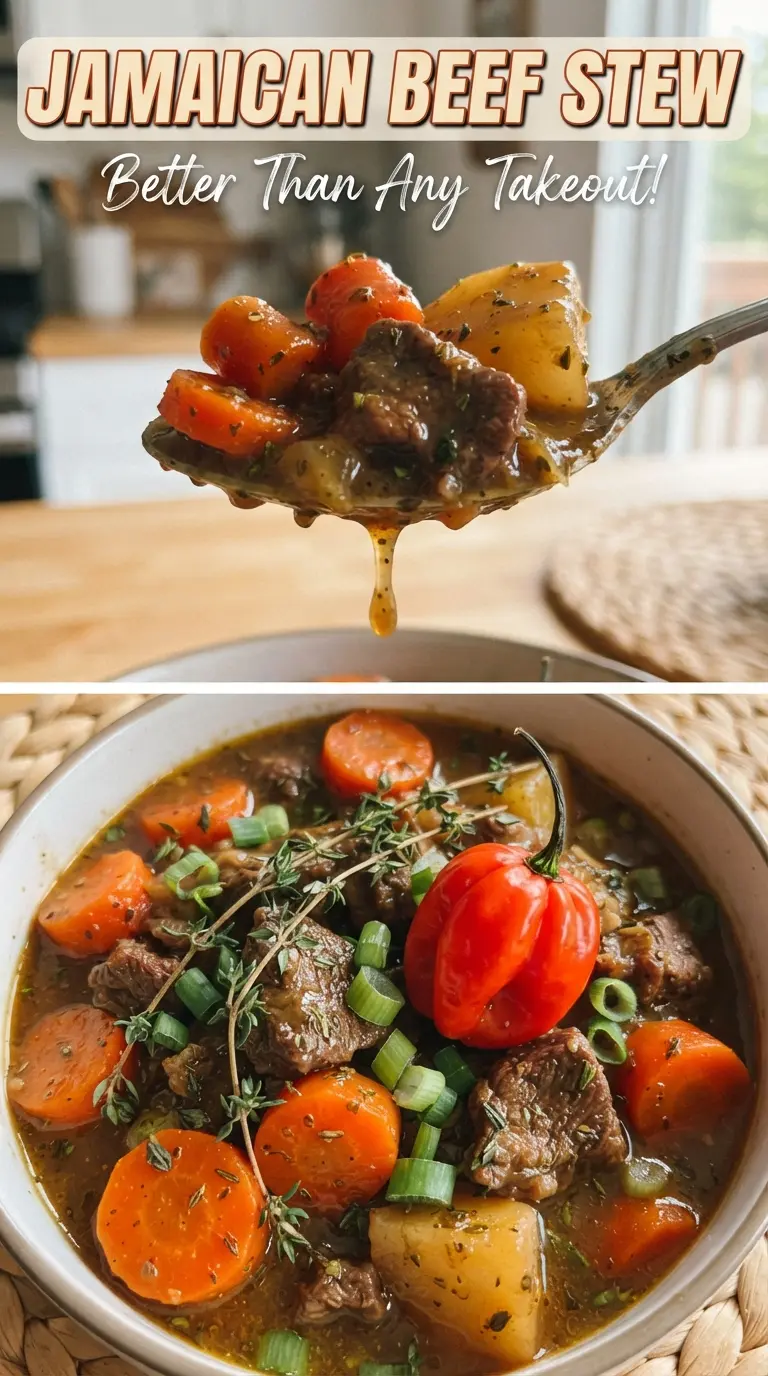
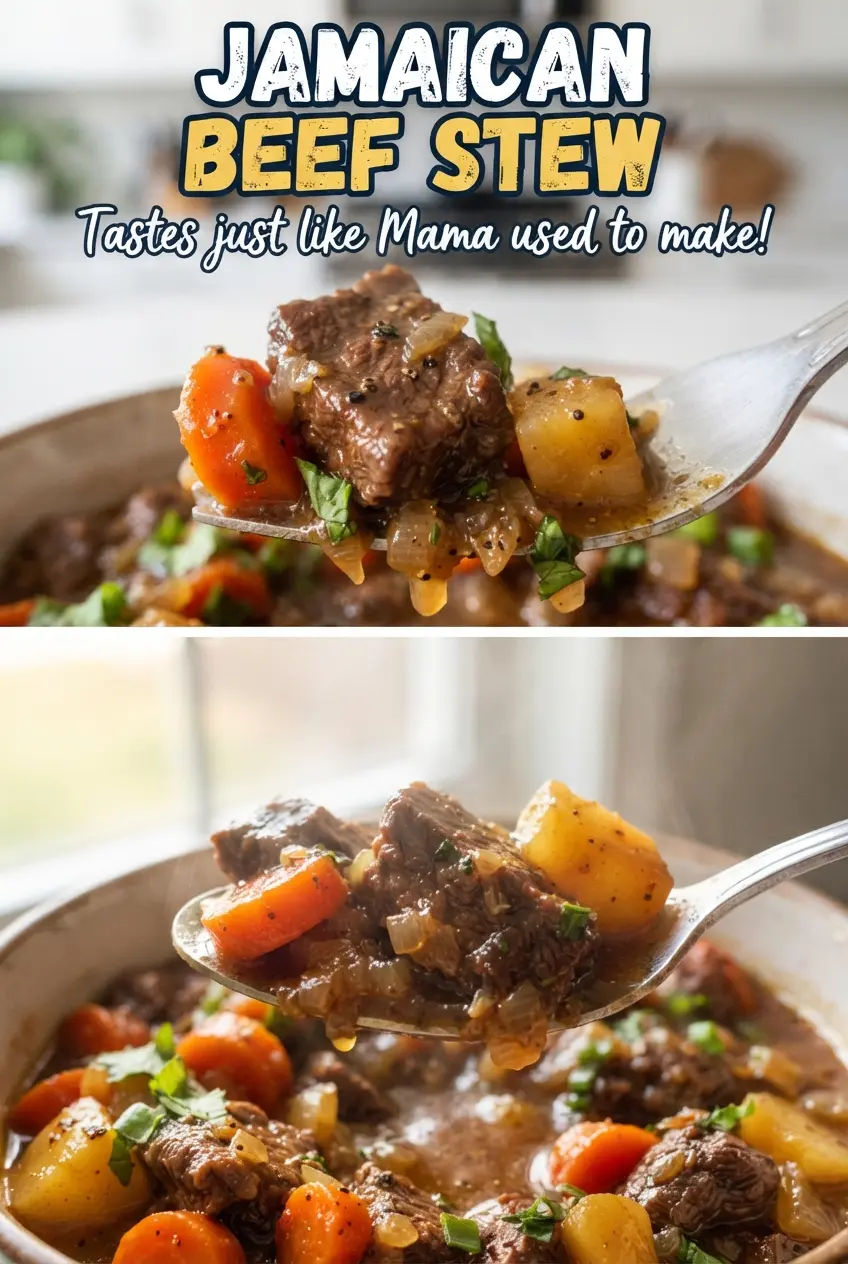
Deep brown Jamaican beef stew lands with that rich, slow-cooked comfort that makes a bowl disappear fast. The beef turns fork-tender without falling apart completely, the sauce gets glossy and dark from browning sauce and caramelized sugar, and the carrots, potatoes, and butter beans soak up every bit of the pot. Served over rice, it’s the kind of stew that tastes even better after the first spoonful, when the thyme, ginger, and allspice settle in underneath the heat of the pepper.
What makes this version work is the order. The beef gets marinated first so the seasoning reaches past the surface, then it’s seared in a little caramelized sugar for that deep color you can’t fake at the end. The scotch bonnet goes in whole, which gives the stew warmth without scattering seeds and sharp heat everywhere. You get layered flavor instead of just spicy broth.
Below, I’ve broken down the one part people usually rush, plus the ingredient swaps that still keep the stew tasting like itself. If you’ve ever ended up with beef that was tough at the center or a sauce that tasted flat, this is the version that clears that up.
The gravy turned out glossy and deep instead of watery, and the beef was tender after the full simmer. I loved that the scotch bonnet stayed whole — it gave the stew a clean heat without overpowering the pot.
Save this Jamaican beef stew for the nights you want glossy gravy, tender beef, and a whole scotch bonnet doing quiet work in the background.
The Caramelized Sugar Is Doing More Than Adding Color
The dark color in this stew doesn’t come from just simmering longer. It starts when the brown sugar is heated in oil until it takes on a deep amber color, then the beef goes in and picks up that roasted edge right away. That step gives you the signature look and a slightly smoky depth that plain broth can’t create on its own.
The other mistake is rushing the simmer. Beef chuck needs time for the collagen to soften, and the pot should stay at a gentle bubble, not a hard boil. If it boils aggressively, the meat tightens up before it has a chance to turn tender, and the sauce can end up harsh instead of rounded.
- Beef chuck — This cut has enough connective tissue to turn silky during the long simmer. Lean stew meat cooks up drier and less forgiving.
- Browning sauce — This deepens the color fast and gives the stew that dark, savory backbone. If you don’t have it, a little extra caramelized sugar will help, but the flavor won’t be quite as layered.
- Scotch bonnet — Keeping it whole lets the pepper infuse heat without turning the stew into a fire trap. Habanero works as the closest swap if that’s what you can find.
- Butter beans — They soften into the sauce near the end and make the stew feel complete. Add them too early and they break apart before serving.
What Each Ingredient Is Actually Doing in the Pot
- Allspice — It gives the stew that unmistakable Jamaican warmth. You need it here; there isn’t a clean substitute that brings the same profile.
- Ginger, garlic, onion, and green onion — These build the base flavor before the liquid goes in. Grating the ginger and mincing the garlic keeps them from tasting raw after the long cook.
- Ketchup and Worcestershire sauce — Ketchup adds a little body and acidity, while Worcestershire adds savory depth. Together they round out the broth so it tastes cooked, not thin.
- Carrots and potatoes — They don’t just bulk up the stew; they help thicken the sauce naturally as they simmer. Cut the potatoes into even cubes so they finish at the same time as the carrots.
Building the Stew in the Right Order
Marinating the Beef First
Mix the beef with browning sauce, soy sauce, Worcestershire, seasoning, allspice, onion, garlic, ginger, and green onions, then let it sit for at least an hour. The seasoning won’t just coat the surface; it starts pulling flavor into the meat before anything hits the pot. If you skip this step, the stew still works, but the finished broth tastes flatter and the beef needs more help later.
Getting the Sear Without Burning the Sugar
Heat the oil with the brown sugar until it darkens, then add the beef and reserve the aromatics for later. You want the sugar deep brown, not black and bitter, and the beef should sizzle the second it touches the pan. Keep the heat controlled here, because burnt sugar will make the whole stew taste acrid no matter how good the rest of it is.
Letting the Stew Relax Into Itself
Stir in the reserved aromatics, ketchup, broth, thyme, and the whole scotch bonnet, then cover and simmer until the beef is almost tender. After that, add the carrots and potatoes so they don’t turn mushy before the meat is ready. The butter beans go in at the very end, just long enough to heat through and stay intact. Pull out the scotch bonnet and thyme stems before serving, then spoon the stew over rice while the sauce is still glossy and hot.
How to Adapt This for the Pantry You Have
No Scotch Bonnet on Hand
Use one habanero for a similar fruit-and-heat effect, or a jalapeño if you want gentle heat with less perfume. The stew will still be good, but it loses some of the signature sharp brightness that Scotch bonnet brings.
Gluten-Free Version
Use tamari instead of soy sauce and check that your browning sauce, Worcestershire, and all-purpose seasoning are gluten-free. The texture stays the same, and the flavor stays close as long as you keep the same seasoning balance.
Vegetable Swap for the Butter Beans
If you want a bean-free pot, leave them out and add extra potatoes or carrots instead. The stew will be a little less creamy and less brothy-thick, so simmer uncovered for a few minutes at the end to keep the sauce from feeling thin.
Storage and Reheating
- Refrigerator: Store in an airtight container for up to 4 days. The flavor deepens overnight, and the sauce thickens as it chills.
- Freezer: This freezes well for up to 3 months. Cool it completely first and leave a little headspace in the container so the broth can expand.
- Reheating: Warm it gently on the stove over low heat with a splash of broth or water if needed. Don’t boil it hard or the beef can tighten up and the potatoes can start to break apart.
Answers to the Questions Worth Asking
Jamaican Beef Stew
Ingredients
Equipment
Method
- Combine beef with browning sauce, soy sauce, Worcestershire sauce, all-purpose seasoning, allspice, diced onion, minced garlic, grated ginger, and chopped green onions, then marinate for 1 hour.
- Cover the marinating beef in the refrigerator so the flavors infuse while the onions and aromatics soften slightly.
- Heat vegetable oil in a Dutch oven over medium-high heat and add brown sugar, cooking until it darkens and smells caramel-like.
- Add the marinated beef (reserving the aromatics) and sear until browned, 6 to 8 minutes, stirring once or twice for an even crust.
- Stir in the reserved aromatics, then add ketchup, beef broth, and fresh thyme plus the whole scotch bonnet.
- Cover and simmer on low until the beef is nearly tender, about 1 1/2 hours, with steady bubbling around the edges (visual cue: broth should look glossy, not watery).
- Add sliced carrots and cubed potatoes, then simmer 30 to 40 minutes until they are tender.
- Stir in drained butter beans and simmer 10 minutes more, until the stew thickens slightly and the beans are hot throughout.
- Remove the whole scotch bonnet and thyme stems, then taste and adjust seasoning if needed.
- Serve the stew over rice, spooning the deep brown gravy over beef, carrots, potatoes, and butter beans (visual cue: a glossy, thickened surface).