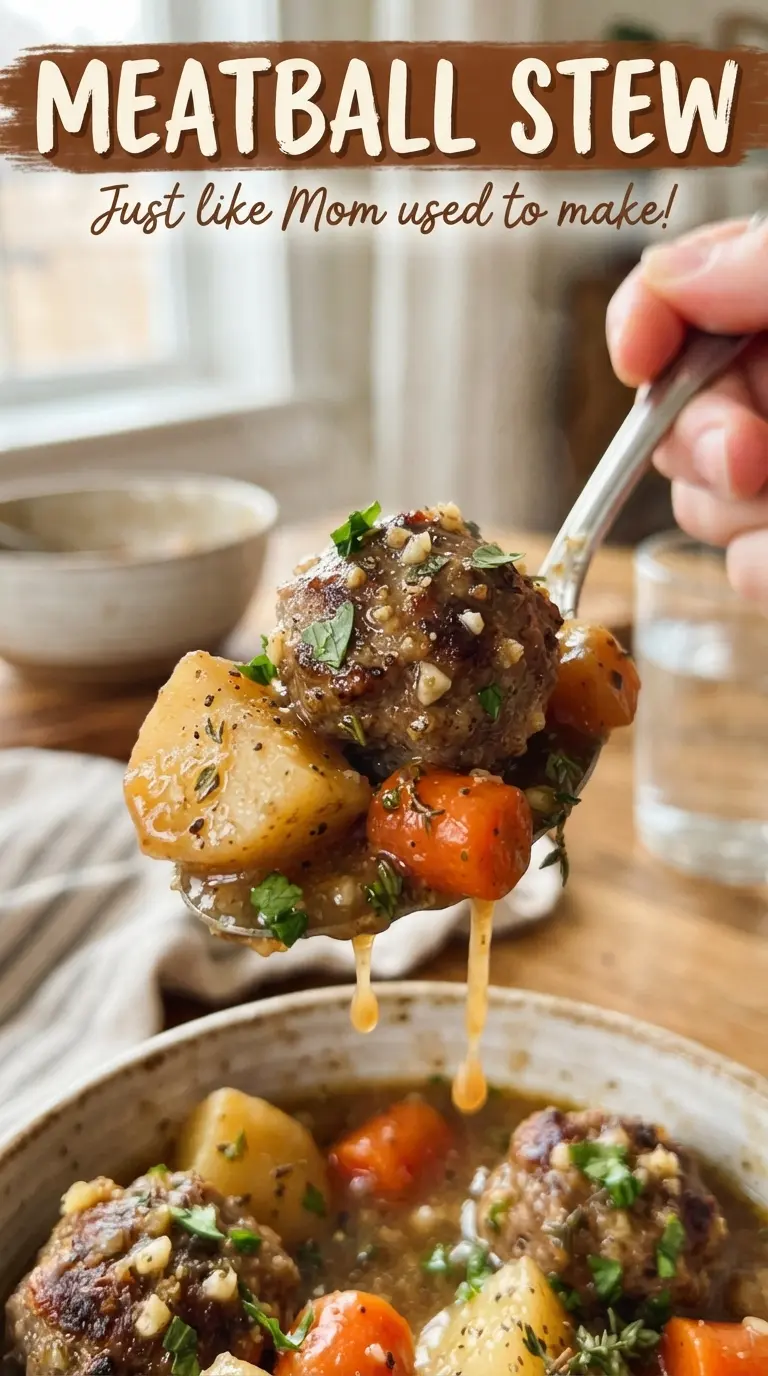
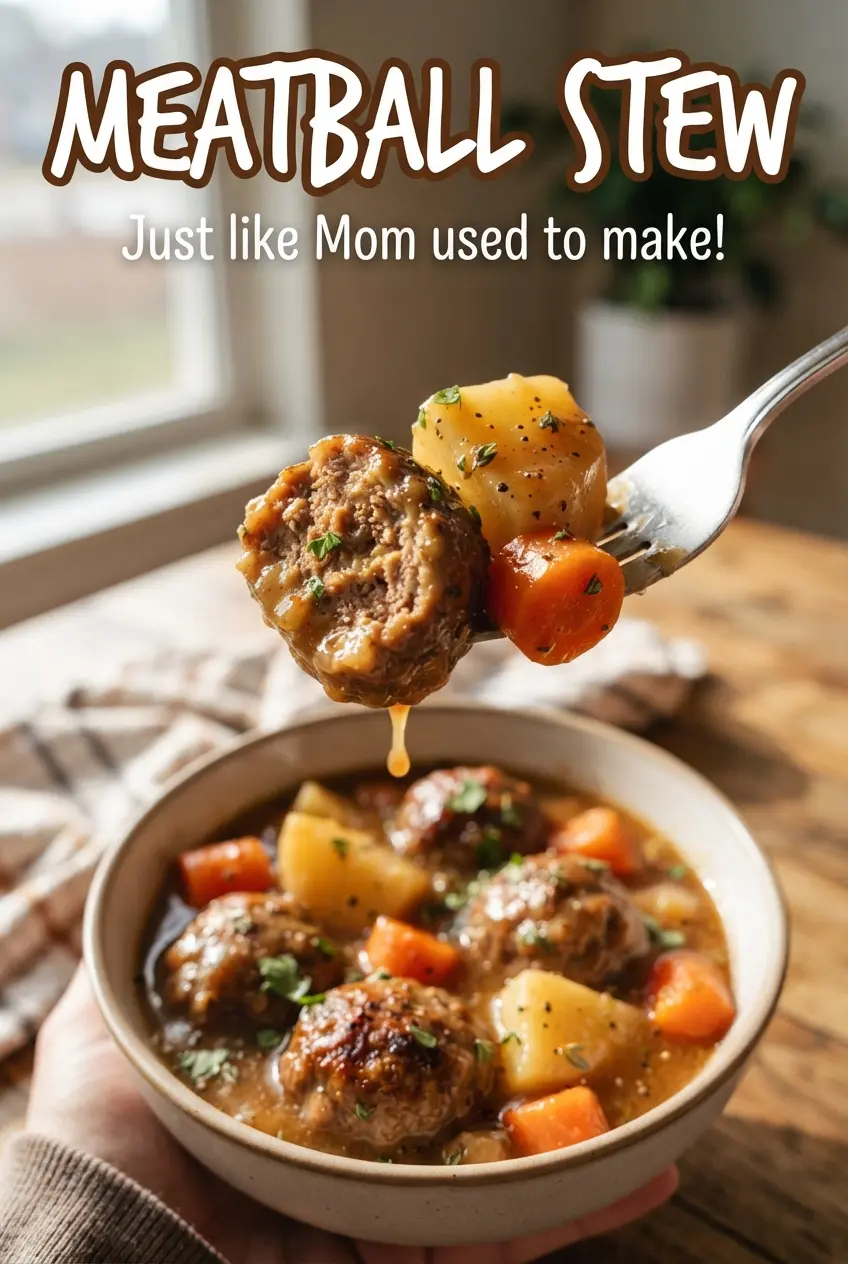
Meatball stew lands in that sweet spot between a soup and a full dinner. The broth turns rich and savory, the meatballs stay tender, and the potatoes and carrots soak up every bit of flavor as they simmer. It’s the kind of pot that tastes like it took all day, even though the steps are straightforward and the ingredients are pantry-friendly.
The trick is building layers before the simmer. Browning the meatballs first gives the stew a deeper base than you’d get from dropping them in raw, and stirring flour into the onions before the broth goes in keeps the gravy from tasting thin or chalky. A little tomato paste and Worcestershire pull the broth toward something dark and rounded without making it taste like tomato soup.
Below, I’ve included the timing cues that matter most, plus a few swaps if you want to use a different meat or make the pot a little lighter. The peas go in at the end for a reason, and once you’ve made it that way, you won’t want to overcook them again.
The gravy thickened up beautifully and the meatballs stayed tender instead of falling apart. I added the peas at the end like you said, and the whole pot tasted even better the next day.
Love a thick, cozy stew? Save this meatball stew for the nights when you want tender meatballs, soft potatoes, and a rich gravy in one pot.
The Trick to Keeping the Meatballs Tender While the Stew Simmeres
The meatballs need just enough handling to hold together. Mix until everything is combined, then stop. If you work the mixture too much, the texture turns dense and springy instead of soft and meaty. Browning them in batches matters too, because crowding the pan steams them and leaves you with pale meatballs and less flavor in the pot.
The other place people run into trouble is the simmer. Once the potatoes and carrots go in, keep the heat low enough that the liquid barely bubbles around the edges. A hard boil will break the meatballs apart and make the potatoes crumble before the center gets tender. Gentle heat keeps the gravy smooth and gives the vegetables time to soften without turning mushy.
What Each Ingredient Is Actually Doing in This Stew
- Ground beef — Use a blend with some fat, not the leanest package on the shelf. That little bit of fat keeps the meatballs juicy and gives the stew body as it simmers. If you swap in ground turkey, the flavor gets lighter and you’ll want to brown it well for more depth.
- Breadcrumbs, egg, and milk — This trio holds the meatballs together without making them heavy. The milk softens the crumbs so they stay tender after the simmer. If you only have panko, crush it a little before mixing so the texture doesn’t get too loose.
- Flour and onion — The onion builds sweetness while the flour thickens the stew from the start. Don’t dump the broth in too soon; give the flour a full minute to coat the onions so the gravy doesn’t taste raw.
- Beef broth, tomato paste, Worcestershire, and thyme — This is the base that makes the pot taste deep and savory instead of just salted. Tomato paste adds color and a little richness, while Worcestershire gives the broth that long-cooked flavor you can’t fake with water.
- Potatoes, carrots, and peas — The potatoes make the stew filling, the carrots bring sweetness, and the peas add freshness at the end. Frozen peas need only a few minutes; add them too early and they turn dull and mealy.
How to Build the Stew So the Broth Turns Rich Instead of Thin
Mixing and shaping the meatballs
Combine the beef, breadcrumbs, egg, milk, salt, and garlic powder until the mixture just comes together, then roll it into 1 1/2-inch meatballs. They should hold their shape but still look a little soft on the outside. If the mixture feels sticky, wet your hands lightly instead of adding more breadcrumbs, which can dry them out.
Browning for flavor
Heat the oil and brown the meatballs in batches until they pick up a deep crust on the outside. They don’t need to cook through at this stage; the goal is color and flavor. If they stick, leave them alone for another minute because they’ll release once a crust forms.
Building the gravy
Cook the onion until it softens and turns translucent, then sprinkle in the flour and stir it for a minute. That short cooking time removes the raw flour taste and starts the thickening process. Whisk in the broth slowly so the base stays smooth, then add the tomato paste, Worcestershire, and thyme.
Simmering the vegetables and finishing the pot
Add the potatoes and carrots, then return the meatballs to the pot and cover it. Simmer until the vegetables are tender and the meatballs are cooked through, with the broth gently bubbling rather than boiling hard. Stir in the peas at the end and let them warm through just long enough to stay bright.
Three Ways to Adapt This Meatball Stew Without Losing the Comfort
Use ground turkey instead of beef
Ground turkey works, but the stew will taste lighter and less robust. Brown it well for color, and don’t skip the Worcestershire, because that extra savory note makes up some of what beef would normally bring.
Make it gluten-free
Use gluten-free breadcrumbs in the meatballs and swap the all-purpose flour for a 1:1 gluten-free flour blend. The stew will still thicken well, though it may need an extra minute or two of simmering before it reaches the same gravy-like texture.
Add a little more vegetable bulk
A handful of celery or parsnips fits in well with the carrots and potatoes. Add them with the potatoes so they soften at the same pace, and expect a slightly sweeter, more layered broth.
Storage and Reheating
- Refrigerator: Store covered for up to 4 days. The broth thickens as it chills, and the potatoes will soften a bit more.
- Freezer: It freezes well for up to 2 months, though the potatoes may turn slightly softer after thawing. Cool it completely before freezing in airtight containers.
- Reheating: Warm it gently on the stove over low heat with a splash of broth or water if needed. A hard boil is the fastest way to break up the meatballs and make the potatoes grainy.
Answers to the Questions Worth Asking
Meatball Stew
Ingredients
Equipment
Method
- In a bowl, mix ground beef, breadcrumbs, egg, milk, salt, and garlic powder until evenly combined (no dry spots). Roll into 1 1/2-inch meatballs and set aside.
- Heat vegetable oil in a Dutch oven over medium-high heat. Brown the meatballs in batches, turning as needed until well browned, then transfer to a plate.
- Add onion to the Dutch oven and cook for 4 minutes, stirring, until softened. Sprinkle in all-purpose flour and stir for 1 minute to cook the flour.
- Whisk in beef broth, tomato paste, Worcestershire sauce, and dried thyme until smooth. Add potatoes and carrots, stir to coat, and bring to a simmer.
- Return the browned meatballs to the pot and simmer covered for 25-30 minutes until the vegetables are tender. Keep the heat at a steady simmer so the gravy stays thick.
- Stir in frozen peas and simmer for 5 minutes. Serve hot, with the peas vivid and just tender.