Mulligan stew earns its place because it tastes like a pot that has been building flavor all afternoon: beef that’s tender without falling apart, sausage that seasons the broth, and vegetables that keep their own shape instead of turning to mush. It’s hearty in the old-fashioned sense of the word, with enough broth to feel like a stew but enough substance to eat with a spoon and a thick slice of bread.
The trick is getting a good brown on the beef and sausage before anything else goes in. That first layer of color gives the broth depth, and it matters more here than in a quick soup because this stew leans on a handful of ingredients to carry the whole pot. The potatoes, cabbage, corn, and beans go in later so each one lands at the right texture, not overcooked into the background.
Below, I’ll walk through the timing that keeps the vegetables intact, the ingredient choices that make the broth taste fuller, and a few easy variations if you want to stretch the pot or adapt it for what’s in your kitchen.
The beef got tender and the sausage kept the broth from tasting flat. I loved that the potatoes held together and the cabbage softened without disappearing.
Save this rustic Mulligan Stew for the nights when you want a big, slow-simmered pot with beef, sausage, potatoes, cabbage, corn, and beans.
The Browned Meat Is What Keeps This Stew From Tasting Flat
Most beef-and-vegetable stews rely on time alone, but time won’t fix a pale pot. The first browning step builds the flavor you taste in every spoonful, and it also leaves browned bits in the pan that dissolve into the broth later. If you rush this part or crowd the pan, the meat steams instead of sears and the stew ends up tasting thinner than it should.
Sauteing the onion in the same pot after the meat comes out pulls up those browned bits before the liquid goes in. That’s where the depth comes from. The sausage does double duty here: it adds smoky saltiness and gives the broth a little body, which is why this stew tastes fuller than a plain beef version.
What Each Ingredient Is Actually Doing In This Pot
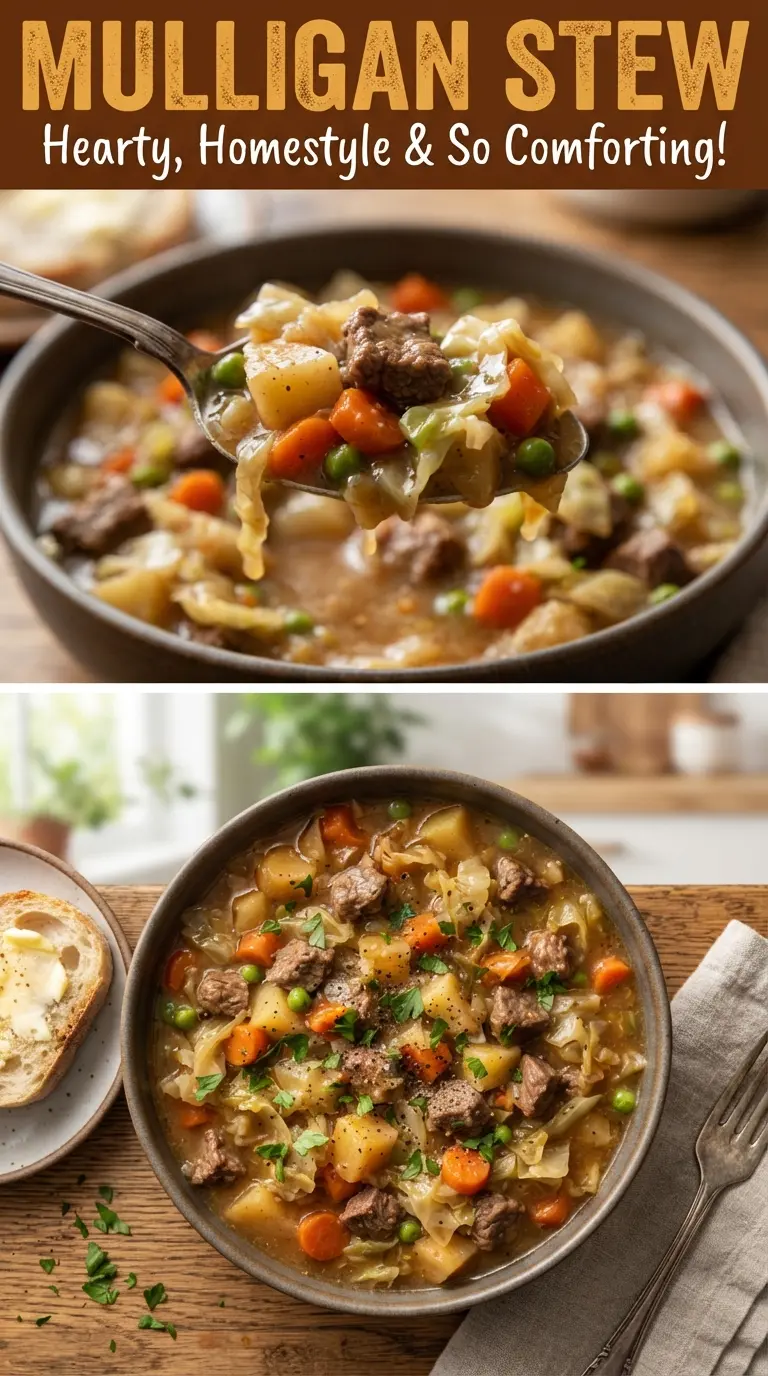
- Beef chuck — This cut has the fat and connective tissue that turn tender during a long simmer. Lean stew meat cooks up drier and less flavorful, so chuck is the one ingredient worth keeping.
- Smoked sausage — It seasons the broth from the inside out. If you swap it, choose another fully cooked smoky sausage; raw sausage changes the timing and the texture of the stew.
- Worcestershire sauce — This adds savory depth and a little tang that keeps the broth from tasting one-note. There isn’t a perfect substitute, but soy sauce plus a splash of vinegar gets you part of the way there.
- Potatoes, carrots, and cabbage — These go in after the beef has started to soften so they keep their shape. Add them too early and the potatoes break down before the stew is done.
- Corn and kidney beans — These finish the pot with sweetness and a little creamy texture. They only need the last few minutes, or they’ll go dull and overly soft.
Building the Stew So Every Vegetable Keeps Its Texture
Browning the Beef and Sausage
Heat the oil until it shimmers, then brown the beef in batches with the sausage slices. You want deep color, not gray surfaces. If the pan looks crowded, the meat will release liquid and steam, which robs the stew of the rich base it needs. Take the meat out once it’s browned; it doesn’t need to be cooked through at this stage.
Starting the Broth
Cook the onion in the same pot until it softens and picks up the browned bits from the bottom, then add the garlic for just a short burst so it stays fragrant instead of bitter. Pour in the tomatoes, broth, Worcestershire sauce, and thyme, then return the meat to the pot. Bring it to a gentle simmer, not a hard boil. A rolling boil can toughen the beef before it has time to relax.
Adding the Heartier Vegetables
Potatoes, carrots, and cabbage go in after the beef has simmered long enough to start yielding. This keeps the vegetables from collapsing and keeps the broth from turning starchy too early. Simmer until the potatoes are fork-tender and the carrots have taken on the broth without turning mushy. The cabbage should be soft but still present, not stringy or faded.
Finishing with Corn and Beans
Stir in the corn and kidney beans near the end so they warm through without losing shape. This last simmer is just long enough to let everything come together. Taste before serving and adjust the salt at the very end, since sausage and broth both bring their own saltiness and the stew can need less than you expect.
How to Adapt Mulligan Stew Without Losing What Makes It Good
Use all beef instead of beef and sausage
You can leave out the smoked sausage and use extra beef chuck if that’s what you have. The stew will taste cleaner and a little less smoky, so add an extra splash of Worcestershire or a pinch of smoked paprika to give the broth back some depth.
Make it gluten-free
The ingredient list is naturally close to gluten-free, but check the sausage and Worcestershire sauce labels carefully because both can hide wheat. Use certified gluten-free versions and the stew keeps the same texture and body.
Swap the vegetables for what needs using up
Parsnips, turnips, green beans, or peas all work here as long as you add them at the right time. Hard vegetables go in with the potatoes and carrots; quick-cooking vegetables go in near the end. The key is keeping the pot balanced so nothing turns to paste.
Stretch it for a bigger crowd
This stew scales up well as long as the pot is large enough for the meat to brown properly. If you double it, brown in batches and keep the simmer gentle so the beef stays tender instead of tightening up.
Storage and Reheating
- Refrigerator: Store covered for up to 4 days. The broth thickens as it sits, and the vegetables soften a little more by the next day.
- Freezer: It freezes well for up to 3 months. Cool it fully first and leave a little room at the top of the container because the broth will expand.
- Reheating: Warm it gently on the stove over medium-low heat, stirring often. A hard boil can break down the potatoes and make the beef feel dry, so keep the heat modest until it’s hot all the way through.
Answers to the Questions Worth Asking

Mulligan Stew
Ingredients
Equipment
Method
- Season the beef with the salt and black pepper, then heat the vegetable oil in a Dutch oven over medium-high heat and brown the beef. Brown the smoked sausage alongside until the meat is well-seared, then set everything aside.
- Cook the diced onion in the Dutch oven for 4 minutes over medium heat, stirring until softened. Add the minced garlic and cook for 30 seconds, just until fragrant.
- Add the diced tomatoes, beef broth, Worcestershire sauce, and dried thyme, then return the beef and sausage to the pot. Cover and simmer for 1 1/4 hours over a steady, gentle simmer, with visible bubbling under the lid.
- Add the cubed potatoes, sliced carrots, and chopped cabbage to the pot. Cover and simmer for 30 minutes, stirring once or twice so the vegetables cook evenly.
- Stir in the corn kernels and drained kidney beans. Cover and simmer for 10 minutes more until everything is hot and tender.
- Taste the stew and season to taste with additional salt and black pepper if needed. Serve hot, spooning the meat and vegetables into each bowl.