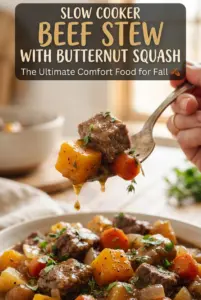
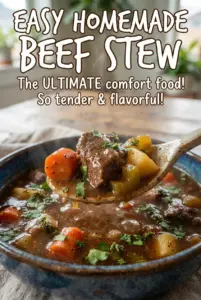
Dark, glossy beef stew is at its best when the beef turns spoon-tender and the broth tastes like it spent all day getting richer. This slow cooker version gives you that deep Guinness backbone without babysitting a pot on the stove. The beef stays substantial, the potatoes hold their shape, and the carrots soak up just enough stout and thyme to taste like they belong there.
The trick is building flavor before the slow cooker ever comes into play. Browning the beef first gives you those savory crusty bits that slow cooking alone can’t create, and cooking the tomato paste in the pan for a minute or two keeps the stew from tasting flat. The Guinness doesn’t make the stew taste boozy; it adds a dark, malty depth that settles into the broth while the beef breaks down.
Below, I’ve included the small details that matter most, from keeping the sauce from tasting thin to the best way to handle leftovers without turning the potatoes mushy. If you’ve ever had beef stew that tasted one-note, this version fixes that.
The stew thickened beautifully in the slow cooker, and the Guinness gave it that deep savory flavor without taking over. My husband kept going back for “just one more bowl,” which never happens with stew in our house.
Save this slow cooker Guinness beef stew for a hands-off dinner with tender beef, stout-rich gravy, and potatoes that hold their shape.
The Step That Keeps the Stew Rich Instead of Watery
The biggest mistake with slow cooker beef stew is skipping the browning step and expecting the crock to build the same depth on its own. It won’t. Browning the beef gives you caramelized edges, and cooking the onion, garlic, and tomato paste in the same pan picks up every bit of flavor left behind. That’s what keeps the broth tasting layered instead of thin and beefy in a bland way.
Guinness also needs a quick simmer before it goes into the slow cooker. Pour it into the hot pan and scrape the bottom well; that loosens the browned bits and cooks off some of the raw edge. If you dump the stout straight in cold, the stew can taste harsher and a little flat by the time it finishes.
What the Beef, Stout, and Potatoes Are Doing Here
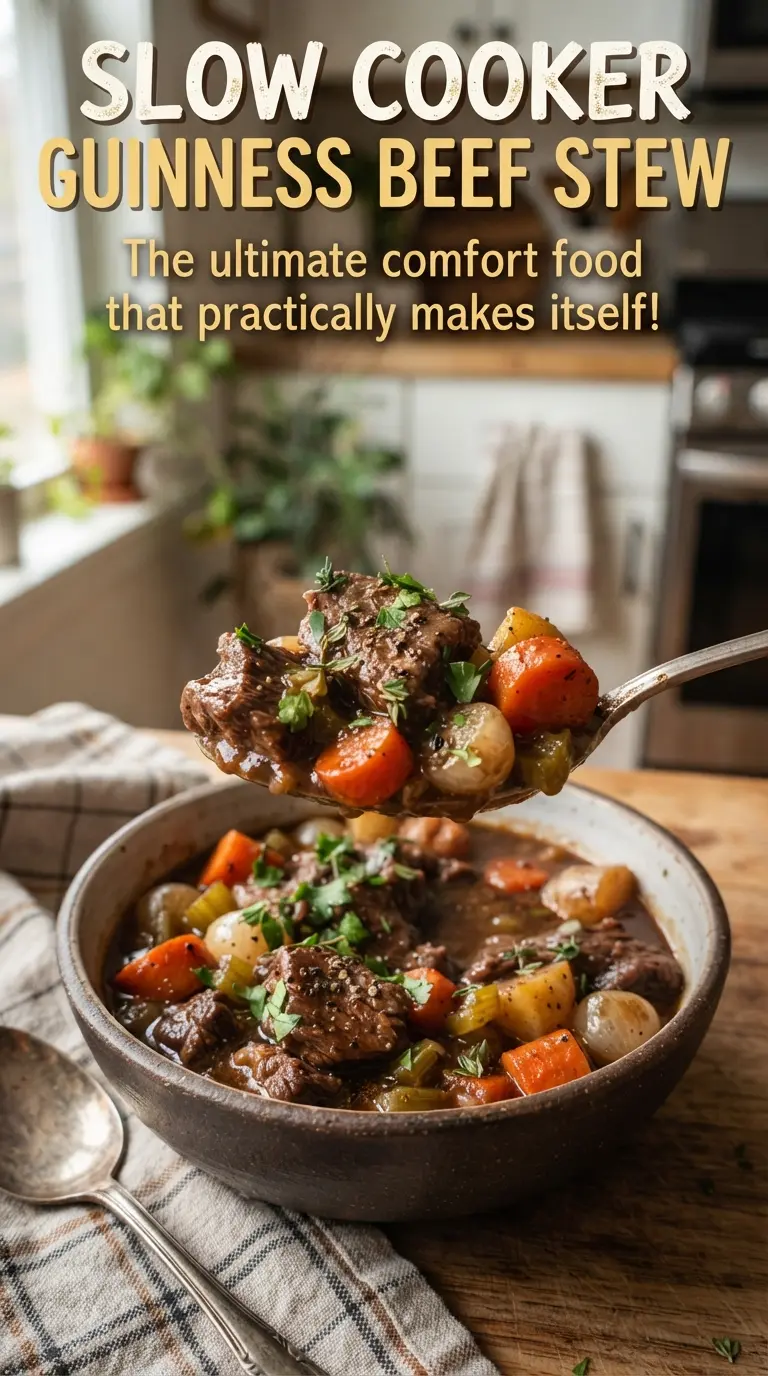
- Beef chuck — This is the right cut because it has enough connective tissue to turn tender over a long cook. Lean stew meat can dry out before it gets truly soft. If you need to swap, use another well-marbled braising cut like brisket or boneless short rib.
- Guinness stout — This adds malty depth and color, not a strong beer taste. A dark stout works best here; lighter beer won’t give the same richness. If you don’t want to use alcohol, use more beef broth plus 1 tablespoon balsamic vinegar for some of the same backbone.
- Tomato paste — It’s small, but it matters. Cooking it briefly in the pan removes the raw metallic edge and gives the broth a rounder, fuller flavor.
- Baby potatoes — Halving them keeps them from turning to mush while still letting them soak up the broth. If you use larger Yukon Golds, cut them into chunky pieces so they cook at the same rate as the carrots.
- Flour — The light coating helps the beef brown better and gives the stew a little natural body as it cooks. If you need this gluten-free, use a 1:1 gluten-free flour blend and brown the beef the same way.
How to Build the Stew So the Beef Turns Tender
Browning the Beef First
Toss the beef with flour, salt, and pepper, then get it into hot oil in a single layer. The goal is a deep brown crust on the outside, not cooking the meat through. If the pan is crowded, the beef will steam and you’ll lose the flavor you were trying to build, so work in batches if needed.
Cooking the Aromatics in the Same Pan
Once the beef goes to the slow cooker, use the same pan for the onion, garlic, and tomato paste. Stir until the onion softens and the paste darkens slightly; that brief cooking time wakes up the tomato flavor and keeps it from tasting canned. The browned bits on the pan bottom should loosen as the onions release moisture, and that’s exactly what you want.
Letting the Slow Cooker Finish the Job
After the Guinness, broth, Worcestershire, brown sugar, thyme, carrots, and potatoes go in, cover and cook on LOW for 8 hours. The stew is done when the beef pulls apart with a fork and the potatoes are tender at the center but not crumbling. If you cook it on HIGH, the beef can tighten before it fully softens, which is why low and slow wins here.
Finishing With Salt and Parsley
Taste the stew at the end before adding anything else. The broth should taste rounded and savory, with just enough sweetness to balance the stout. Parsley goes on last for freshness; stir it in right before serving so it stays bright instead of disappearing into the pot.
How to Adapt This for Different Tables and Tastes
Gluten-Free Version
Swap the all-purpose flour for a gluten-free flour blend and check that your Worcestershire sauce is gluten-free. The stew still thickens well, and the texture stays close to the original as long as you brown the beef first.
No-Alcohol Option
Replace the Guinness with extra beef broth and add 1 tablespoon balsamic vinegar plus 1 teaspoon soy sauce for depth. You won’t get the same stout character, but you’ll still have a dark, savory stew with enough complexity to stand up to the beef.
Vegetable Add-Ins
Parsnips, celery, or mushrooms fit in naturally if you want more vegetables in the pot. Add mushrooms with the carrots so they hold their shape, and keep extra tender vegetables out until the last hour so they don’t disappear.
Storage and Reheating
- Refrigerator: Keep in an airtight container for up to 4 days. The flavor gets deeper on day two, though the potatoes will soften a bit more.
- Freezer: This freezes well for up to 3 months, but the potatoes can turn grainy. For the best texture, freeze the stew without potatoes and add fresh-cooked potatoes when reheating.
- Reheating: Warm gently on the stove over low heat or in the microwave at medium power. A hard boil will break the potatoes and make the beef stringy, so heat it just until steaming and hot through.
Answers to the Questions Worth Asking
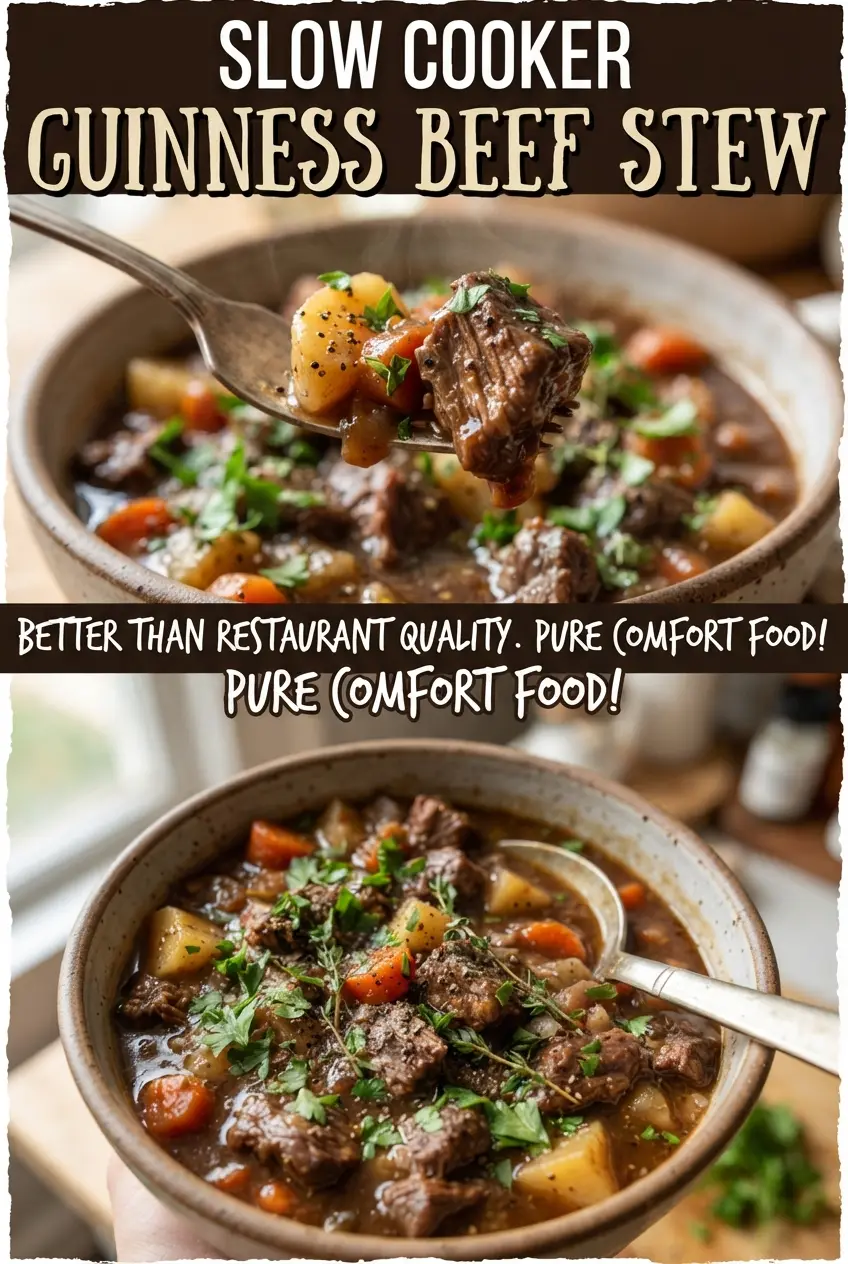
Slow Cooker Guinness Beef Stew
Ingredients
Equipment
Method
- Toss the beef chuck with flour, salt, and black pepper until evenly coated. Heat the vegetable oil in a cast iron skillet over medium-high and brown the beef in batches, transferring it to the slow cooker as you go.
- Reduce heat to medium and cook the chopped onion, garlic, and tomato paste for 3 minutes, stirring until fragrant. Pour in the Guinness stout and scrape the bottom of the pan to loosen browned bits, then simmer for 2 minutes.
- Pour the stout mixture into the slow cooker. Add the beef broth, Worcestershire sauce, brown sugar, dried thyme, sliced carrots, and halved baby potatoes.
- Cover and cook on LOW for 8 hours, until the beef is very tender and the stew looks thick and glossy. If needed, remove the lid for the last 15–30 minutes to concentrate the sauce.
- Season the stew to taste with additional salt and black pepper as needed. Garnish with chopped fresh parsley just before serving.