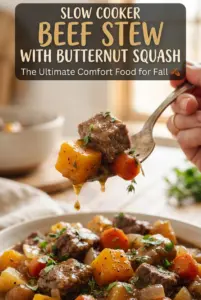
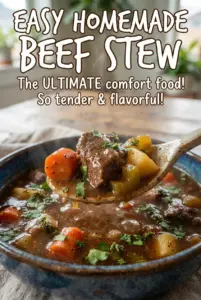
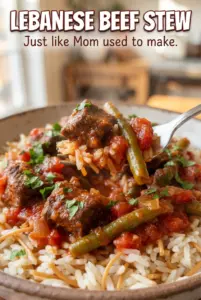
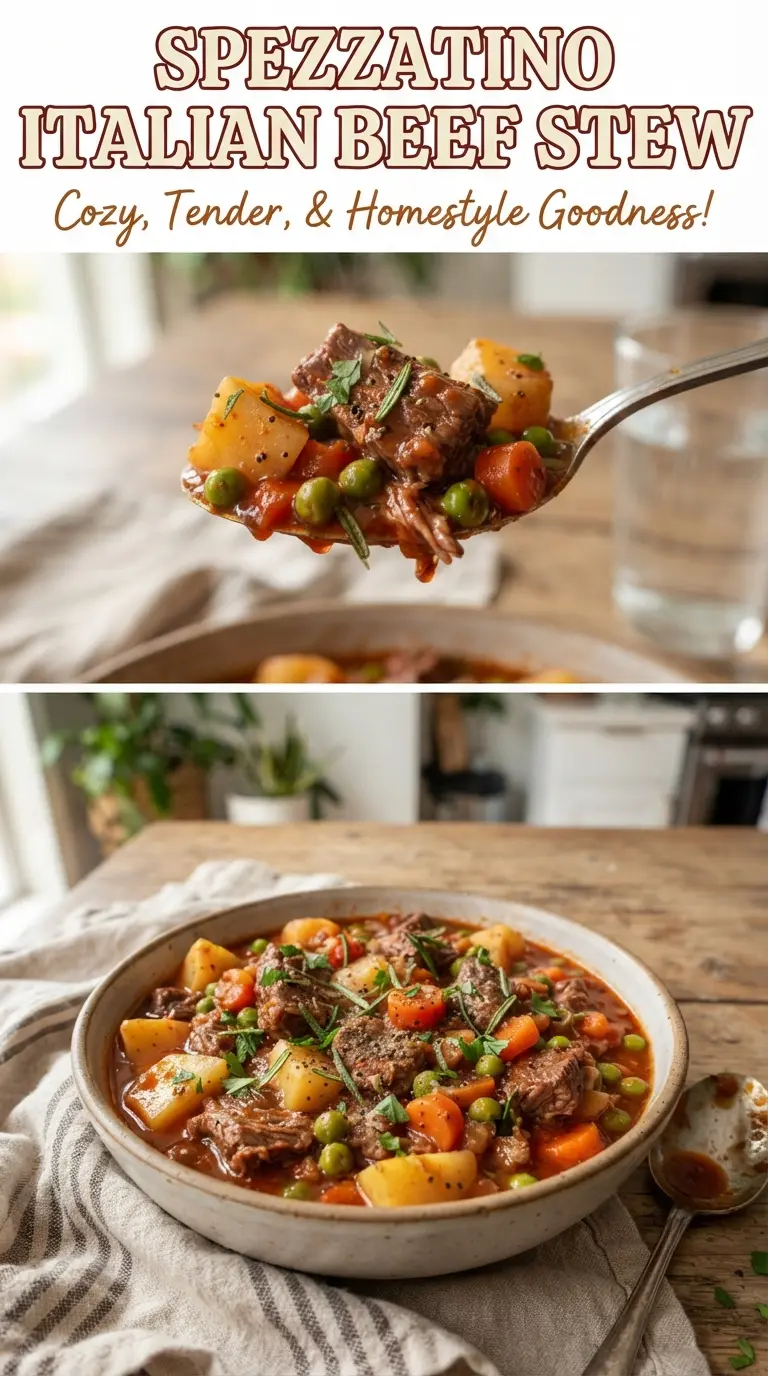
Spezzatino lands in that perfect spot between rustic and deeply comforting: tender beef, soft potatoes, and a tomato-wine broth that tastes like it has been building flavor for hours. The beef stays in proper chunks instead of shredding into strings, and the sauce turns glossy and rich enough to coat every spoonful without feeling heavy.
The difference here starts at the browning stage. Dusting the beef with a little flour helps the meat take on better color and gives the stew a slight natural body later on, while the wine gets reduced before the broth goes in so the final pot tastes rounded instead of sharp. Rosemary and bay leaf do the quiet work in the background, which is exactly what you want in a stew like this.
Below, I’ve included the part that matters most with a stew like this: how to keep the beef tender, when the potatoes should go in, and what to do if you want the broth a little thicker or a little looser.
The beef stayed in actual chunks and the sauce thickened into that rich, spoon-coating texture by the end. I added the peas at the very end like suggested and they kept their color and pop.
Save this Spezzatino for a cozy dinner with tender beef, potatoes, and rosemary-tomato broth.
The Browning Stage That Gives This Stew Its Depth
The biggest mistake with beef stew is crowding the pan and rushing the meat. If the beef steams, you miss the browned bits that give the broth its deep, savory backbone. Brown the cubes in batches in hot olive oil and leave them alone long enough to form a real crust before turning them.
That flour coating helps, but it won’t save pale meat. You want the outside caramelized and the pan bottom dotted with dark fond. Those browned bits dissolve when the wine goes in, and that is where the stew starts tasting like more than just meat and vegetables simmered together.
What Each Ingredient Is Actually Doing In This Dish
- Beef chuck — This is the cut you want because it has enough connective tissue to turn silky over a long simmer. Lean stew meat can work, but it often ends up dry or stringy before the potatoes are tender.
- Dry red wine — It adds depth and a gentle acidity that keeps the stew from tasting flat. Use something you’d drink, but it doesn’t need to be expensive.
- Crushed tomatoes — They give the sauce body and sweetness without turning it into a heavy tomato stew. If yours taste sharp, the long simmer will smooth that out.
- Potatoes — Add them later so they hold their shape. If they go in at the start, they break down before the beef is ready.
- Rosemary and bay leaves — These are the herbal backbone. Fresh rosemary is worth using here because dried rosemary can turn woody in a long cook.
Building the Pot In The Right Order
Brown the Beef First
Season the beef, dust it lightly with flour, and brown it in batches in olive oil. The flour should look like a thin veil, not a paste. If the pan looks crowded, pause and work in smaller rounds; a packed pan lowers the heat and takes away the sear you need.
Soften the Aromatics Slowly
Cook the onion, carrot, and celery until they soften and lose their raw edge, about 8 minutes. You want them sweet and translucent, not browned hard. Add the garlic at the end of this stage so it perfumes the pot without turning bitter.
Reduce the Wine Before Anything Else
Pour in the red wine and scrape the bottom well, then let it simmer until it’s reduced by about half. This cooks off the harsh alcohol edge and concentrates the flavor before the tomatoes and broth go in. If you rush this part, the stew can taste thin and a little boozy even after the long simmer.
Simmer Until the Beef Starts Giving Up
Add the tomatoes, broth, rosemary, bay leaves, and beef, then cover and simmer gently. The heat should stay low enough that you see only occasional bubbles breaking the surface. A hard boil tightens the meat and makes the broth greasy instead of silky, so keep it patient.
Add the Potatoes and Finish With Peas
Stir in the potatoes once the beef has had time to turn tender, then cook until the potatoes are just cooked through. The peas only need the last 5 minutes, or they lose their color and pop. Pull out the rosemary and bay leaves before serving so the stew tastes clean and not piney.
Three Ways to Make Spezzatino Fit Your Table
Gluten-Free Spezzatino
Skip the flour or use a gluten-free all-purpose blend for dusting the beef. You’ll lose a little of the natural thickening from the flour, but the long simmer and reduced sauce still give you a satisfying body.
No-Wine Version
Replace the wine with extra beef broth plus 1 tablespoon red wine vinegar or a splash of balsamic vinegar. You won’t get the same layered depth from fermented wine, but the acid keeps the stew bright instead of heavy.
A Thicker, Heartier Pot
Mash a few potatoes against the side of the pot near the end of cooking, then stir them back in. That gives the broth a thicker, more rustic finish without adding extra flour or changing the flavor.
Make-Ahead Storage
This stew tastes even better the next day, when the broth has had time to settle and deepen. Store it in the refrigerator for up to 4 days; the potatoes will soften a little more, but the flavor improves. Freeze for up to 3 months in airtight containers, then thaw overnight before reheating. Warm it gently on the stove over low heat with a splash of broth if needed, because a hard boil can break down the potatoes and make the beef dry at the edges.
Questions I Get Asked About This Recipe
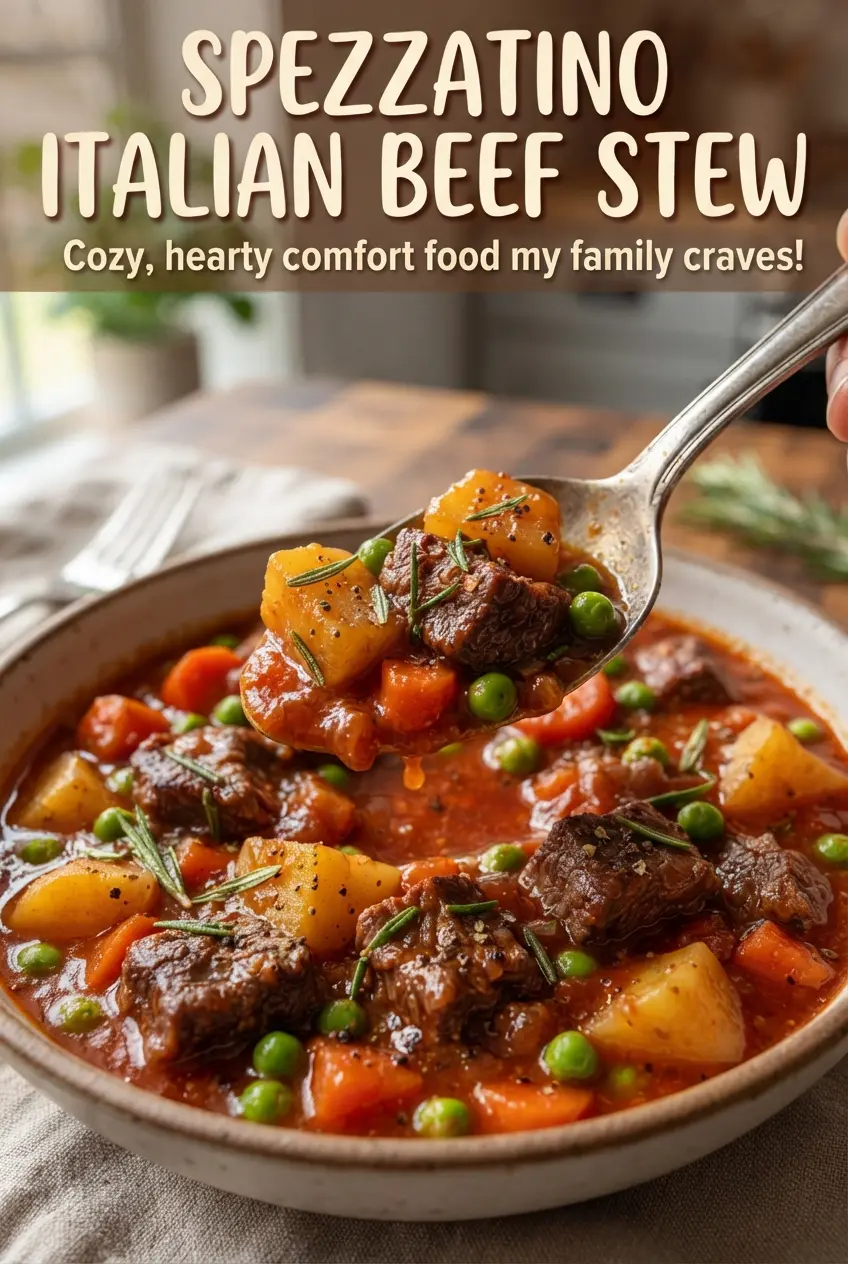
Spezzatino Italian Beef Stew
Ingredients
Equipment
Method
- Season the beef with salt and black pepper, then dust with all-purpose flour to coat evenly.
- Heat olive oil in a Dutch oven over medium-high heat and brown the beef in batches, turning occasionally, until deeply browned on all sides.
- Add the onion, carrot, and celery and cook for 8 minutes until soft, scraping up any browned bits.
- Stir in the garlic and cook for 1 minute until fragrant.
- Pour in the red wine and simmer until reduced by half, scraping the bottom of the pot as it bubbles.
- Add crushed tomatoes, beef broth, fresh rosemary, bay leaves, and browned beef; bring to a simmer, cover, and simmer for 1 1/2 hours.
- Add the cubed potatoes, then simmer uncovered until tender, about 40 minutes, stirring occasionally.
- Stir in the frozen peas and simmer for the last 5 minutes, just until heated through.
- Remove the rosemary and bay leaves, then serve the spezzatino hot with crusty Italian bread.