Golden coconut-curry broth clings to silky rice noodles in this Thai chicken noodle soup, and the whole bowl lands with that first spoonful of lime, basil, and just enough heat to wake everything up. It’s the kind of soup that tastes layered and full, not thin or one-note, with tender chicken and noodles that stay pleasantly slippery instead of turning mushy.
The trick is building the broth in stages. Red curry paste needs a minute in the pot before the liquid goes in so it can bloom and lose that raw, flat edge. Coconut milk softens the curry, chicken broth keeps it pourable, and fish sauce plus lime juice pull the whole thing into balance. Bruised lemongrass and galangal add that clean, unmistakable Thai-style backbone without making the soup complicated.
Below you’ll find the exact timing for keeping the chicken tender and the noodles intact, plus the one swap I reach for when I can’t find galangal. The garnish matters here, too, because the fresh herbs and chili aren’t decoration — they’re what make the broth taste alive.
The broth had that silky coconut finish and the rice noodles stayed perfect because I added them at the very end. My husband went back for a second bowl before I’d even sat down.
Save this Thai Chicken Noodle Soup for the nights when you want silky coconut broth, tender chicken, and bright lime in one bowl.
The Part That Keeps the Broth from Tasting Flat
Thai chicken noodle soup gets muddy fast when the curry paste never has a chance to wake up. That first minute in hot oil is doing real work: it opens the paste, deepens the color, and gives the soup that layered curry aroma instead of a raw spice taste. If you dump everything in at once, the broth still tastes fine, but it won’t have the same depth.
The other thing that matters is balance. Coconut milk brings body, but it also softens the edges, so fish sauce, lime juice, and a little brown sugar need to land in the pot together. That gives you salty, sour, and lightly sweet in the same spoonful, which is what keeps the soup from tasting heavy. Pull the soup off a hard boil once the chicken goes in; a gentle simmer keeps the meat tender and the coconut milk smooth.
What Each Ingredient Is Actually Doing in This Bowl
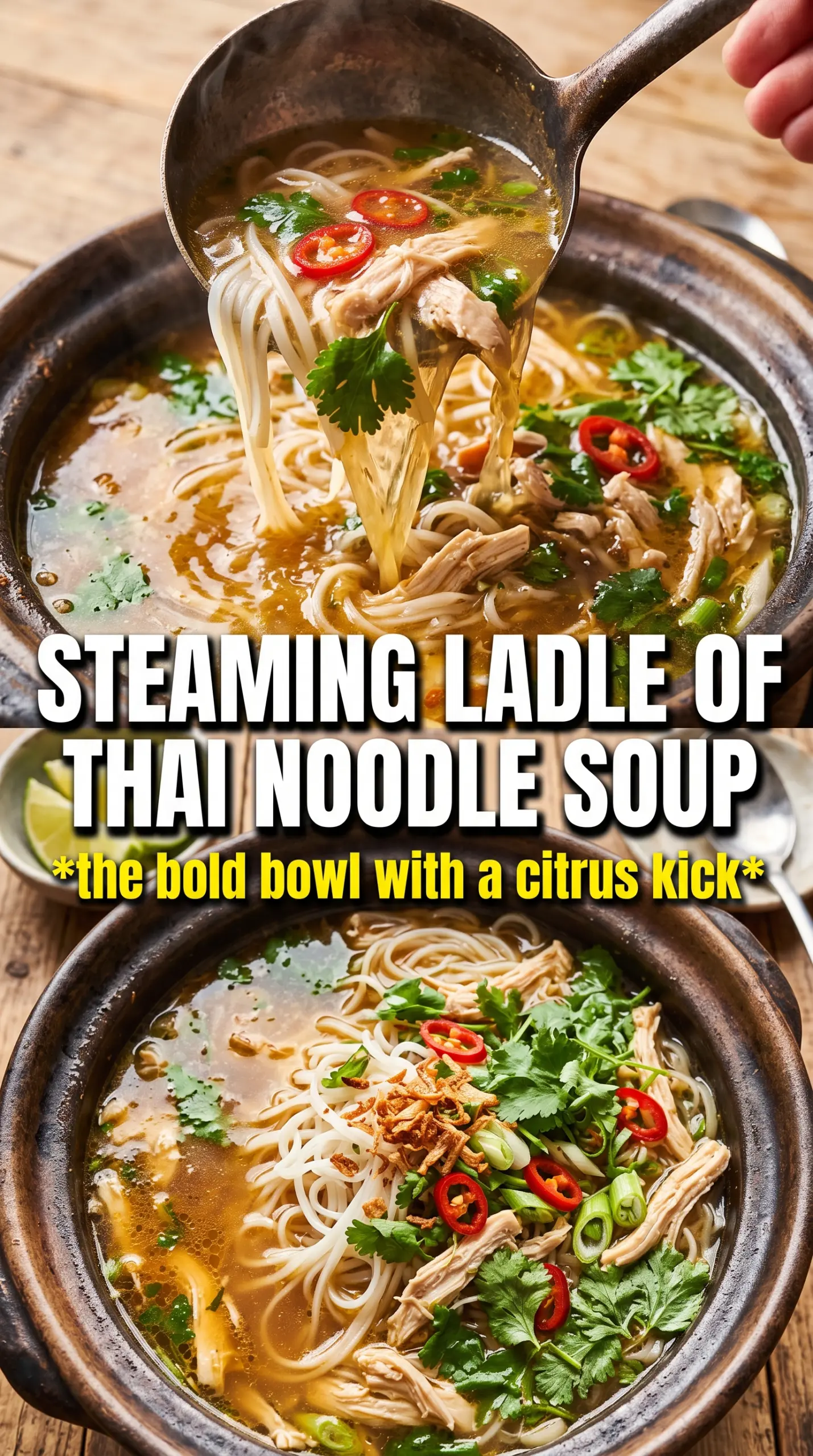
- Red curry paste — This is the flavor base, not just seasoning. Brands vary a lot, so use one you already like the taste of. If yours runs especially salty or spicy, start with a little less and adjust at the end.
- Coconut milk — Full-fat coconut milk gives the broth its silky finish and keeps the soup from tasting watery. Light coconut milk works in a pinch, but the broth will be thinner and less luxurious.
- Lemongrass and galangal — These bring the clean, citrusy, slightly floral note that makes the soup taste distinct. Bruise the lemongrass so it actually perfumes the broth, and slice the galangal or ginger thin enough to release flavor during the simmer.
- Chicken thighs or breast — Thighs stay juicier if you’re simmering a little longer, while breast meat is leaner and cooks quickly. Slice it thin so it cooks through before the noodles overtake the pot.
- Rice noodles — Soaking first keeps them from clumping and overcooking in the broth. If you boil them straight in the soup, they can go from tender to bloated fast and soak up too much liquid.
- Thai basil, cilantro, lime, and chili — These are not optional if you want the bowl to taste fresh at the table. Add them at the end so they stay bright and fragrant instead of sinking into the broth.
Building the Soup in the Right Order
Bloom the Curry First
Start with oil in a wide pot and cook the red curry paste until it smells toasted and a little sharper, not raw. You’re looking for the paste to darken slightly and separate from the oil. If the heat is too low, it just sits there and stains the pot without opening up.
Let the Broth Simmer, Not Boil
Add the coconut milk, broth, fish sauce, lime juice, and brown sugar, then bring the soup to a gentle simmer. Drop in the lemongrass and galangal so they can infuse the liquid, but keep the heat modest. A hard boil can make coconut milk taste rough and can push the soup toward greasy instead of smooth.
Cook the Chicken Gently
Slide in the thinly sliced chicken and cook just until it’s opaque and tender, about 8 to 10 minutes depending on thickness. If the chicken curls tightly or feels rubbery, the heat is too high. Thin slices cook fast, which is the point here — they stay soft and don’t steal the texture of the broth.
Finish with the Noodles at the End
Add the drained rice noodles only after the chicken is cooked and the aromatics are removed. Let them heat through just until supple. If they sit in the broth too long, they keep drinking liquid and the soup turns starchy and heavy instead of silky.
Ways to Bend This Recipe Without Breaking It
Make It Dairy-Free and Naturally Gluten-Free
This recipe already lands in that lane as written, as long as your curry paste and fish sauce are gluten-free brands. Rice noodles keep it wheat-free, and coconut milk carries the creamy texture without any dairy. That’s one reason this soup works so well for mixed-diet tables.
Swap the Chicken for Shrimp
Shrimp gives you a lighter bowl and cooks even faster, but it needs the gentlest heat. Add it near the end and simmer only until it turns pink and just opaque. Overcooked shrimp turns firm and loses the soft bite that works so well here.
Use Ginger When You Can’t Find Galangal
Fresh ginger won’t taste exactly the same, but it gives you the same warm, clean lift. Use it sliced rather than grated so it can infuse and still be easy to remove. The soup will be a little brighter and less resinous, which is a good trade in most home kitchens.
Storage and Reheating
- Refrigerator: Store for up to 4 days. The noodles will keep soaking up broth, so expect a thicker soup on day two.
- Freezer: Freeze the broth and chicken without the noodles for the best texture. Rice noodles get soft and fragile after thawing, so cook fresh noodles when you reheat.
- Reheating: Warm the soup gently over medium-low heat until steaming, then add the noodles if they’re not already in the pot. Don’t boil it hard, or the coconut milk can separate and the chicken will turn tough.
Questions I Get Asked About This Recipe
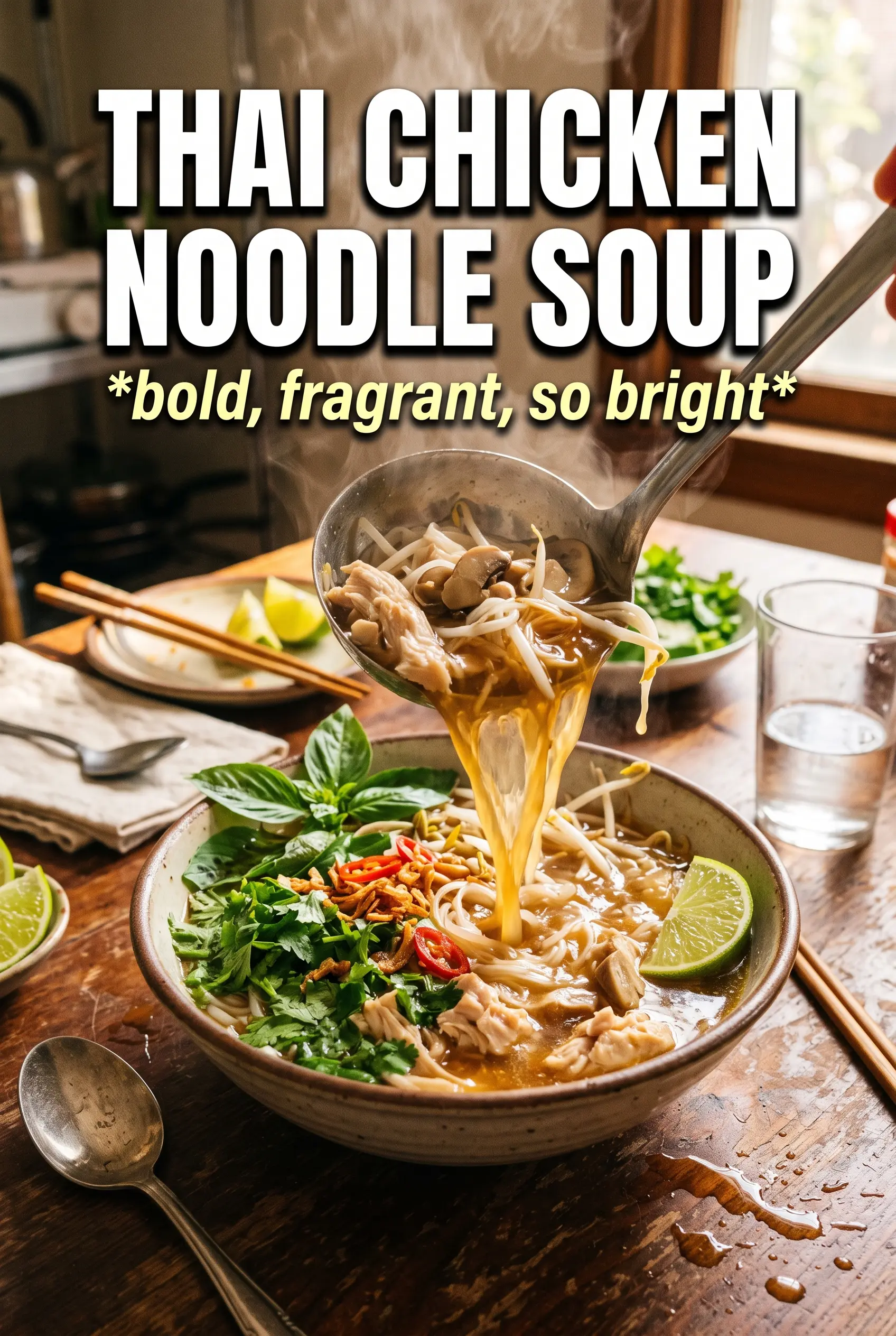
Thai Chicken Noodle Soup
Ingredients
Equipment
Method
- Soak the rice noodles in warm water for 15 minutes, then drain and set aside.
- Set the drained rice noodles aside while you build the curry broth.
- Heat 1 tablespoon oil in a large pot, then cook the red curry paste for 1-2 minutes until fragrant.
- Add garlic, lemongrass, and galangal (or fresh ginger) and cook for 1 minute.
- Pour in coconut milk and chicken broth, then stir in fish sauce, lime juice, and brown sugar.
- Simmer the broth for 10 minutes.
- Add the sliced chicken to the simmering broth and cook for 8-10 minutes until cooked through.
- Remove the lemongrass and galangal (or fresh ginger), then add the drained rice noodles and heat through for 2-3 minutes.
- Serve the soup hot and top each bowl with bean sprouts, green onions, Thai basil, cilantro, lime wedges, and sliced red chili.